Neural mechanisms and social support for mental health in old age by martial arts exercise
Yong Jiang, Pengsong Li, Yulong Yang, Liqing Liu, Haibin Liu, Yan Zhu, Fengshan Gao, Yanze Li, Suheng Li, Junjie Wang, Qingyong Wang, Shuye Yang

TL;DR
Martial arts exercise can improve mental health and cognitive function in older adults by enhancing brain mechanisms and providing social support.
Contribution
This review highlights the neural mechanisms and social benefits of martial arts for mental health in aging populations.
Findings
Martial arts increase BDNF expression and neuroplasticity, supporting cognitive and emotional health.
Both hard and soft martial arts practices offer distinct benefits for cognitive and psychosocial well-being.
Martial arts reduce loneliness and enhance emotional resilience through community engagement.
Abstract
The increasing global aging population presents significant challenges related to cognitive decline, mental health disorders, and social isolation. Martial arts exercise emerges as a multifaceted intervention promoting mental health and cognitive vitality among older adults by integrating physical activity, cognitive engagement, and social interaction. This review synthesizes evidence on the neural mechanisms underlying the benefits of martial arts, highlighting their role in enhancing brain-derived neurotrophic factor (BDNF) expression, neuroplasticity, and neural connectivity, which support improved executive functions, memory, and emotional regulation. Both hard martial arts and soft practices, such as Tai Chi, offer distinct advantages in addressing age-related cognitive and psychosocial challenges. Additionally, martial arts foster strong social support systems, reducing loneliness…
Genes, proteins, chemicals, diseases, species, mutations and cell lines named across the full text — each resolved to its canonical identifier and authoritative record.
Click any figure to enlarge with its caption.
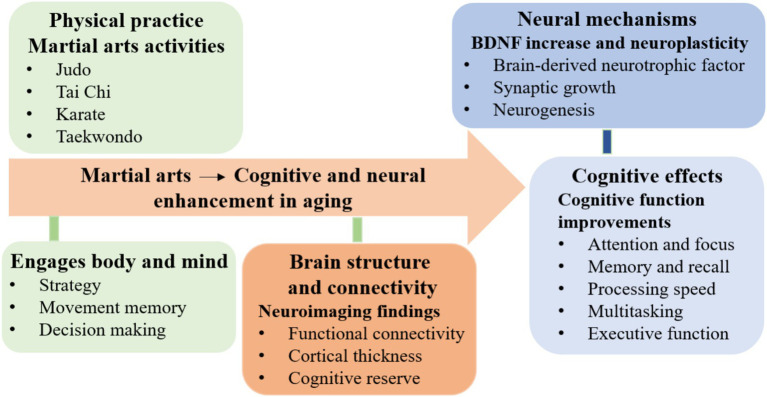 Figure 1
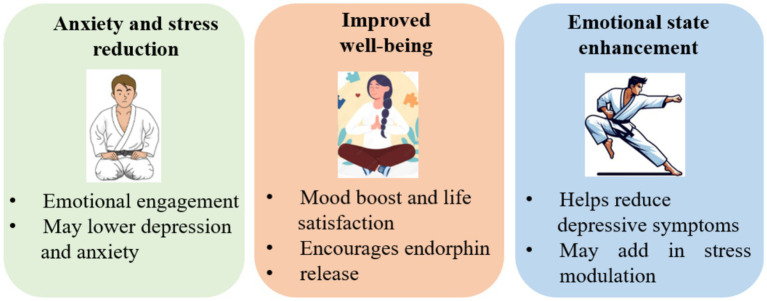 Figure 2
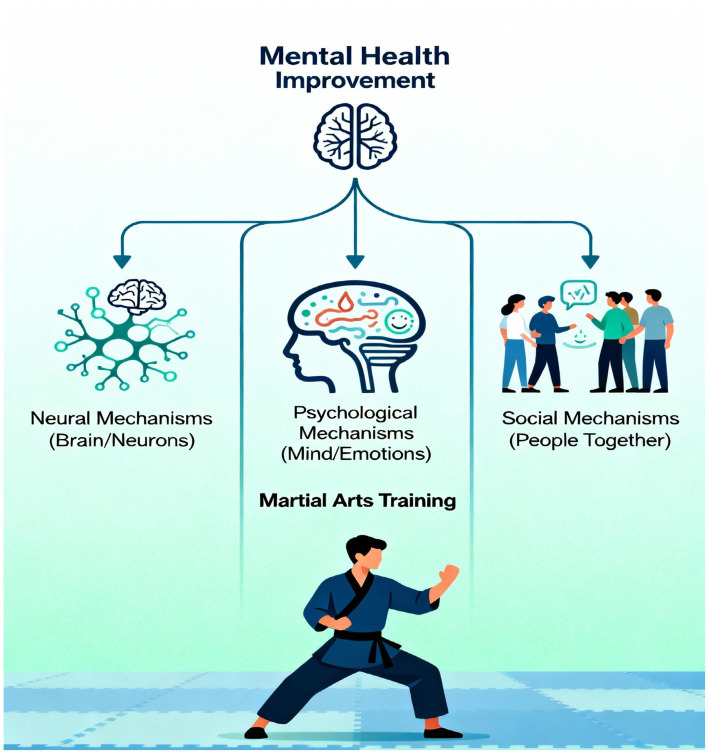 Figure 3
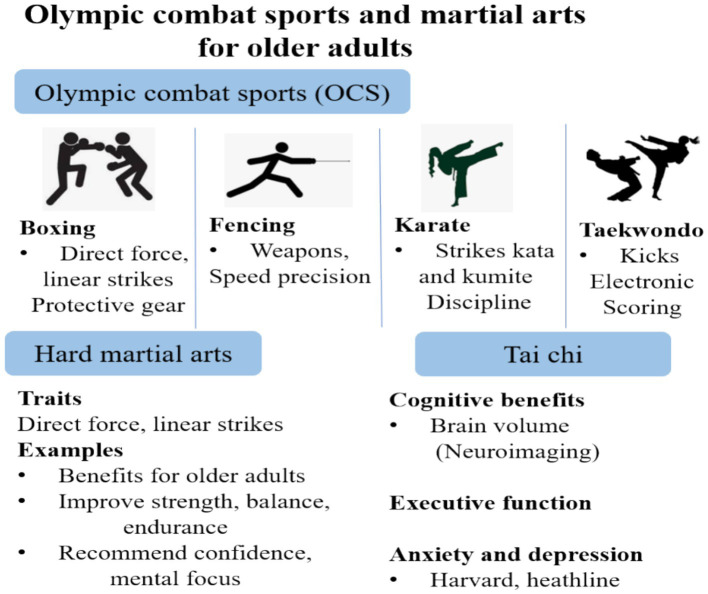 Figure 4
Peer Reviews
No public reviews on file for this paper yet. If you reviewed it on a platform where reviews are public (OpenReview, ICLR, NeurIPS, ICML), you can paste yours below so the community can read it here.
Videos
No videos yet. Explain this paper in a talk, walkthrough, or lecture? Add one.
Taxonomy
TopicsMartial Arts: Techniques, Psychology, and Education · Exercise and Physiological Responses · Physical Education and Training Studies