Validating the Existential Quest Scale using item response theory
Marco Rizzo, Giorgia Molinengo, Barbara Loera, Anna Miglietta, Vassilis Saroglou

TL;DR
This study validates a psychological scale for measuring willingness to engage with existential questions using advanced statistical methods.
Contribution
The paper applies item response theory to validate the Existential Quest Scale, improving its precision and cross-group comparability.
Findings
The Existential Quest Scale is unidimensional and discriminates levels of existential quest effectively.
The scale shows psychometric invariance across sex, age, and religious affiliation.
Revisions to items and response categories are suggested to improve scale performance.
Abstract
The Existential Quest Scale (EQS) is a brief instrument designed to assess individuals’ willingness to engage with existential quest in both religious and secular contexts. As the construct of existential quest becomes increasingly relevant for understanding psychological flexibility, identity development, and social attitudes in multicultural societies, ensuring the validity of its measurement is essential. Previous validations of the EQS have relied on Classical Test Theory (CTT), which limits comparability across groups and item-level precision. This study aims to evaluate the EQS using Rasch modeling, a robust item response theory (IRT) approach that overcomes such limitations. Drawing on a large, heterogeneous sample (N = 4,378), we assessed dimensionality, item functioning, and measurement invariance across sex, age, and religious affiliation. Results confirmed the unidimensional…
Click any figure to enlarge with its caption.
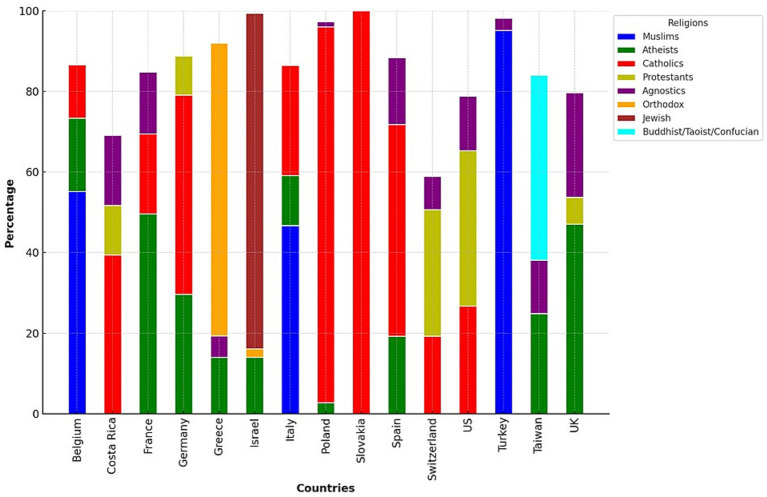 Figure 1
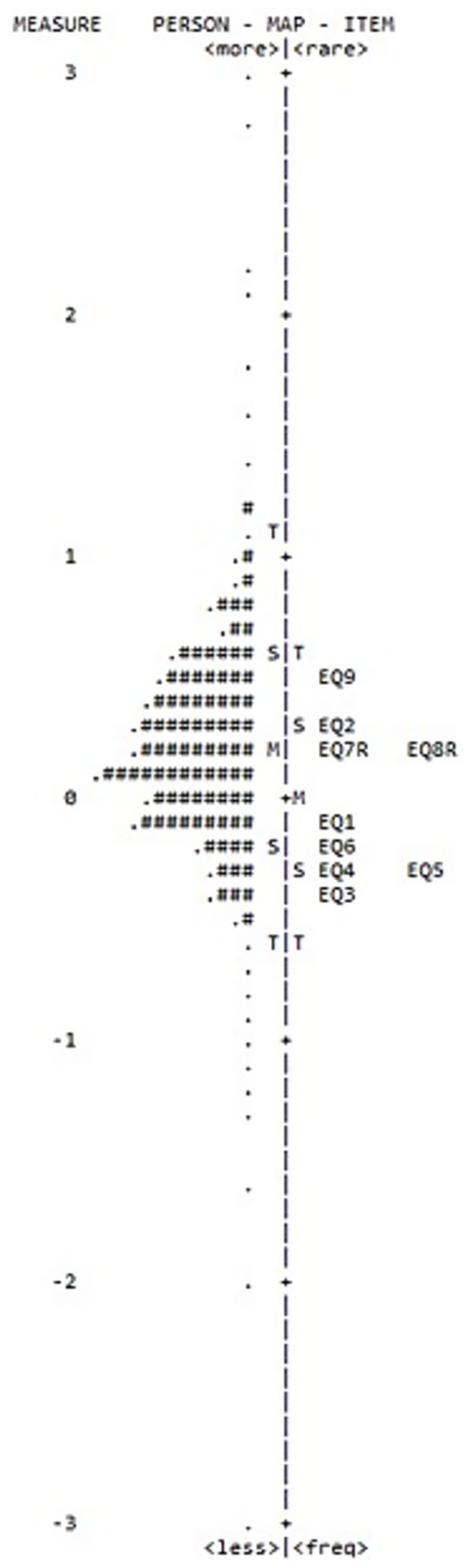 Figure 2
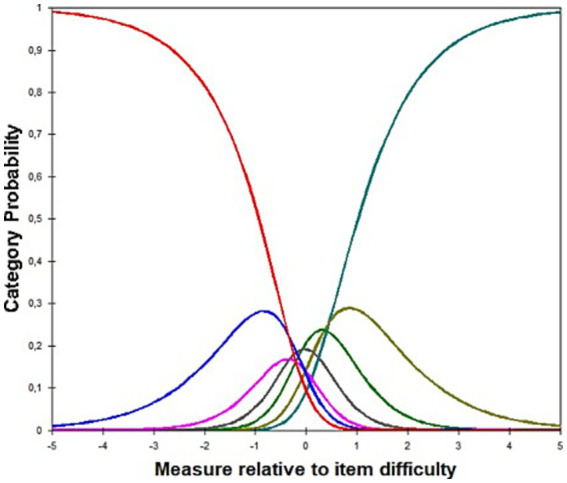 Figure 3
Peer Reviews
No public reviews on file for this paper yet. If you reviewed it on a platform where reviews are public (OpenReview, ICLR, NeurIPS, ICML), you can paste yours below so the community can read it here.
Videos
No videos yet. Explain this paper in a talk, walkthrough, or lecture? Add one.
Taxonomy
TopicsReligion, Spirituality, and Psychology · Death Anxiety and Social Exclusion · Cultural Differences and Values