Prognostic value of baseline QFR in single-vessel intermediate coronary stenosis
Yanfeng Lu, Abdulrahman AlQazzaz, Jasmine Yimeng Bao, Gary S. Mintz, Jiahao Feng, Yong Zhang, Shanshan Gao, Qiang Song, Feifei Ning, Xin Huang, Ning Guo

TL;DR
This study shows that baseline QFR can predict heart-related risks in patients with intermediate coronary stenosis, with lower QFR values linked to higher risks.
Contribution
The study introduces a three-tier QFR model to stratify risk in patients with intermediate coronary stenosis.
Findings
Lower QFR groups had significantly higher rates of major adverse cardiac events and revascularization.
Each 0.01 increase in QFR was associated with reduced risk of adverse outcomes.
QFR group was an independent predictor of adverse events in multivariate analysis.
Abstract
The prognostic value of baseline Quantitative Flow Ratio (QFR) in real-world patients remains unclear. This study aimed to evaluate the prognostic value of baseline QFR and its three-tier model—low, grey-zone, and high QFR—in patients with single-vessel intermediate stenosis. This retrospective study included 478 patients with QFR between 0.70 and 0.90 who underwent coronary angiography between May and June 2023. Patients were stratified into Low (0.70–0.74), Grey-Zone (0.75–0.85), and High (0.86–0.90) QFR groups. The primary endpoint was major adverse cardiac events (MACE); the key secondary endpoint was target vessel failure (TVF). Kaplan–Meier and Cox proportional hazards models were used to evaluate outcomes. During the 18-month follow-up period, MACE incidence was 13.5%, 6.6%, and 3.4% in Low, Grey-Zone, and High QFR groups, respectively (P = 0.008), mainly driven by MI (3.2% vs.…
Genes, proteins, chemicals, diseases, species, mutations and cell lines named across the full text — each resolved to its canonical identifier and authoritative record.
Click any figure to enlarge with its caption.
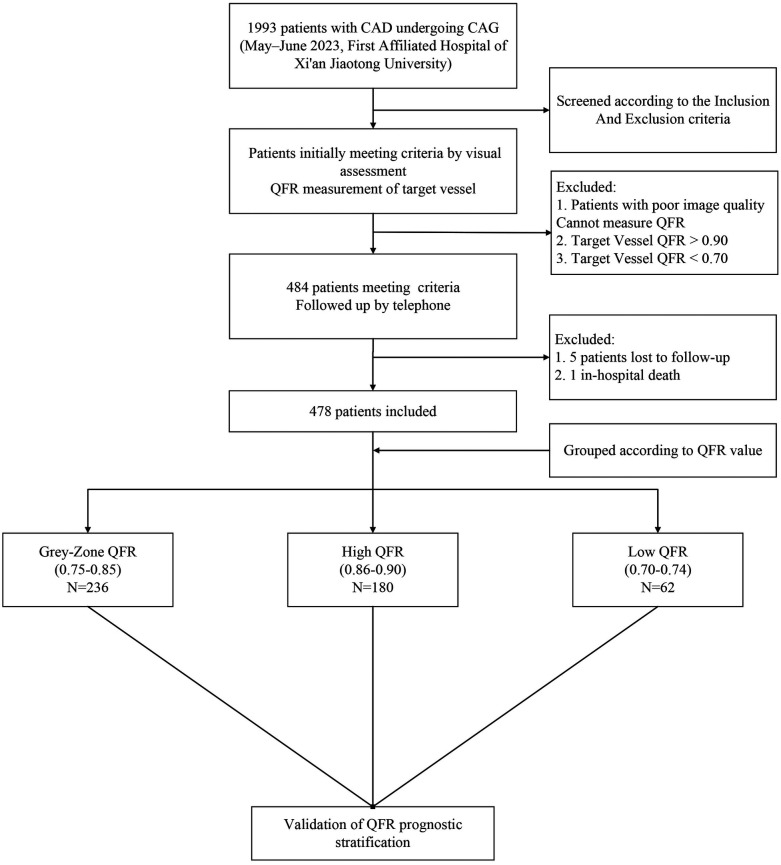 Figure 1
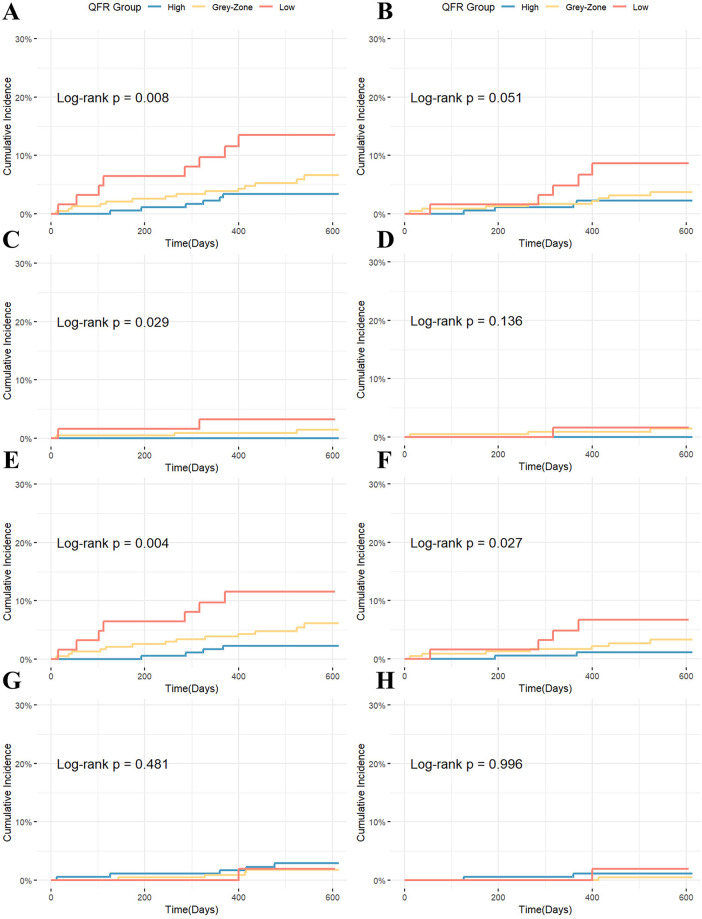 Figure 2
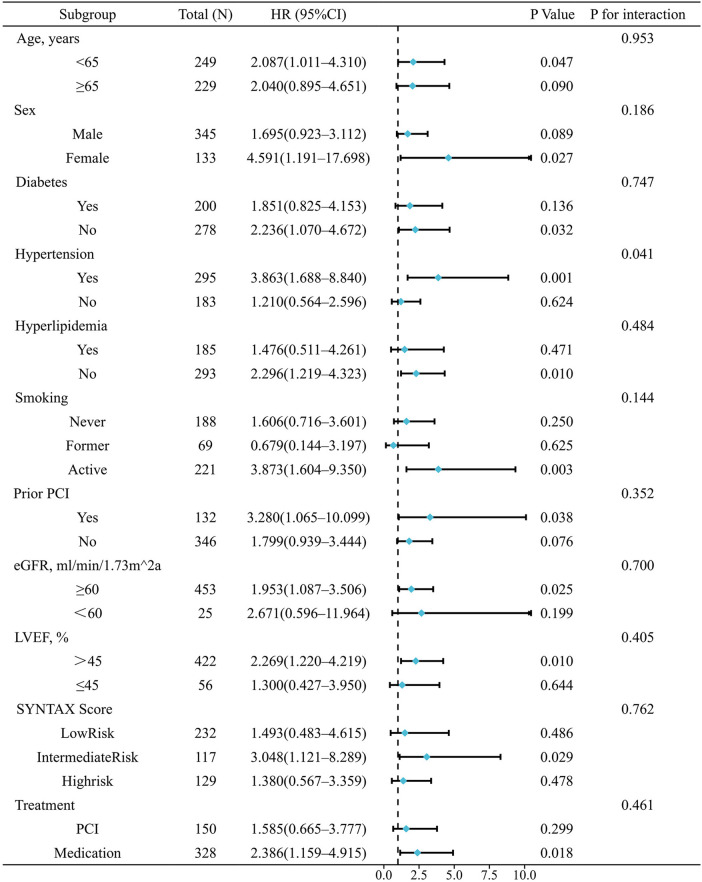 Figure 3
Peer Reviews
No public reviews on file for this paper yet. If you reviewed it on a platform where reviews are public (OpenReview, ICLR, NeurIPS, ICML), you can paste yours below so the community can read it here.
Videos
No videos yet. Explain this paper in a talk, walkthrough, or lecture? Add one.
Taxonomy
TopicsCoronary Interventions and Diagnostics · Cardiac Imaging and Diagnostics · Atrial Fibrillation Management and Outcomes