Validity of current surgical strategies for aneurysmal progression in post-subacute Stanford type B aortic dissection: a propensity score–matched comparative analysis
Ken Nakamura, Kentaro Akabane, Shusuke Arai, Ryota Katsura, Miku Konaka, Jun Hayashi, Cholsu Kim, Hideaki Uchino, Takao Shimanuki, Tetsuro Uchida

TL;DR
This study examines whether early surgical intervention in aortic dissection patients with rapidly enlarging aneurysms improves outcomes compared to medical therapy alone.
Contribution
The study introduces a propensity score–matched analysis to evaluate preemptive TEVAR in subacute and chronic aortic dissection.
Findings
Preemptive TEVAR was associated with significantly increased aortic diameter control compared to best medical therapy.
Preemptive TEVAR was identified as a protective factor against aorta-related events in univariate Cox regression analysis.
Untreated patients had a higher incidence of ruptured aortic aneurysms compared to those receiving preemptive TEVAR.
Abstract
The use of preemptive thoracic endovascular aortic repair (TEVAR) has been expanding, especially in cases where aortic enlargement is an indication for surgical intervention. Current guidelines recommend treatment for chronic type B aortic dissection (TBAD) when aortic diameter increases by ≥5 mm over a 6-month period. However, the optimal window for preemptive TEVAR is the subacute phase (up to 3 months), creating a dilemma where intervention may be delayed beyond this window. This study investigates the short- and long-term outcomes of aggressive treatment for rapidly enlarging aneurysms. Between July 2004 and August 2024, 432 patients with acute Stanford type B aortic dissection were treated at two centers. Of these, 324 patients who completed acute best medical therapy (BMT) were included. Patients with rapid enlargement of aortic aneurysms who did not meet absolute surgical…
Genes, proteins, chemicals, diseases, species, mutations and cell lines named across the full text — each resolved to its canonical identifier and authoritative record.
Click any figure to enlarge with its caption.
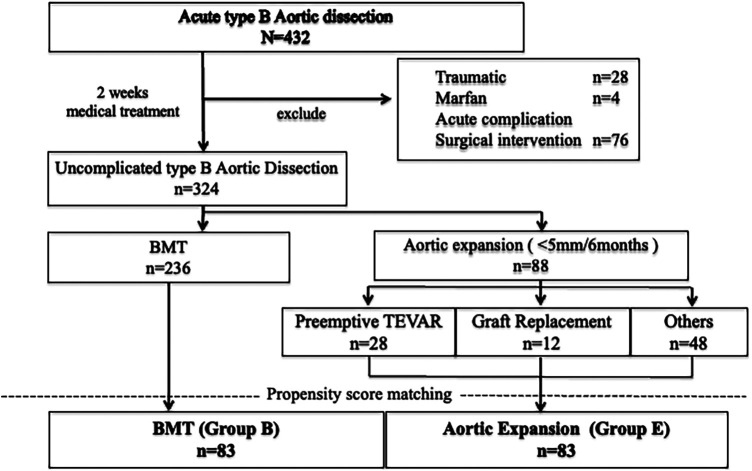 Figure 1
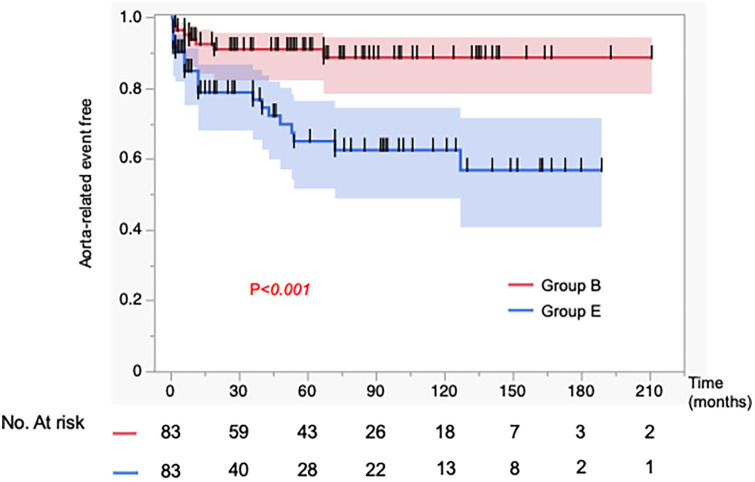 Figure 2
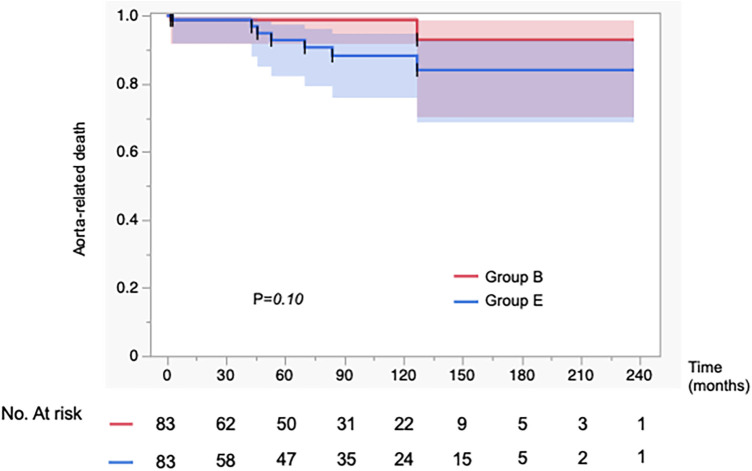 Figure 3
Peer Reviews
No public reviews on file for this paper yet. If you reviewed it on a platform where reviews are public (OpenReview, ICLR, NeurIPS, ICML), you can paste yours below so the community can read it here.
Videos
No videos yet. Explain this paper in a talk, walkthrough, or lecture? Add one.
Taxonomy
TopicsAortic Disease and Treatment Approaches · Aortic aneurysm repair treatments · Congenital Heart Disease Studies