Deep learning–based approaches for weed detection in crops
Hua Zhao, Yan Wang

TL;DR
This paper reviews how deep learning improves weed detection in crops, comparing different models and discussing challenges and future directions.
Contribution
A comprehensive synthesis of deep learning approaches for weed detection, highlighting their strengths, limitations, and emerging solutions.
Findings
Object detection, image segmentation, and classification models each offer unique advantages for weed detection.
Challenges include dataset scarcity and real-time deployment constraints, with semi-supervised learning showing promise.
Future opportunities focus on scalable, data-efficient, and precision-integrated weed management systems.
Abstract
Deep learning has become a transformative technology for modern weed detection, offering significant advantages over traditional machine vision in robustness, scalability, and recognition accuracy. This review provides a comprehensive synthesis of recent progress in deep learning-based weed detection, with a focus on three major model families: object detection, image segmentation, and image classification. For each category, representative architectures, key algorithmic features, and typical agricultural application scenarios are summarized and compared. The strengths and limitations of these approaches—particularly in terms of spatial localization, pixel-level delineation, computational efficiency, and model generalization—are critically analyzed. In addition, major challenges such as dataset scarcity, annotation cost, variability in weed morphology, and real-time deployment…
Click any figure to enlarge with its caption.
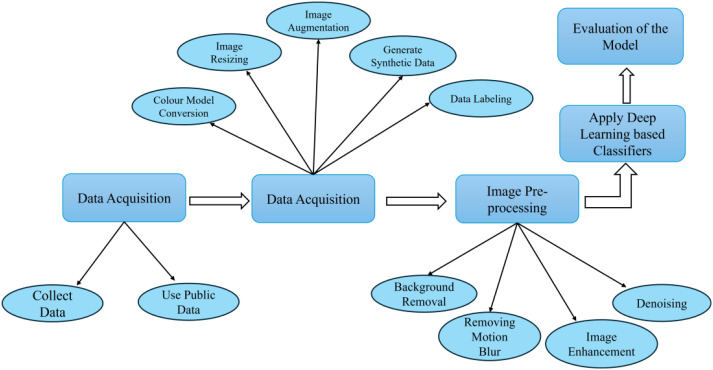 Figure 1
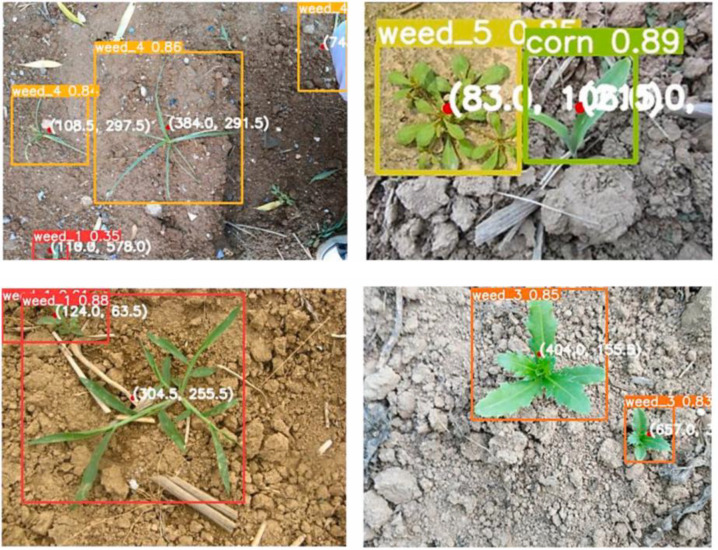 Figure 2
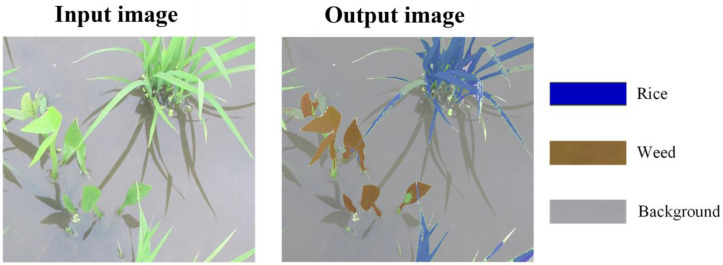 Figure 3
Peer Reviews
No public reviews on file for this paper yet. If you reviewed it on a platform where reviews are public (OpenReview, ICLR, NeurIPS, ICML), you can paste yours below so the community can read it here.
Videos
No videos yet. Explain this paper in a talk, walkthrough, or lecture? Add one.
Taxonomy
TopicsSmart Agriculture and AI · Innovations in Aquaponics and Hydroponics Systems · Biological Control of Invasive Species