The impact of dynamic reversal potential on the evolution of action potential attributes during spike trains
Ahmed A. Aldohbeyb, Jozsef Vigh, Kevin L. Lear

TL;DR
The study explores how changes in ion concentrations and sodium channel cooperation affect the variability of action potentials in neurons during bursts.
Contribution
The paper introduces a novel mechanism involving dynamic reversal potential and cooperative sodium channel gating to explain AP variability.
Findings
AP attributes in bursts show two patterns: first APs are consistent, and subsequent APs change monotonically.
Including ion concentration dynamics in models reproduces AP attribute variation linked to dynamic reversal potential.
Cooperative sodium gating restores first AP attributes and enhances modeled variation.
Abstract
Action potentials (AP) are the basic elements of information processing in the nervous system. Understanding AP generation mechanisms is a critical step to understand how neurons encode information. However, an individual neuron might fire APs with various shapes even in response to the same stimulus, and the mechanisms responsible for this variability remain unclear. Therefore, we analyzed four AP attributes including AP rapidity and threshold during consecutive bursts from three neuron types using intracellular electrophysiological recordings. In response to consecutive current steps, the AP attributes in evoked spike trains show two distinctive patterns across different neurons: (1) The first APs from each train always have comparable properties regardless of the stimulus strength; (2) The attributes of the subsequent APs during each pulse monotonically change during the burst, where…
Genes, proteins, chemicals, diseases, species, mutations and cell lines named across the full text — each resolved to its canonical identifier and authoritative record.
Click any figure to enlarge with its caption.
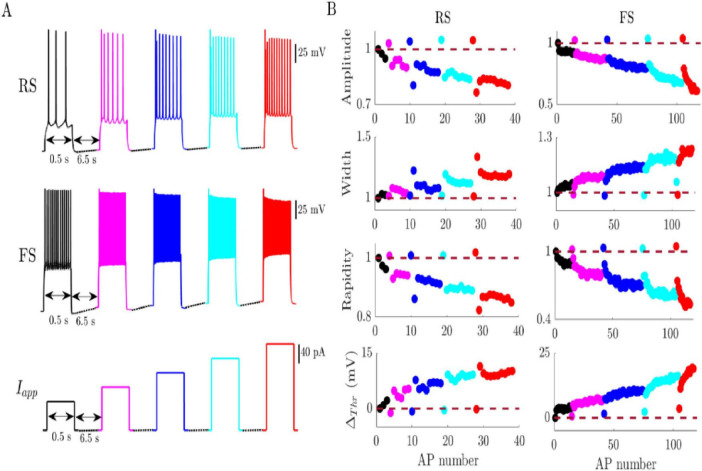 Figure 1
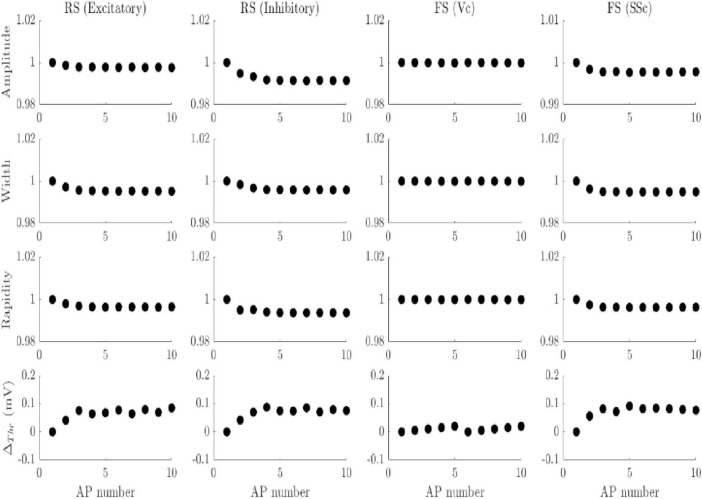 Figure 2
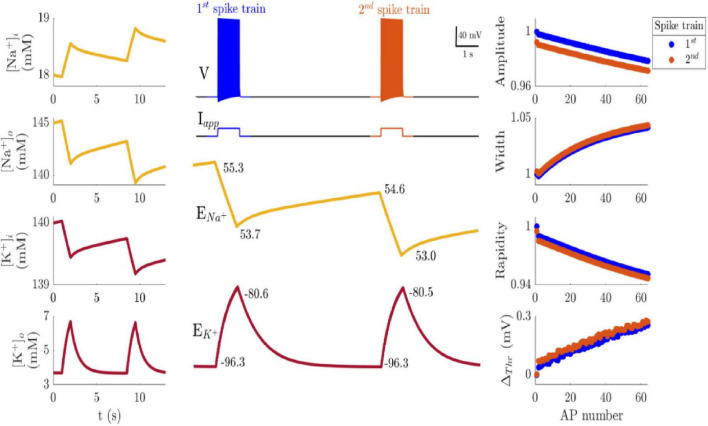 Figure 3
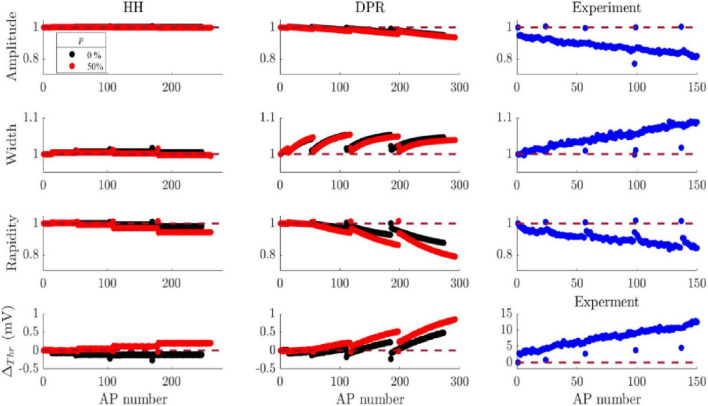 Figure 4
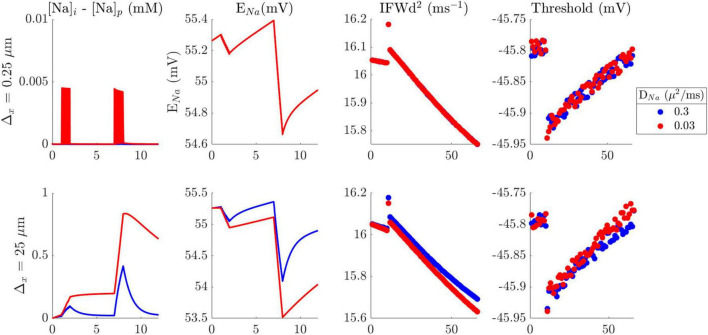 Figure 5
Peer Reviews
No public reviews on file for this paper yet. If you reviewed it on a platform where reviews are public (OpenReview, ICLR, NeurIPS, ICML), you can paste yours below so the community can read it here.
Videos
No videos yet. Explain this paper in a talk, walkthrough, or lecture? Add one.
Taxonomy
TopicsNeural dynamics and brain function · Neuroscience and Neuropharmacology Research · Neurobiology and Insect Physiology Research