Prostate-specific membrane antigen targeted organic semiconducting polymer nanoparticles for enhanced photothermal therapy of prostate cancer
Zhongji Jiang, Xun Zhang, Gaohaer Kadeerhan, Jin Zhang, Jiali Jin, Weijing Hu, Wenmin Guo, Hong Guo, Dongwen Wang

TL;DR
Researchers developed targeted nanoparticles for prostate cancer treatment using a specific protein marker, enabling precise and effective photothermal therapy.
Contribution
A prostate-specific membrane antigen-targeted organic semiconducting polymer nanoparticle for efficient NIR-II photothermal therapy is introduced.
Findings
PSMA-OSP12 nanoparticles achieved a maximum solution temperature of 77.3°C under 808 nm excitation.
The nanoparticles retained over 90% of their photothermal performance after five irradiation cycles.
In vivo experiments showed effective tumor ablation with minimal systemic toxicity.
Abstract
Photothermal therapy (PTT) in the second near-infrared window (NIR-II, 1000–1700 nm) enables deep-tissue penetration and reduced off-target damage, offering a promising approach for localized cancer ablation. A major challenge, however, lies in achieving efficient and tumor-specific accumulation of photothermal agents. In this study, we developed a prostate-specific membrane antigen (PSMA)-targeted NIR-II photothermal nanoplatform based on an organic semiconducting polymer (OSP12). The OSP12 core was encapsulated with DSPE-PEG-Mal and covalently conjugated with ACUPA, a high-affinity PSMA ligand, to generate PSMA-OSP12 nanoparticles (NPs). These nanoparticles exhibited strong NIR-II fluorescence emission and high photothermal conversion efficiency under 808 nm excitation; notably, at 1.0 W/cm2 for 5 min the maximum solution temperature reached 77.3°C, and the particles showed excellent…
Genes, proteins, chemicals, diseases, species, mutations and cell lines named across the full text — each resolved to its canonical identifier and authoritative record.
Click any figure to enlarge with its caption.
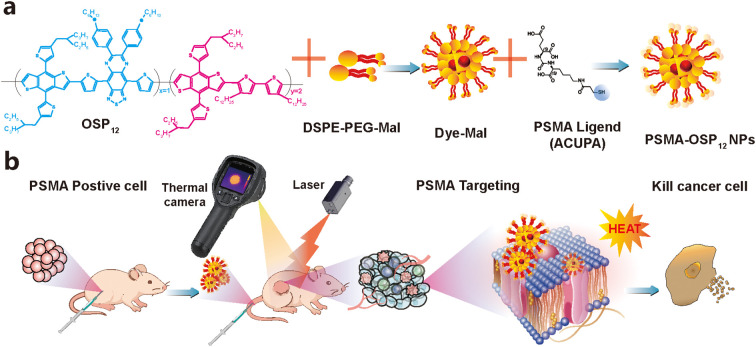 Figure 1
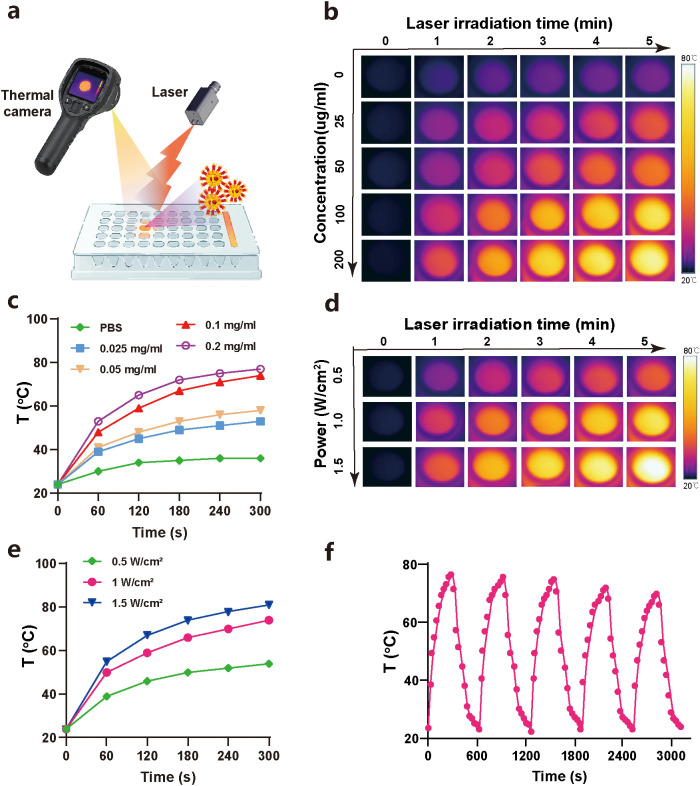 Figure 2
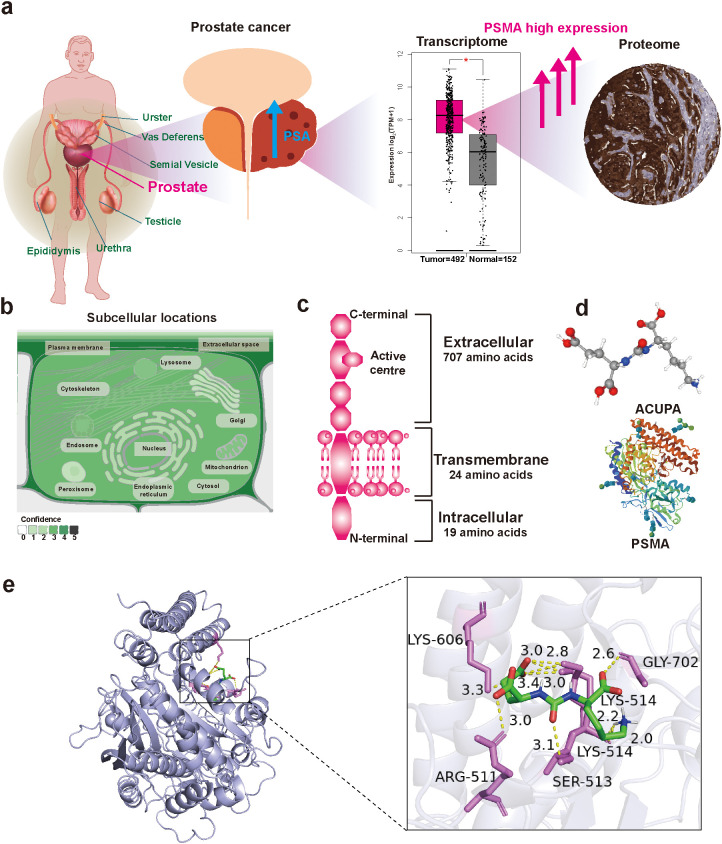 Figure 3
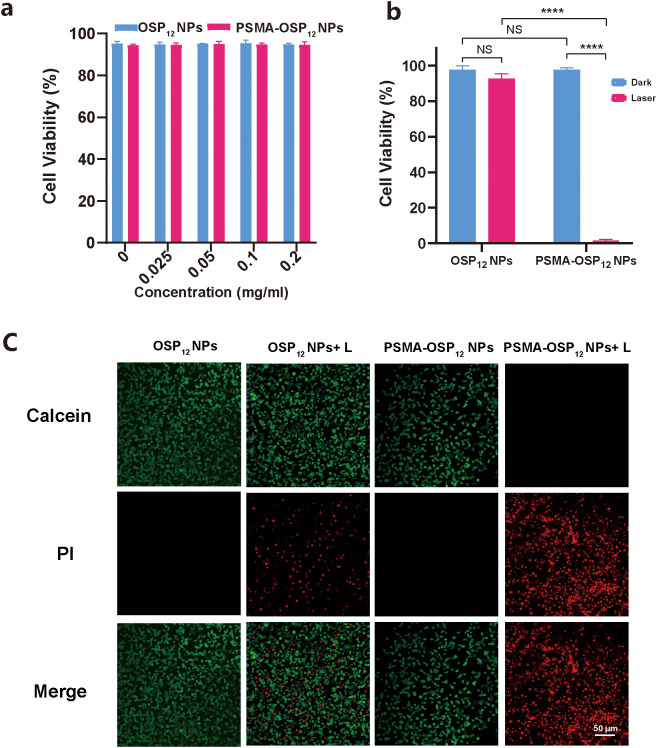 Figure 4
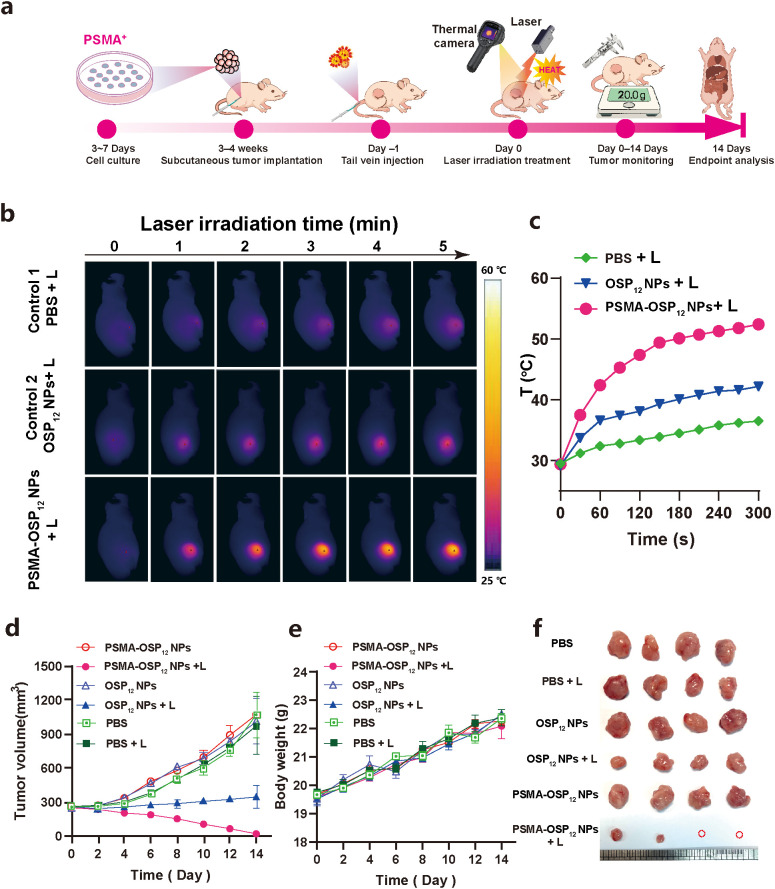 Figure 5
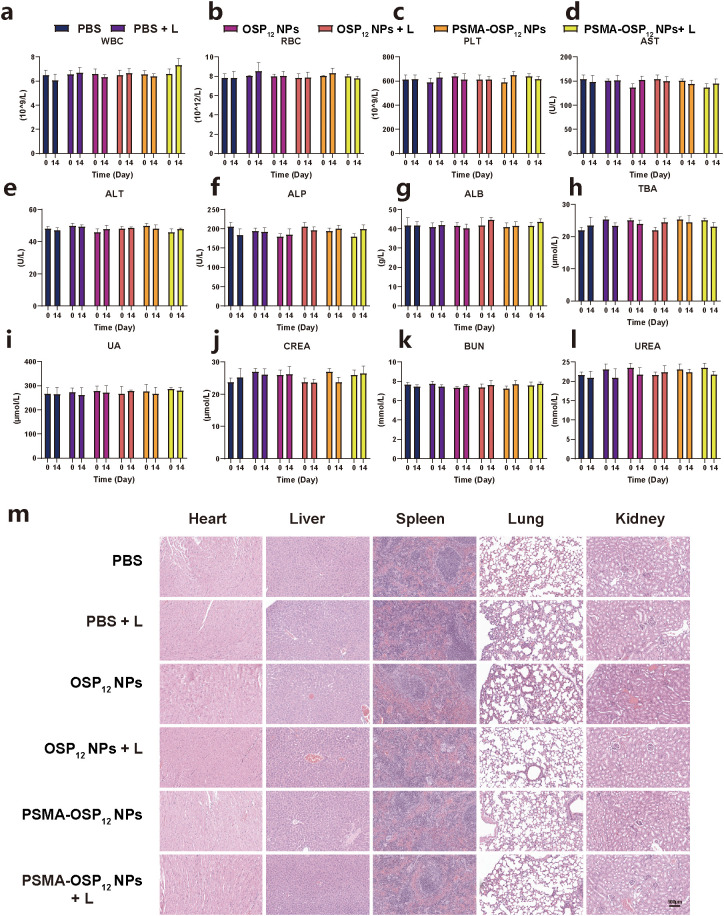 Figure 6
Peer Reviews
No public reviews on file for this paper yet. If you reviewed it on a platform where reviews are public (OpenReview, ICLR, NeurIPS, ICML), you can paste yours below so the community can read it here.
Videos
No videos yet. Explain this paper in a talk, walkthrough, or lecture? Add one.
Taxonomy
TopicsNanoplatforms for cancer theranostics · Nanoparticle-Based Drug Delivery · Hepatocellular Carcinoma Treatment and Prognosis