Drivers of Diagnostic Delay in Mitochondrial Disease: Missed Recognition of Canonical Features
Rory J. Tinker, Neil Jacob, Mohammad Ghouse Syed, Janhawi Kelkar, Colleen Donnelly, Ibrahim Elsharkawi, Jaya Ganesh, Bruce D. Gelb, Vikas Pejaver, Tamas Kozicz, Eva Morava

TL;DR
This study finds that most diagnostic delays in mitochondrial disease occur because doctors fail to recognize early symptoms, not due to testing limitations.
Contribution
The study identifies missed recognition of canonical features as a key driver of diagnostic delay in mitochondrial disease.
Findings
Most delays occurred between symptom onset and clinical suspicion (mean 8.17 years).
Delays decreased sharply with later birth and symptom-onset years.
Canonical features like seizures and stroke were documented years before diagnosis.
Abstract
Diagnostic delay is common in mitochondrial disease, and its drivers remain unclear despite advances in molecular diagnostics. We retrospectively analyzed 61 individuals with molecularly confirmed mitochondrial disease at the Mount Sinai Mitochondrial Disease Clinic, diagnosed after 2016. Diagnostic delay was partitioned into intervals from symptom onset to clinical suspicion, and from suspicion to molecular diagnosis. Demographic, phenotypic, and genetic data were abstracted from health records, and Human Phenotype Ontology terms were compared before and after diagnosis using ClinPhen. Most delays occurred between symptom onset and clinical suspicion (mean 8.17 years) rather than after suspicion (mean 1.28 years), yielding a mean total delay of 8.22 years (median 3.0). Delay decreased sharply by year of birth (r = −0.99, p < 49.92 × 10−39) and symptom onset (r = −0.96, p < 8.14 ×…
Genes, proteins, chemicals, diseases, species, mutations and cell lines named across the full text — each resolved to its canonical identifier and authoritative record.
Click any figure to enlarge with its caption.
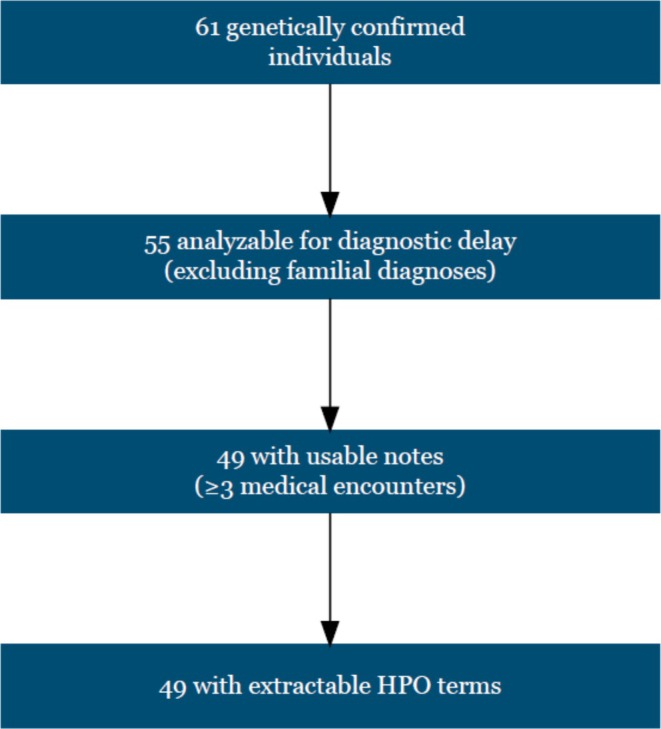 Figure 1
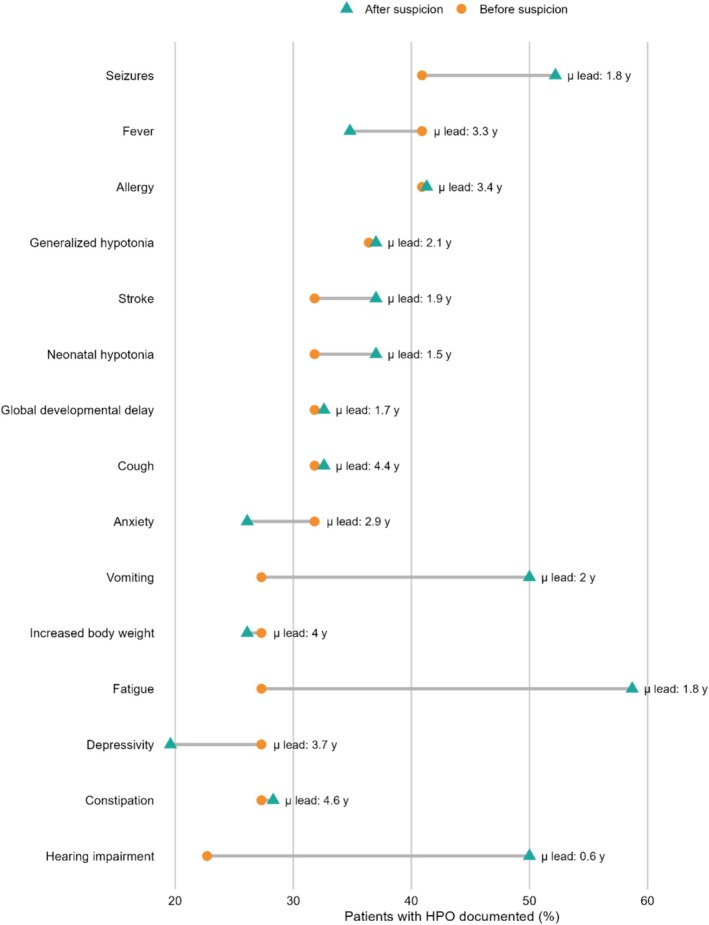 Figure 2
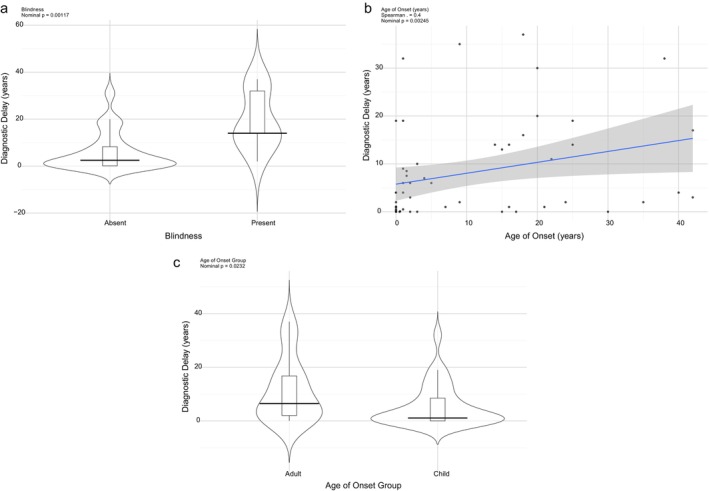 Figure 3
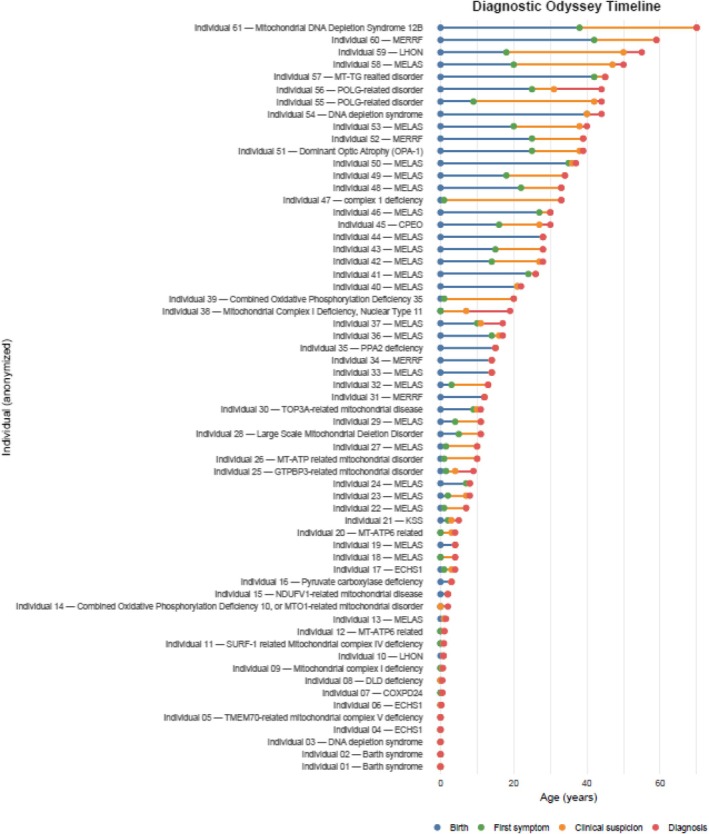 Figure 4
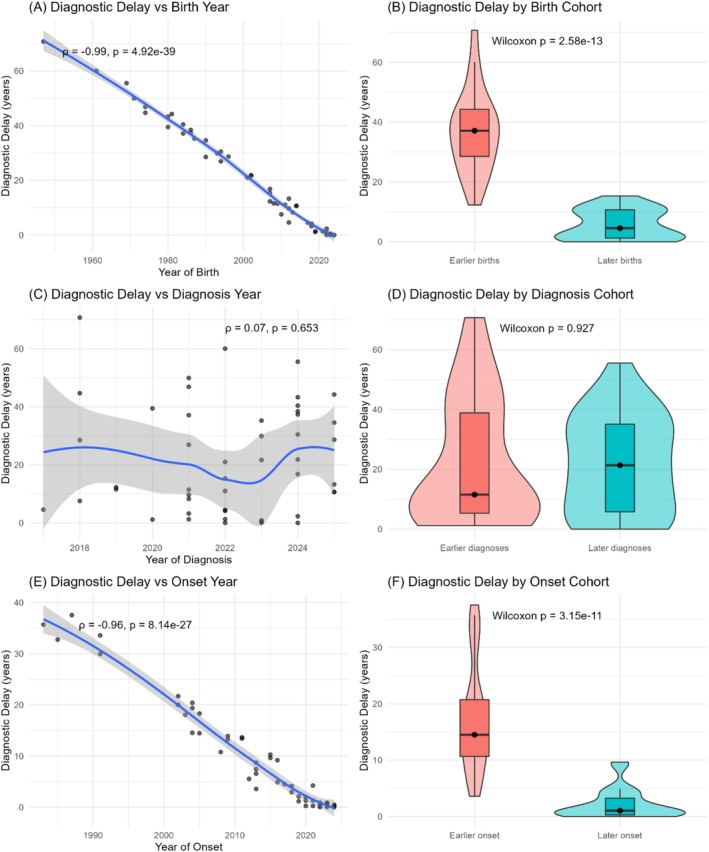 Figure 5
Peer Reviews
No public reviews on file for this paper yet. If you reviewed it on a platform where reviews are public (OpenReview, ICLR, NeurIPS, ICML), you can paste yours below so the community can read it here.
Videos
No videos yet. Explain this paper in a talk, walkthrough, or lecture? Add one.
Taxonomy
TopicsMitochondrial Function and Pathology · Genomics and Rare Diseases · Genetic Neurodegenerative Diseases