Endoscopic laser lithotripsy for a pancreaticojejunostomy stricture using a novel ultra-slim cholangiopancreatoscope via an endoscopic ultrasound-guided pancreatogastrostomy route
Kimi Bessho, Takeshi Ogura, Junichi Nakamura, Nga Nguyen Trong, Hiroki Nishikawa

Abstract
Genes, proteins, chemicals, diseases, species, mutations and cell lines named across the full text — each resolved to its canonical identifier and authoritative record.
Click any figure to enlarge with its caption.
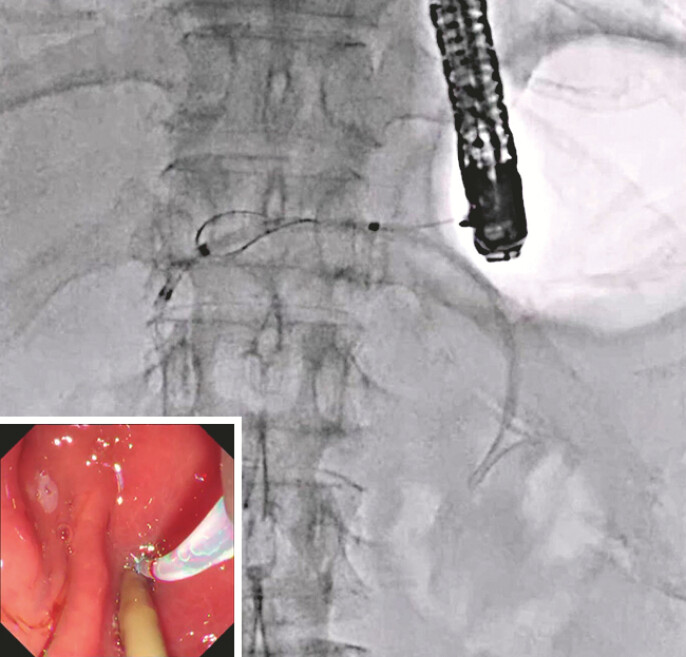 Fig. 1
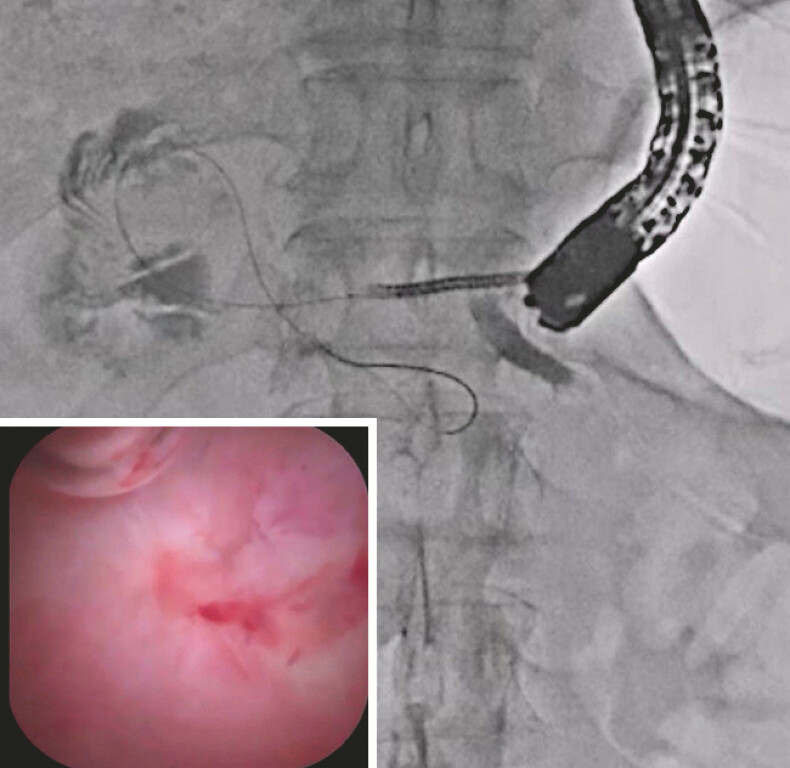 Fig. 2
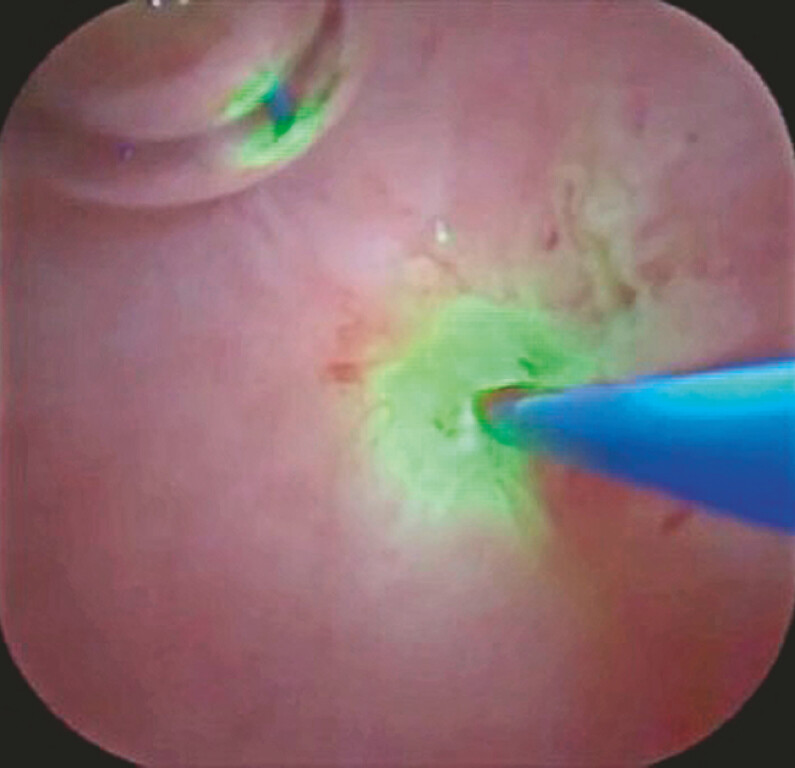 Fig. 3
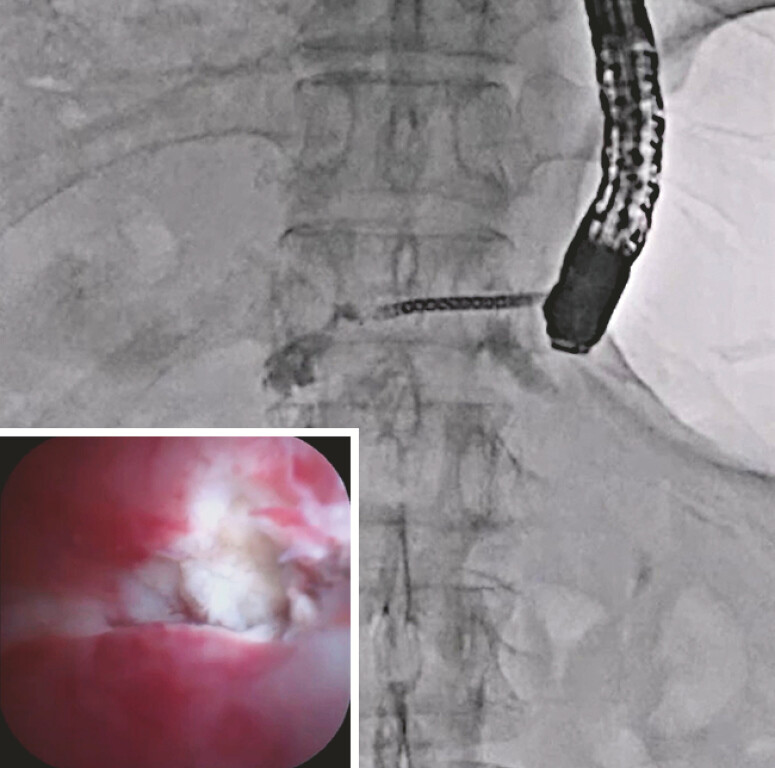 Fig. 4
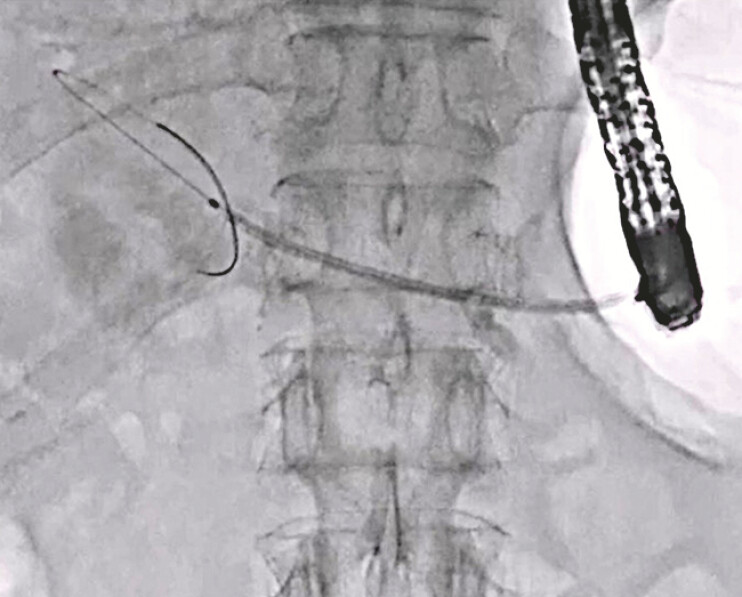 Fig. 5
Peer Reviews
No public reviews on file for this paper yet. If you reviewed it on a platform where reviews are public (OpenReview, ICLR, NeurIPS, ICML), you can paste yours below so the community can read it here.
Videos
No videos yet. Explain this paper in a talk, walkthrough, or lecture? Add one.
Taxonomy
TopicsGallbladder and Bile Duct Disorders · Pancreatic and Hepatic Oncology Research · Minimally Invasive Surgical Techniques
Endoscopic ultrasound-guided pancreaticogastrostomy (EUS-PD) is now attempted for failed endoscopic retrograde cholangiopancreatography (ERCP). After EUS-PD, antegrade procedures such as stone extraction and laser ablation can be tried. However, during antegrade procedures, a pancreatoscope must be inserted into the main pancreatic duct through an EUS-PD route. To insert the pancreatoscope, tract dilation techniques such as balloon dilation and metal stent deployment have been reported 1 2 . In cases of balloon dilation, however, the tract might rupture, and the cost of deploying a metal stent is high. To overcome this, an ultra-slim cholangiopancreatoscope with the unique characteristic of providing the working channel exit at the 3 o’clock position (7.8 Fr, Briview, SeeGen Co., Ltd, Shanghai, China) has become available. Technical tips for antegrade laser ablation of a pancreaticojejunostomy stricture (PJS) using this scope are described.
A 71-year-old man underwent pancreaticoduodenostomy due to pancreatic cancer 1 year earlier. He developed frequent pancreatitis due to a PJS and was therefore admitted to our hospital. First, he underwent EUS-PD using a 7-Fr plastic stent without any adverse events. Two weeks later, antegrade treatment was attempted for the PJS. First, a 0.025-inch guidewire was deployed along the plastic stent ( Fig. 1 ), and the stent was removed. Then, novel pancreatoscope insertion was attempted without tract dilation, and it was successfully inserted into the main pancreatic duct ( Fig. 2 ). The PJS was then identified. Because the probe was extracted from the 3 o’clock position, laser ablation for the PJS could be easily performed without mucosal injury ( Fig. 3 ). After antegrade laser ablation, stricture resolution was obtained ( Fig. 4 ). Finally, a plastic stent was deployed without any adverse events ( Fig. 5 , Video 1 ). This patient underwent stent removal after 3 months, with no stricture recurrence observed during the clinical follow-up.
A 0.025-inch guidewire is deployed along the plastic stent.
Novel pancreatoscope insertion is attempted without tract dilation, and it is successfully inserted into the main pancreatic duct.
Laser ablation for the pancreaticojejunostomy stricture can be easily performed without mucosal injury.
After antegrade laser ablation, stricture resolution is obtained.
A plastic stent is deployed without any adverse events.
Novel pancreatoscope insertion is attempted without tract dilation, and it is successfully inserted into the main pancreatic duct.Video 1
In conclusion, an antegrade procedure using this slim pancreatoscope may be useful because tract dilation is not needed.
Endoscopy_UCTN_Code_TTT_1AS_2AI
The reference list from the paper itself. Each links out to its DOI / PubMed record.
- 1Ogura T Ohama H Higuchi K Endoscopic Ultrasound-Guided Pancreatic Transmural Stenting and Transmural Intervention Clin Endosc 20205342943510.5946/ce.2019.13031771320 PMC 7403024 · doi ↗ · pubmed ↗
- 2Samanta J Chatterjee A Dhar J Endoscopic ultrasound-guided pancreatic duct drainage: a comprehensive state of the art review Expert Rev Gastroenterol Hepatol 20241835136510.1080/17474124.2024.238363139041336 · doi ↗ · pubmed ↗