Relationship of Plasma p‐tau217 and Mild Behavioral Impairment in Elderly Individuals Without Dementia
Ana Paula Bernardes Real, Arthur C. Macedo, Wyllians Vendramini Borelli, Tevy Chan, Nesrine Rahmouni, Seyyed Ali Hosseini, Etienne Aumont, Joseph Therriault, Gleb Bezgin, Wan Lu Jia, Brandon J Hall, Stuart William Mitchell, Jenna Stevenson, Lydia Trudel, Anna Marier

TL;DR
This study explores how plasma p-tau217 levels relate to behavioral changes in older adults without dementia, finding some links but highlighting the bigger role of cognitive decline.
Contribution
The study is the first to investigate plasma p-tau217 as a biomarker for Mild Behavioral Impairment in non-demented elderly individuals.
Findings
Higher plasma p-tau217 levels were associated with increased emotion dysregulation and impulse dyscontrol in older adults.
Cognitive status was found to be a stronger predictor of Mild Behavioral Impairment than plasma p-tau217 levels.
The relationship between p-tau217 and behavioral symptoms disappeared when accounting for cognitive decline.
Abstract
Mild Behavioral Impairment (MBI) involves the late‐onset, sustained emergence of neuropsychiatric symptoms (NPS) in predementia populations. Prior studies examining amyloid and tau PET in relation to MBI have shown a link to amyloid burden but not to tau. However, the role of plasma biomarkers in MBI remains uncertain. In this study, we aimed to determine whether MBI is associated with plasma p‐tau217 levels in older adults without dementia. We included 168 older adults (136 cognitively unimpaired [CU] and 32 with mild cognitive impairment [MCI] ) from the TRIAD cohort. Participants had amyloid status assessed by [18F]AZD4694 Aβ‐PET. Plasma p‐tau217 levels were quantified using the Janssen Simoa Assay. MBI was assessed using the Mild Behavioral Impairment Checklist (MBI‐C), global cognition was measured with the Mini‐Mental State Examination (MMSE) and the sum of boxes of the Clinical…
Genes, proteins, chemicals, diseases, species, mutations and cell lines named across the full text — each resolved to its canonical identifier and authoritative record.
Click any figure to enlarge with its caption.
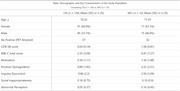 Figure 1
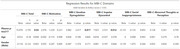 Figure 2
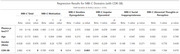 Figure 3
Peer Reviews
No public reviews on file for this paper yet. If you reviewed it on a platform where reviews are public (OpenReview, ICLR, NeurIPS, ICML), you can paste yours below so the community can read it here.
Videos
No videos yet. Explain this paper in a talk, walkthrough, or lecture? Add one.
Taxonomy
TopicsDementia and Cognitive Impairment Research · Cognitive Functions and Memory · Phosphodiesterase function and regulation