Discordance between CSF amyloid beta and PET‐derived amyloid status and its clinical implications
Gemma Natalie Wright, James Neil Dodds, Rifa Sanjida Punnota, Roberto Vicidomini, Paul Edison

TL;DR
The study finds a 10.5% discordance between CSF amyloid and PET amyloid results in Alzheimer's patients, suggesting different tau levels and possible alternative pathology.
Contribution
Quantifies the discordance rate between CSF and PET amyloid measures and links it to lower tau levels in discordant patients.
Findings
10.5% of patients showed discordance between CSF Aβ42:40 and PET amyloid status.
Discordant patients had significantly lower pTau181 and total Tau levels compared to concordant patients.
Results suggest alternative pathological processes may be at play in discordant Alzheimer's patients.
Abstract
There has been a recent focus within Alzheimer's Disease (AD) research on potential CSF biomarkers as diagnostic tools. PET imaging and CSF biomarkers have been used to determine the amyloid status of individuals when characterising AD. While these measures have largely correlated with each other, it is also suggested that there could be patients who can have discordant results. However, it is still unclear what proportion of AD subjects demonstrate the discordance. Additionally, whether these changes are associated with different pathological and clinical characteristics of the patients. Here, we investigated the discordance between CSF Aβ42:40 and amyloid status and evaluated whether there are any significant changes in their levels of tau aggregation. 313 participants’ data were selected from the ADNI database. The cutoff for Aβ42:40 was then calculated using the Youden Index…
Genes, proteins, chemicals, diseases, species, mutations and cell lines named across the full text — each resolved to its canonical identifier and authoritative record.
Click any figure to enlarge with its caption.
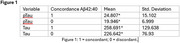 Figure 1
Peer Reviews
No public reviews on file for this paper yet. If you reviewed it on a platform where reviews are public (OpenReview, ICLR, NeurIPS, ICML), you can paste yours below so the community can read it here.
Videos
No videos yet. Explain this paper in a talk, walkthrough, or lecture? Add one.
Taxonomy
TopicsDementia and Cognitive Impairment Research · Alzheimer's disease research and treatments · Amyotrophic Lateral Sclerosis Research