Assessing Braak stage agreement between four Tau PET tracers
Andreia Rocha, Bruna Bellaver, Carolina Soares, Pamela C.L. Ferreira, Emma Ruppert, Marina Scop Madeiros, Guilherme Povala, Livia Amaral, Guilherme Bauer‐Negrini, Firoza Z Lussier, Matheus Scarpatto Rodrigues, Rayan Mroué, Joseph C. Masdeu, Dana L Tudorascu

TL;DR
This study compares how four different tau PET tracers agree on Braak staging in Alzheimer's disease, finding that while they are similar on average, they can give different results in individual cases.
Contribution
The study reveals tracer-specific variability in Braak staging using PET imaging, impacting clinical interpretation and comparison.
Findings
Braak stage trajectories differ by tracer, with Flortaucipir showing earliest abnormality in Braak IV, unlike others.
Concordance between tracers peaks at ~70%, mainly at Braak 0 or IV-V, with low agreement at intermediate stages.
Bland-Altman analysis shows small mean differences but wide limits of agreement, indicating high variability between tracers.
Abstract
The Alzheimer's disease (AD) Braak staging is a key framework for classifying tau pathology progression in AD based on histopathological post‐mortem brain examinations. However, adapting it to PET imaging can be challenging due to differences in tracer uptake patterns and binding properties, which affect sensitivity, specificity, and regional staging. This study compares Braak staging across four tau PET tracers: Flortaucipir, MK6240, PI2620, and RO948. We assessed 90 participants across the AD spectrum (46 CU, 31 MCI, 13 dementia; mean age 66.1 ± 7.8) using Aβ PET and four tau PET tracers: (Flortaucipir, MK6240, PI2620, and RO948). Braak positivity was defined based on Aβ− CU individuals (mean +2.5 SD, SUVR). To evaluate systematic bias and agreement between tracers, we computed pairwise differences at corresponding Braak stage estimates and applied the Bland‐Altman method to assess…
Genes, proteins, chemicals, diseases, species, mutations and cell lines named across the full text — each resolved to its canonical identifier and authoritative record.
Click any figure to enlarge with its caption.
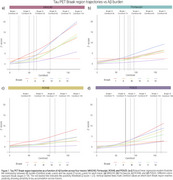 Figure 1
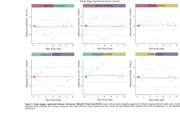 Figure 2
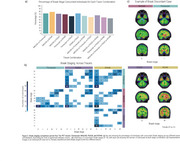 Figure 3
Peer Reviews
No public reviews on file for this paper yet. If you reviewed it on a platform where reviews are public (OpenReview, ICLR, NeurIPS, ICML), you can paste yours below so the community can read it here.
Videos
No videos yet. Explain this paper in a talk, walkthrough, or lecture? Add one.
Taxonomy
TopicsDementia and Cognitive Impairment Research · Functional Brain Connectivity Studies · Alzheimer's disease research and treatments