Hf/Zr Superlattice-Based High‑κ Gate Dielectrics with Dipole Layer Engineering for Advanced CMOS
Taeyoung Song, Sanghyun Kang, Yu-Hsin Kuo, Jiayi Chen, Lance Fernandes, Nashrah Afroze, Mengkun Tian, Hyoung Won Baac, Changhwan Shin, Asif Islam Khan

TL;DR
This paper introduces a new Hf/Zr-based gate dielectric that enables advanced transistors by achieving ultra-thin oxide thickness and reliable performance.
Contribution
HZHA superlattices with embedded Al2O3 dipoles enable subnanometer EOT and multi-Vth tuning while maintaining stability.
Findings
HZH superlattices achieve 7.3 Å EOT after high-temperature annealing with low leakage.
HZHA stacks provide 8.4 Å EOT and >200 mV VFB shift for multi-Vth design.
HZHA and HA stacks show similar VFB drift under stress, confirming stability.
Abstract
Advanced logic transistors require gate dielectrics that achieve subnanometer equivalent oxide thickness (EOT), suppress leakage, and satisfy three key requirements: (i) compatibility with RMG-like high-temperature processing, (ii) sufficient V th tunability for multi-V th design, and (iii) high device reliability. However, meeting all of these requirements at once has been difficult with conventional high-κ systems. In this work, we demonstrate that our Hf/Zr-based gate stacks quantitatively satisfy these conditions. (i) After a 700 °C N2 anneal, the HZH superlattice achieves EOT = 7.3 Å, lower than conventional HfO2-only stacks (8.5 Å) while maintaining comparable leakage. (ii) Embedding a 3 Å Al2O3 dipole within the HfO2/ZrO2/HfO2 superlattice (HZHA) breaks the conventional dipole trade-off, achieving an 8.4 Å EOTlower than the 9.0 Å of a standard HfO2/Al2O3 stackwhile providing a…
Genes, proteins, chemicals, diseases, species, mutations and cell lines named across the full text — each resolved to its canonical identifier and authoritative record.
Click any figure to enlarge with its caption.
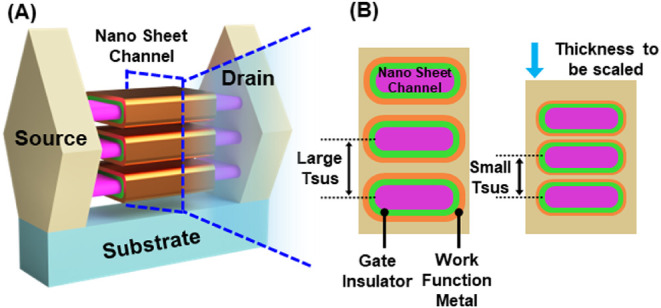 Figure 1
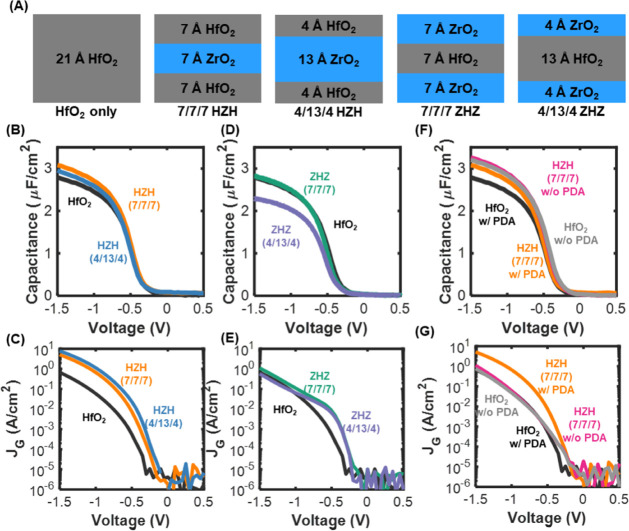 Figure 2
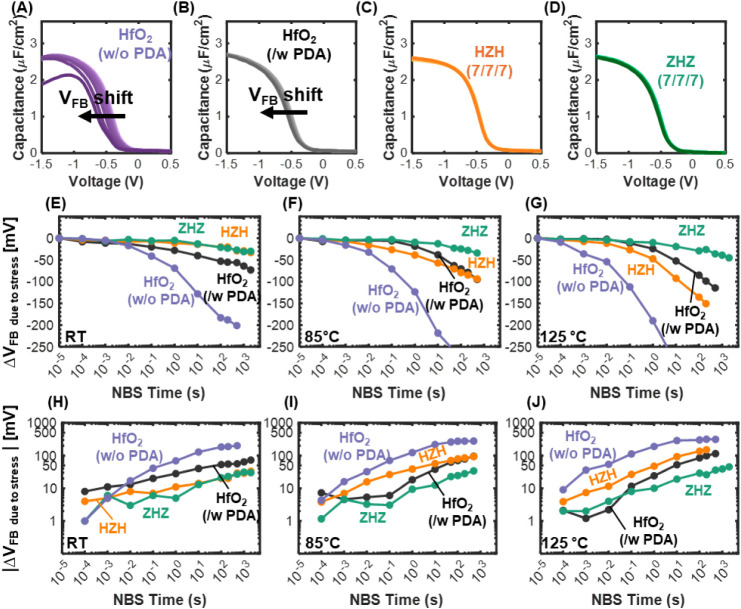 Figure 3
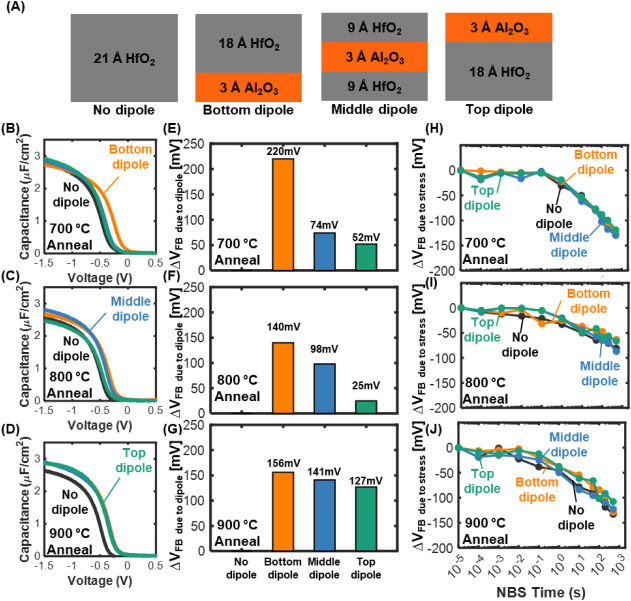 Figure 4
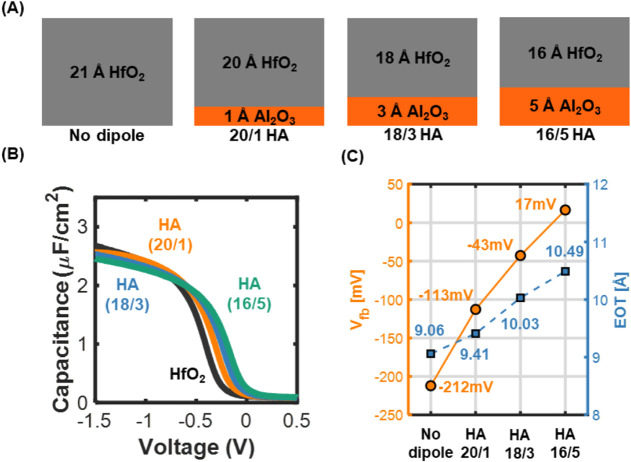 Figure 5
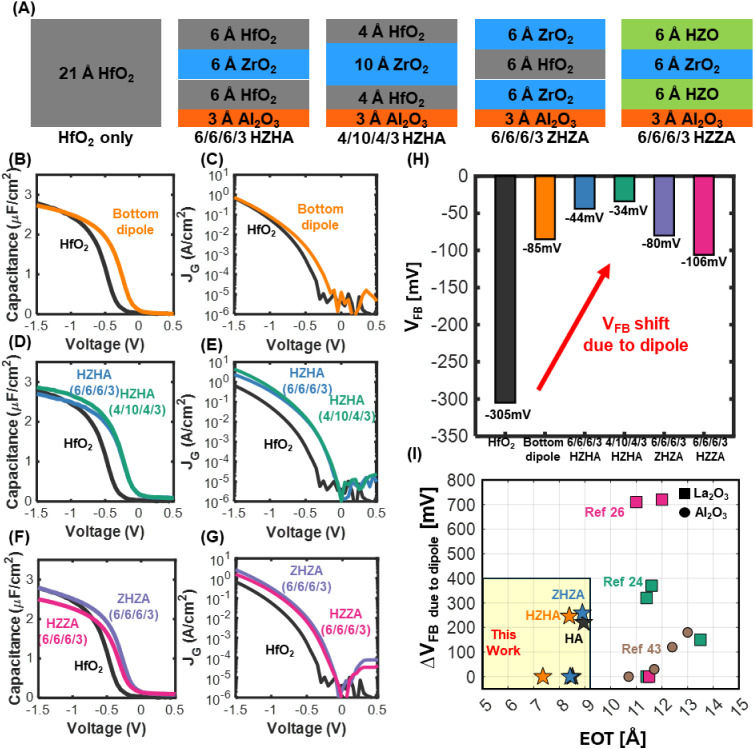 Figure 6
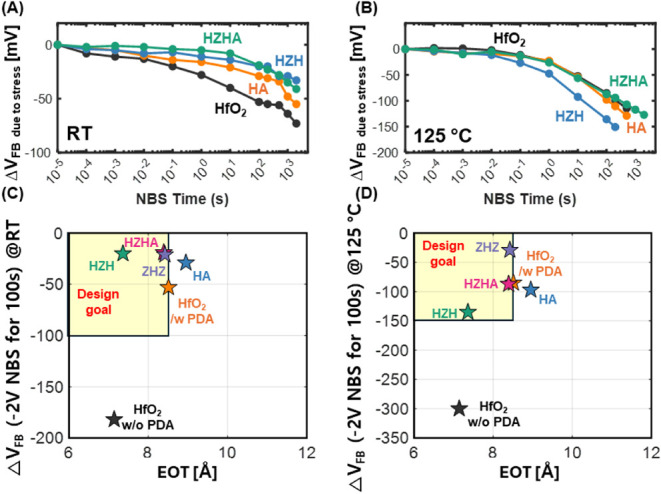 Figure 7
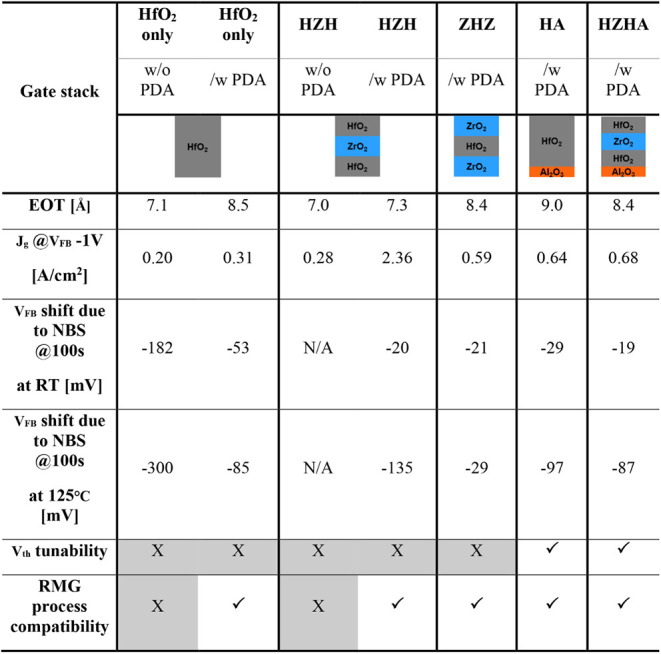 Figure 8
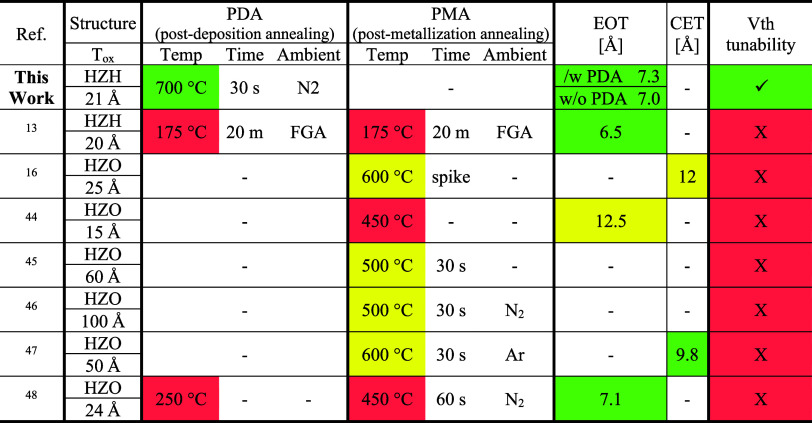 Figure 9
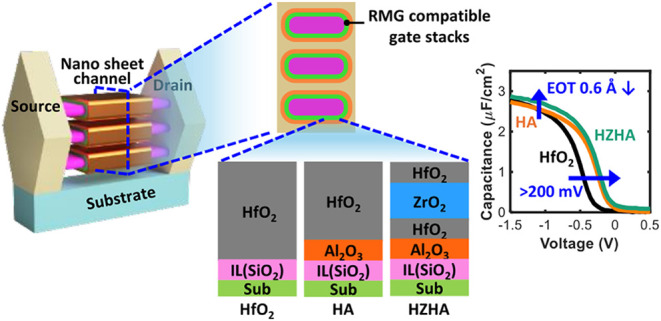 Figure 10
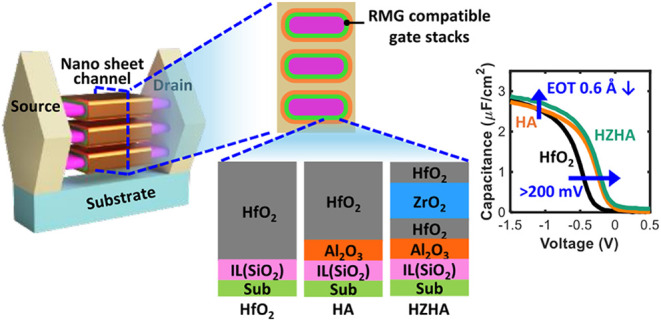 Figure 11
Peer Reviews
No public reviews on file for this paper yet. If you reviewed it on a platform where reviews are public (OpenReview, ICLR, NeurIPS, ICML), you can paste yours below so the community can read it here.
Videos
No videos yet. Explain this paper in a talk, walkthrough, or lecture? Add one.
Taxonomy
TopicsSemiconductor materials and devices · Ferroelectric and Negative Capacitance Devices · Advancements in Semiconductor Devices and Circuit Design