Computational Modeling and Self-Assembly Synthesis of Borazine-Based Free-Standing Molecular-Thin Films
Dario Calvani, Andy Jiao, Thomas J.F. Kock, Maxime A. Siegler, Karthick Babu Sai Sankar Gupta, Dmitri V. Filippov, Huub J. M. de Groot, G. J. Agur Sevink, Grégory F. Schneider, Francesco Buda

TL;DR
Researchers developed a method to create borazine-based thin films using computational modeling and experimental techniques, enabling the formation of free-standing molecular-thin films.
Contribution
A dual theoretical and experimental protocol for synthesizing borazine-based thin films, validated by successful free-standing film formation.
Findings
π–π stacking interactions drive bilayer film formation with 2.1 nm thickness.
The Langmuir–Blodgett technique successfully fabricated free-standing films spanning 0.6 μm diameter holes.
The film retains hexagonal-based π–π stacking and crystal-like features of borazine.
Abstract
Boron-nitride-rich organic thin materials based on borazines have gained significant attention for their potential in nano(opto)electronic and energy storage devices. We address synthetic challenges in producing effective borazine-based thin films by proposing a dual theoretical and experimental protocol. This combines a multiscale computational approach, using density functional theory and classical molecular dynamics, with synthesis and thin-film formation via the Langmuir–Blodgett technique. The computational modeling focuses on three key properties: π–π stacking interactions, molecular steric hindrance, and dynamic self-assembly orientation. This modeling guided the selection of a borazine molecular building block and enabled the successful experimental formation of a free-standing molecular-thin borazine-based film. Solely π–π stacking interactions were found to drive the…
Genes, proteins, chemicals, diseases, species, mutations and cell lines named across the full text — each resolved to its canonical identifier and authoritative record.
Click any figure to enlarge with its caption.
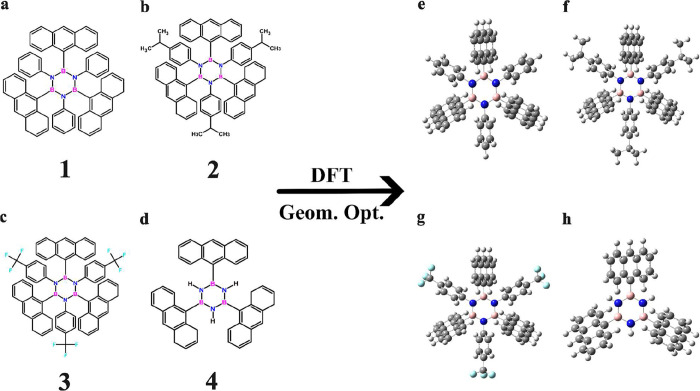 Figure 1
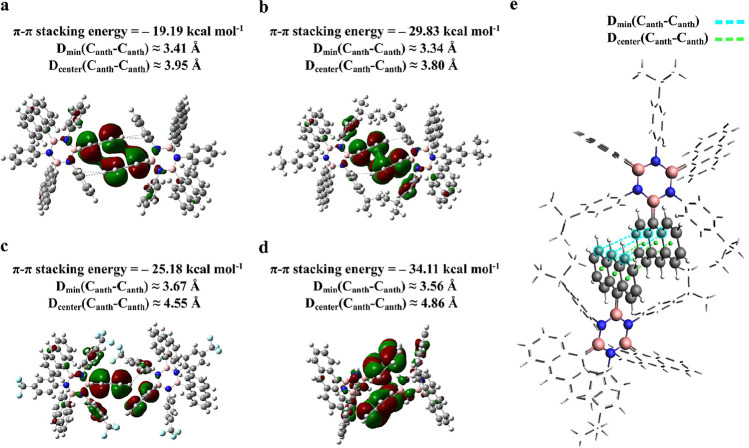 Figure 2
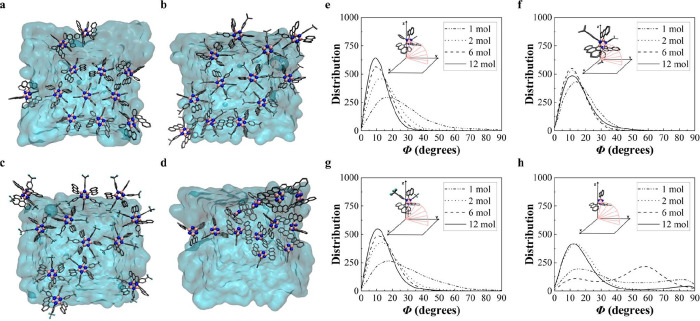 Figure 3
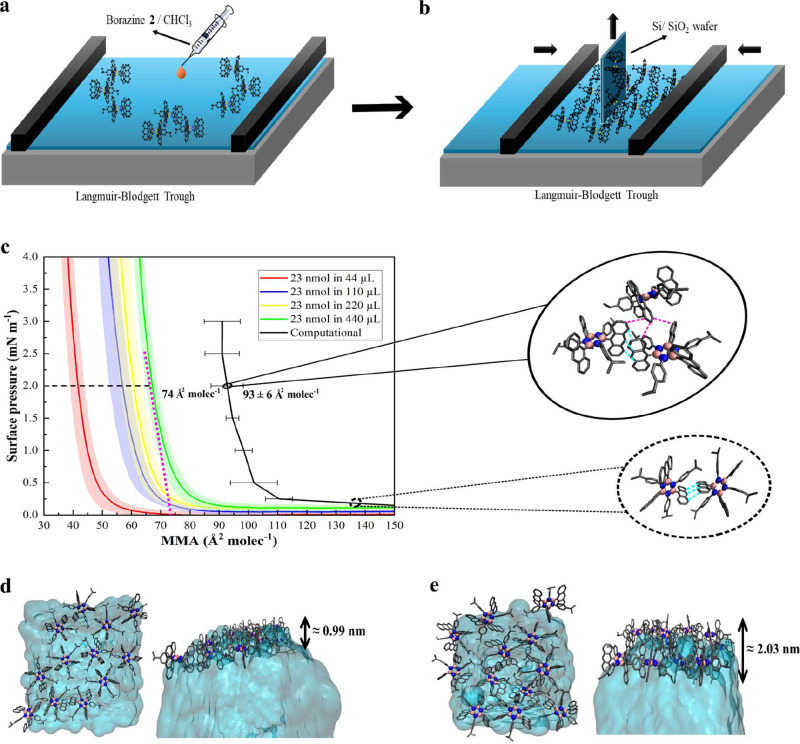 Figure 4
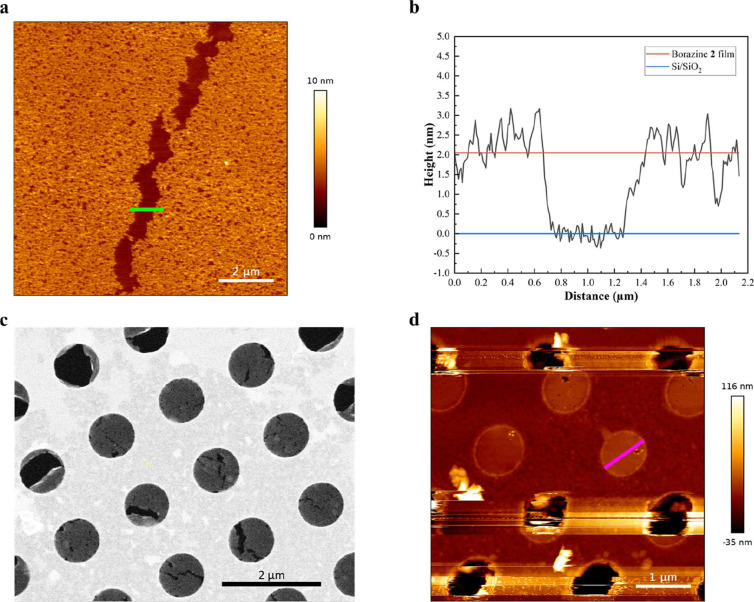 Figure 5
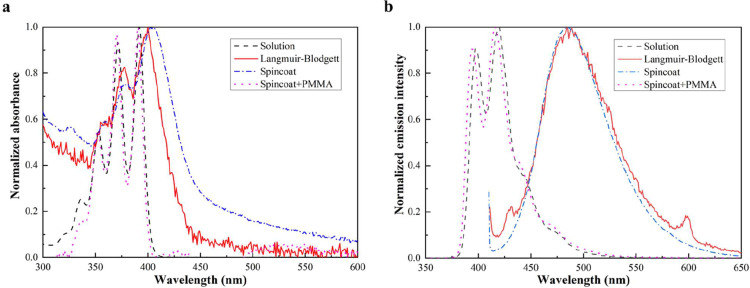 Figure 6
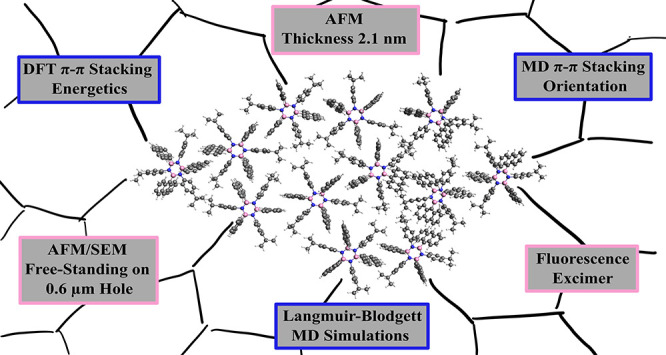 Figure 7
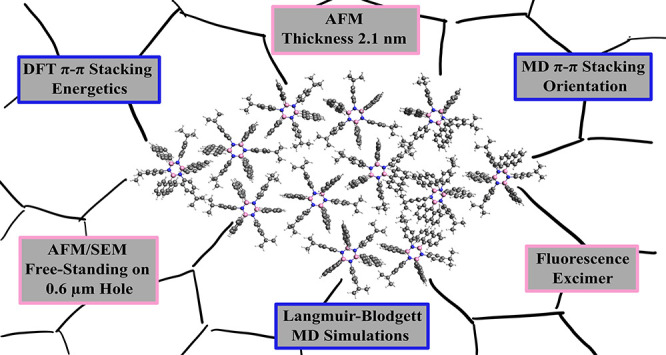 Figure 8
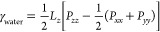 Figure 9
 Figure 10
Peer Reviews
No public reviews on file for this paper yet. If you reviewed it on a platform where reviews are public (OpenReview, ICLR, NeurIPS, ICML), you can paste yours below so the community can read it here.
Videos
No videos yet. Explain this paper in a talk, walkthrough, or lecture? Add one.
Taxonomy
TopicsSurface Chemistry and Catalysis · Covalent Organic Framework Applications · Synthesis and Properties of Aromatic Compounds