Charge Regulation Enables Uptake of Ampholytes to Polyelectrolyte Brushes
Roman Staňo, Peter Košovan

TL;DR
The paper explains how ampholytes can be taken up into polyelectrolyte brushes even when they are negatively charged in the bulk, due to charge regulation and pH differences.
Contribution
The study introduces a phenomenological model to estimate ampholyte uptake based on experimentally accessible parameters.
Findings
Charge regulation enables uptake of ampholytes on the 'wrong' side of the isoelectric point via charge inversion.
The effect is strongest for ampholytes with small pKa differences and decreases with increasing salt concentration.
Explicit simulations are needed to capture deviations from the model for complex ampholytes like patterned peptides.
Abstract
Uptake of proteins and ampholytic solutes into polyelectrolyte brushes underlies some biological processes and also applications in sensing or biomedicine. Especially uptake on the “wrong” side of the isoelectric point (pI) remains puzzling, with charge regulation and solute patchiness proposed as possible mechanisms. Using a hierarchy of approximations, coarse-grained molecular simulations, self-consistent mean-field, and a simple phenomenological model, we investigated the uptake of model ampholytic solutes into polyanionic brushes across varying pH, salt concentrations, pK a values, and peptide sequences. In a narrow pH range on the wrong side of pI, charge regulation enables uptake of the ampholytes by inducing charge inversion so that they become positively charged in the brush despite being negatively charged in the bulk. This charge inversion can be calculated from the pH…
Genes, proteins, chemicals, diseases, species, mutations and cell lines named across the full text — each resolved to its canonical identifier and authoritative record.
Click any figure to enlarge with its caption.
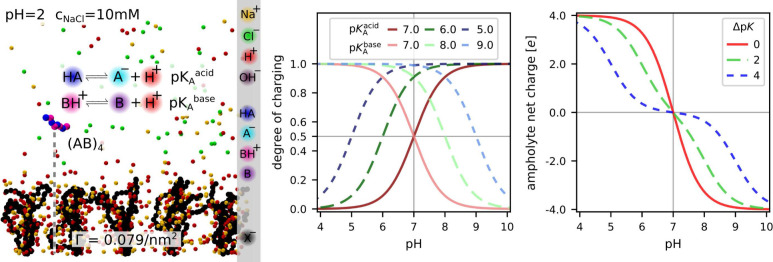 Figure 1
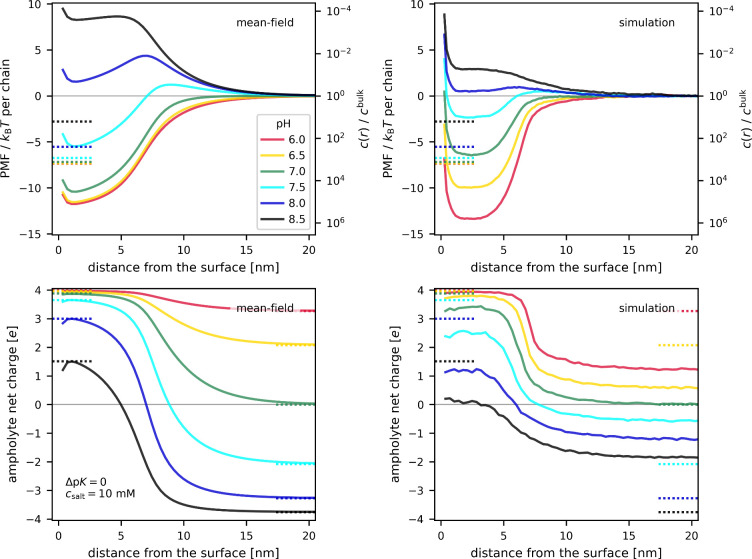 Figure 2
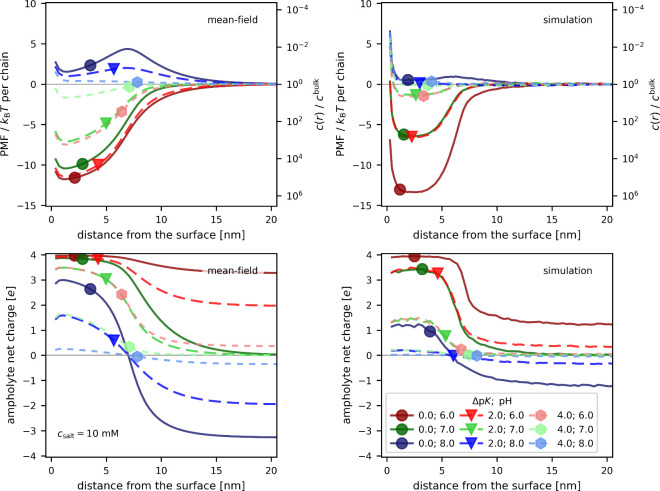 Figure 3
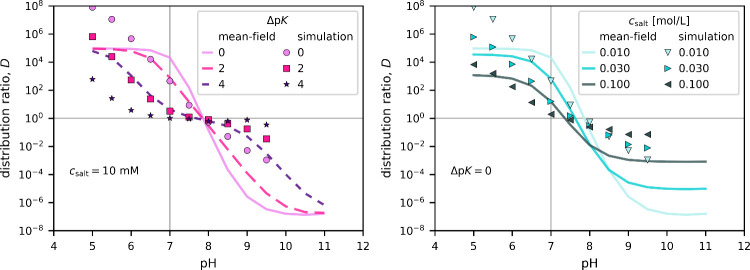 Figure 4
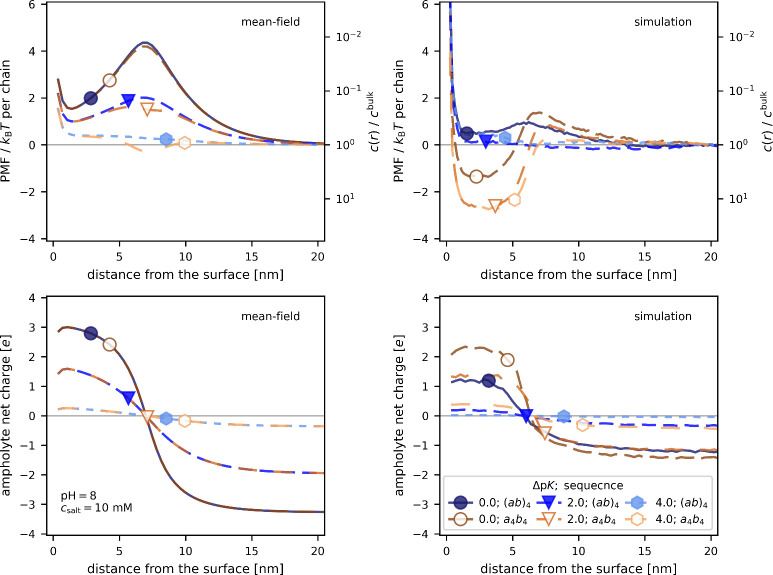 Figure 5
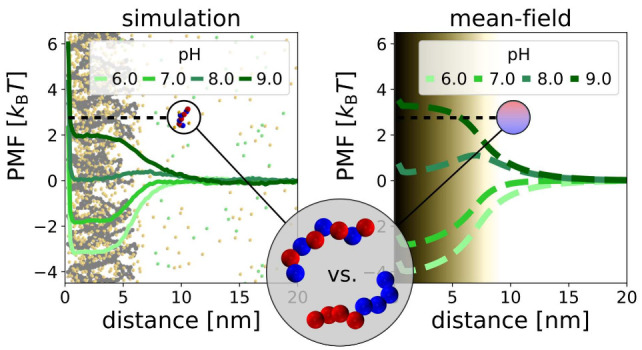 Figure 6
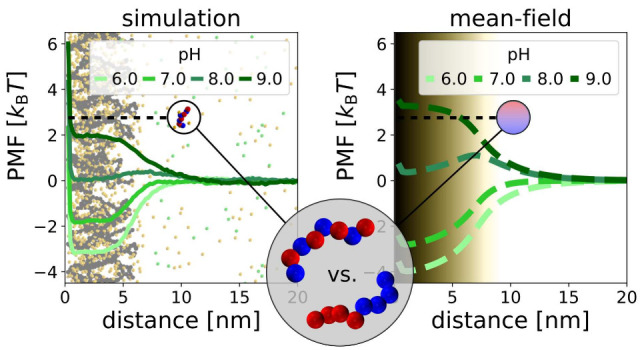 Figure 7
 Figure 8
 Figure 9
 Figure 10
 Figure 11
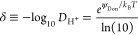 Figure 12
 Figure 13
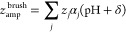 Figure 14
 Figure 15
 Figure 16
Peer Reviews
No public reviews on file for this paper yet. If you reviewed it on a platform where reviews are public (OpenReview, ICLR, NeurIPS, ICML), you can paste yours below so the community can read it here.
Videos
No videos yet. Explain this paper in a talk, walkthrough, or lecture? Add one.
Taxonomy
TopicsPolymer Surface Interaction Studies · Electrostatics and Colloid Interactions · Nanopore and Nanochannel Transport Studies