In Situ 4D STEM of LiNiO2 Particles Heated in an Oxygen Atmosphere: Toward Investigation of Solid‐State Batteries Under Realistic Processing Conditions
Thomas Demuth, Shamail Ahmed, Philipp Kurzhals, Johannes Haust, Jürgen Belz, Andreas Beyer, Jürgen Janek, Kerstin Volz

TL;DR
This study uses in situ electron microscopy to observe how LiNiO2 particles degrade when heated in oxygen, relevant for improving solid-state battery materials.
Contribution
A new in situ heating protocol for studying cathode materials under realistic oxygen-rich conditions is developed and applied to LiNiO2.
Findings
LiNiO2 degrades at ~350°C in oxygen, transitioning to a NiO-type rock-salt phase.
Degradation onset is higher in oxygen than in vacuum, showing the importance of atmosphere in processing.
A sample preparation and experimental setup protocol is established for in situ heating in oxygen.
Abstract
Cathode active material (CAM) particles and solid electrolyte (SE) – CAM composites for solid‐state batteries (SSBs) are often subjected to elevated temperatures during annealing or co‐sintering. This thermal treatment can affect the material's structure and induce degradation processes, particularly at the SE – CAM interface. To better understand these phenomena and improve material stability and performance, investigations by (scanning) transmission electron microscopy ((S)TEM) under realistic processing conditions, i.e., in an oxygen atmosphere, are desirable. However, preparing electron‐transparent TEM lamellae of SE – CAM composites with intact interfaces is highly challenging. Therefore, an in situ heating methodology is first established using LiNiO2 (LNO) particles as a model system. In this study, the morphological and structural evolution of thinned LNO particles during…
Genes, proteins, chemicals, diseases, species, mutations and cell lines named across the full text — each resolved to its canonical identifier and authoritative record.
Click any figure to enlarge with its caption.
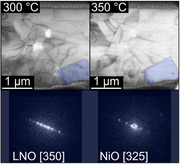 Figure 1
 Figure 2
 Figure 3
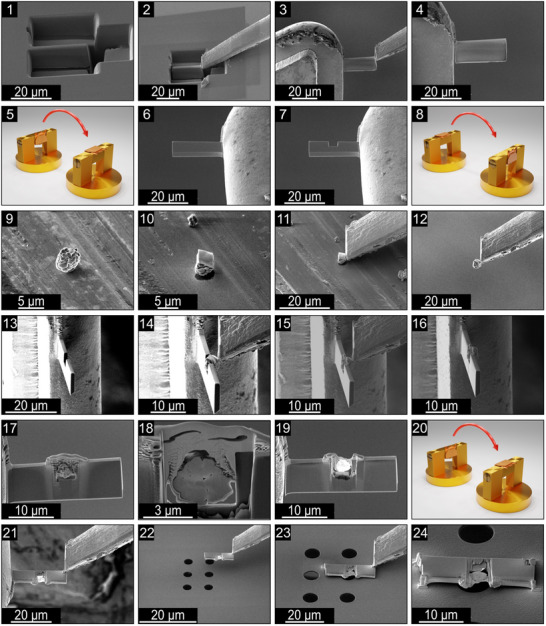 Figure 4
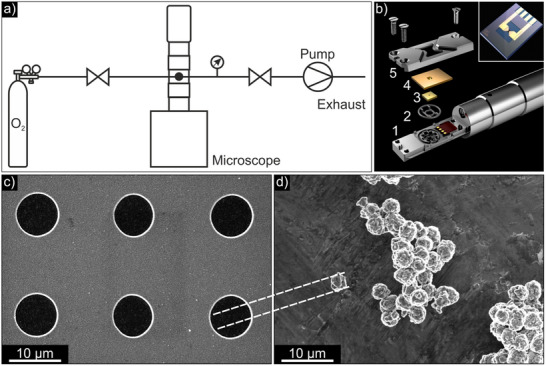 Figure 5
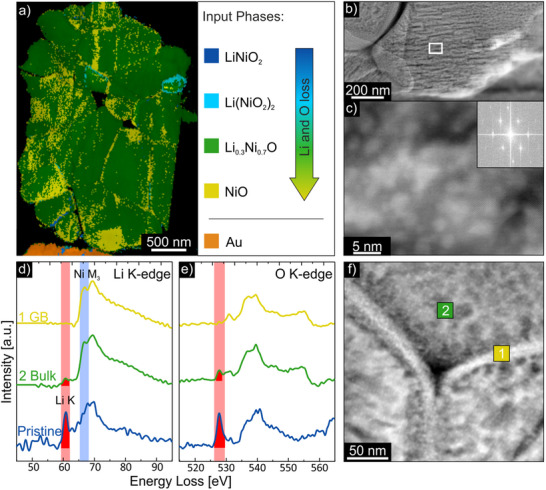 Figure 6
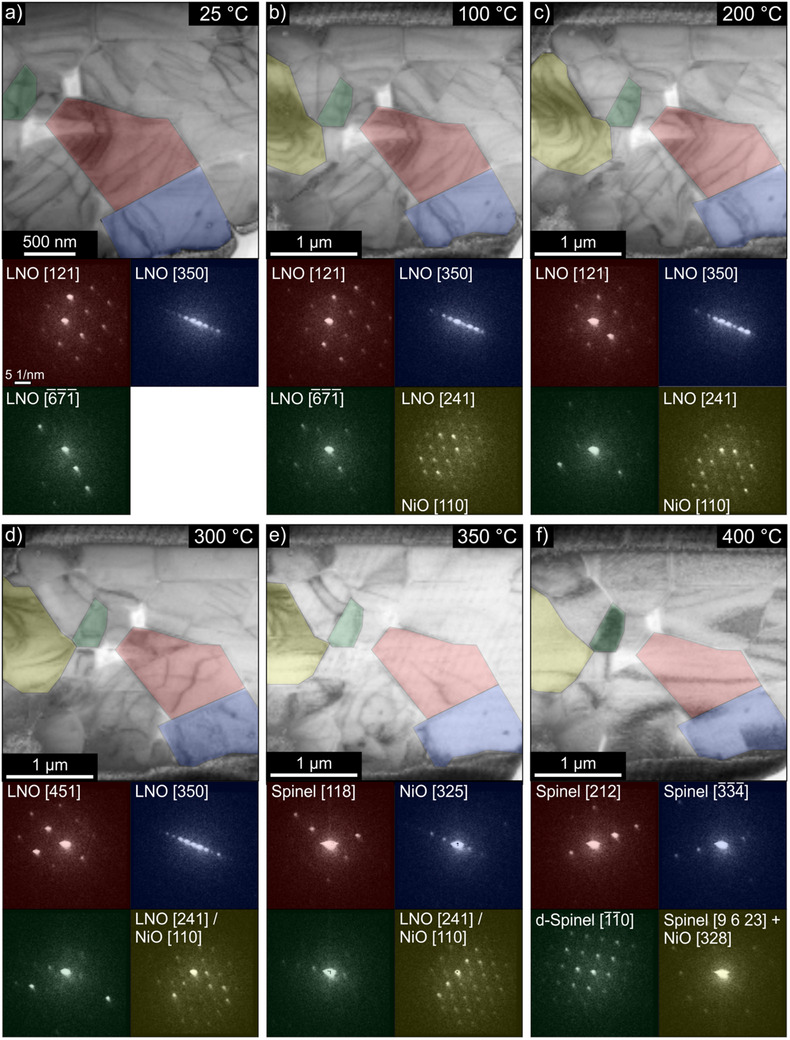 Figure 7
Peer Reviews
No public reviews on file for this paper yet. If you reviewed it on a platform where reviews are public (OpenReview, ICLR, NeurIPS, ICML), you can paste yours below so the community can read it here.
Videos
No videos yet. Explain this paper in a talk, walkthrough, or lecture? Add one.
Taxonomy
TopicsAdvancements in Battery Materials · Advanced Battery Materials and Technologies · Advanced Battery Technologies Research