A comprehensive view on r-protein binding and rRNA domain structuring during early eukaryotic ribosome formation
Magdalena Gerhalter, Michael Prattes, Lorenz Emanuel Grundmann, Irina Grishkovskaya, Enrico F Semeraro, Gertrude Zisser, Harald Kotisch, Juliane Merl-Pham, Stefanie M Hauck, David Haselbach, Helmut Bergler

TL;DR
This study explores how ribosomal proteins and RNA domains organize during early ribosome formation in eukaryotes, revealing a complex and non-linear assembly process.
Contribution
The study provides novel insights into the role of the foot structure and r-protein binding during early ribosome assembly in eukaryotes.
Findings
Compaction of domain I of the 25S rRNA depends on the presence of foot factors.
Rlp7 depletion affects the assembly of small subunit intermediates before A1 cleavage.
r-protein incorporation in eukaryotes does not follow a linear co-transcriptional mode.
Abstract
Formation of the eukaryotic ribosomal subunits follows a strict regime to assemble ribosomal proteins (r-protein) with ribosomal RNAs (rRNA) while removing internal (ITS) and external (ETS) transcribed rRNA spacers. During the early stages of large subunit (LSU) formation, ITS2, together with six assembly factors, forms the characteristic foot structure of early nuclear pre-LSU particles. Here, we address the function of this foot structure during the early stages of ribosome assembly. We present cryo-EM structures from wild-type cells and cells depleted for the foot structure factor Rlp7. We show that compaction of domain I of the 25S rRNA is strictly dependent on the presence of foot factors, while domain II folds independently. Furthermore, Rlp7-depletion accumulated small subunit (SSU) processome intermediates prior to A1 cleavage and compaction of the individual domains of the 18S…
Genes, proteins, chemicals, diseases, species, mutations and cell lines named across the full text — each resolved to its canonical identifier and authoritative record.
Click any figure to enlarge with its caption.
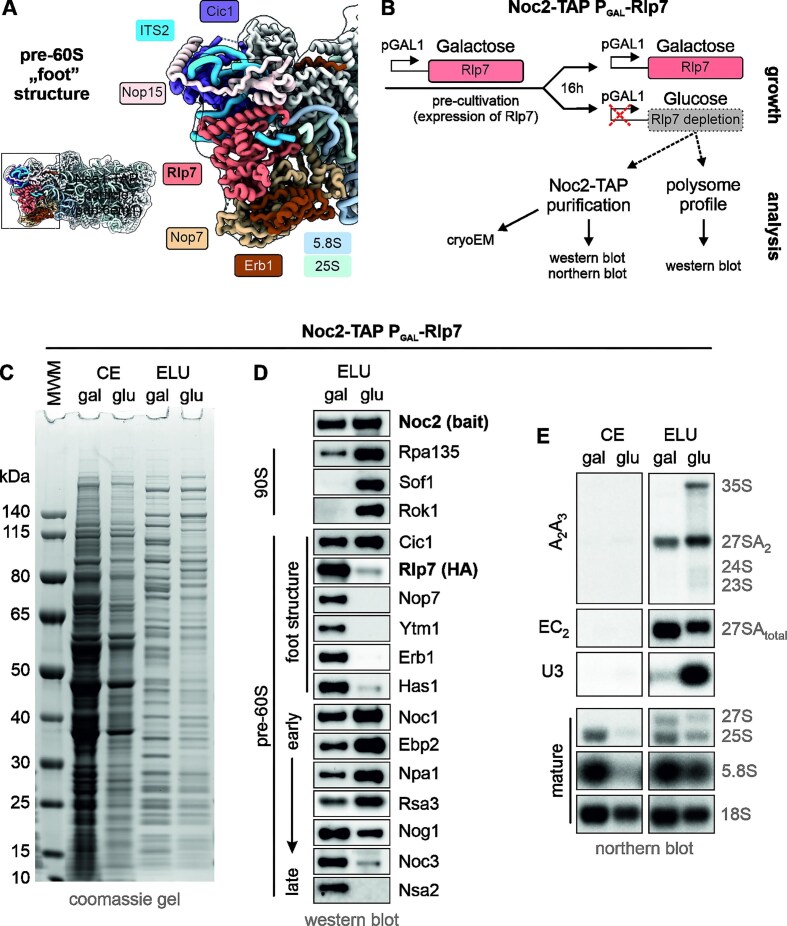 Figure 1
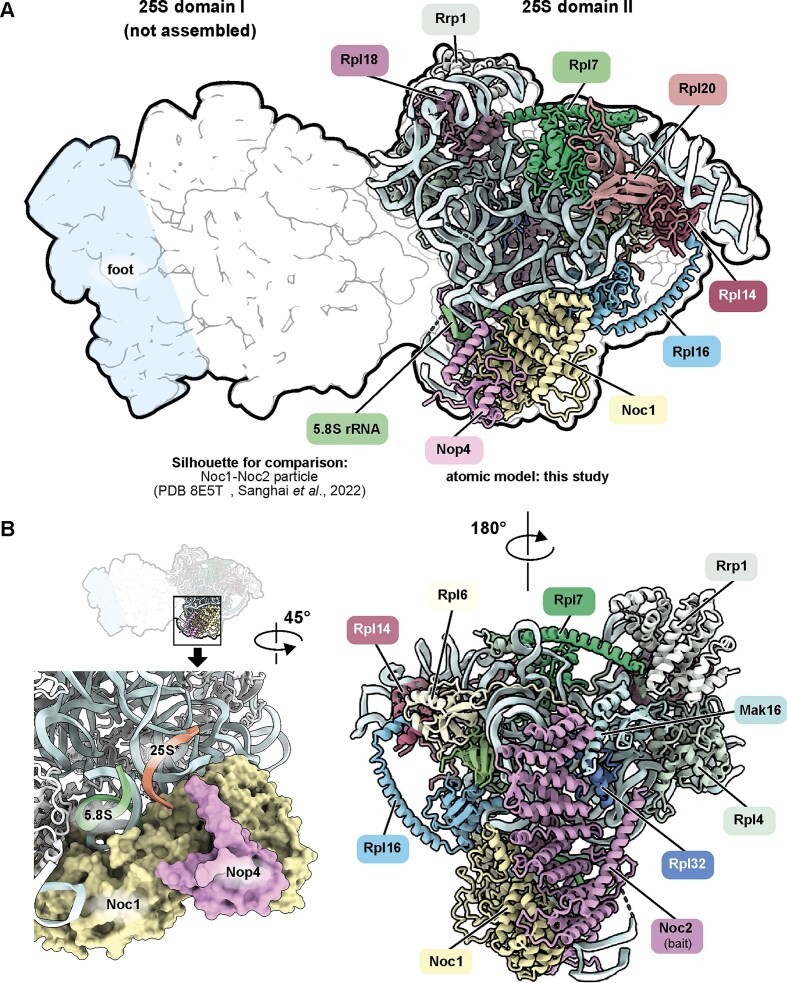 Figure 2
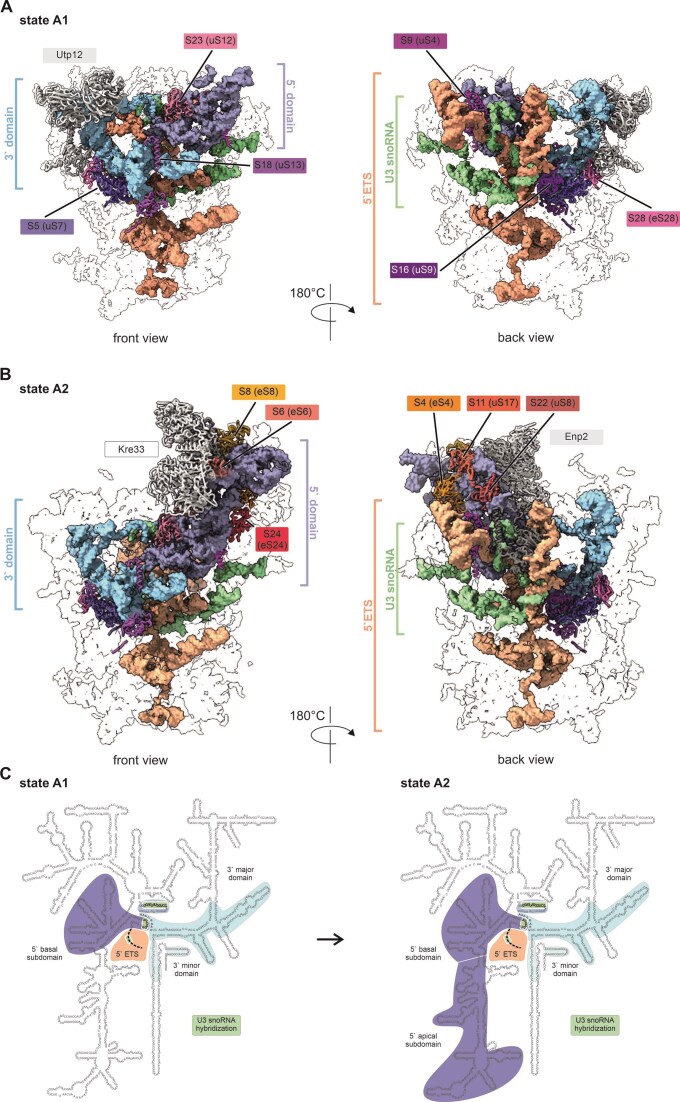 Figure 3
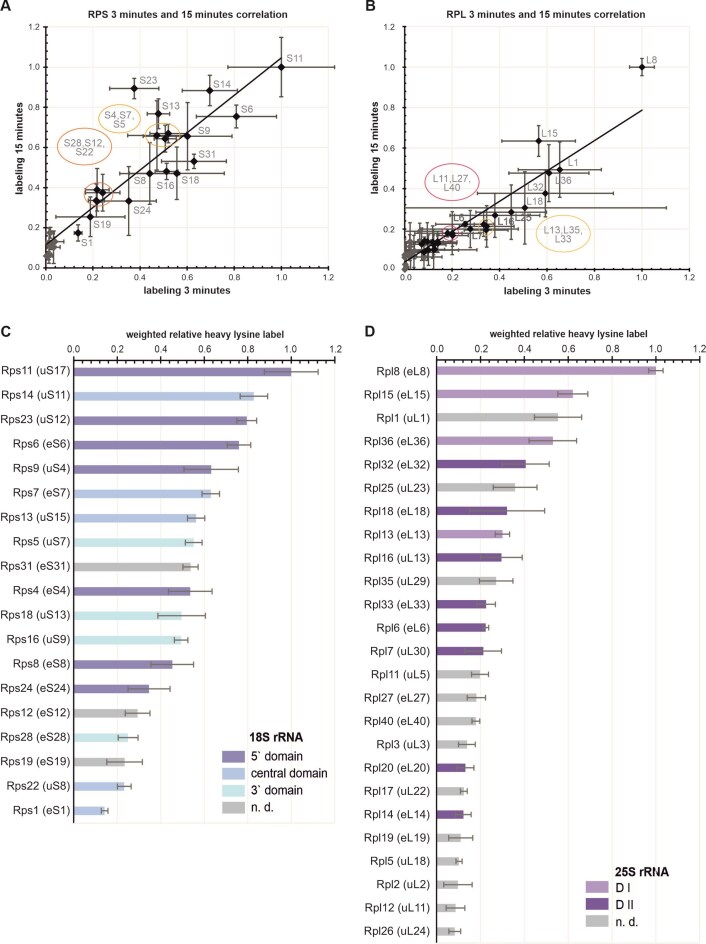 Figure 4
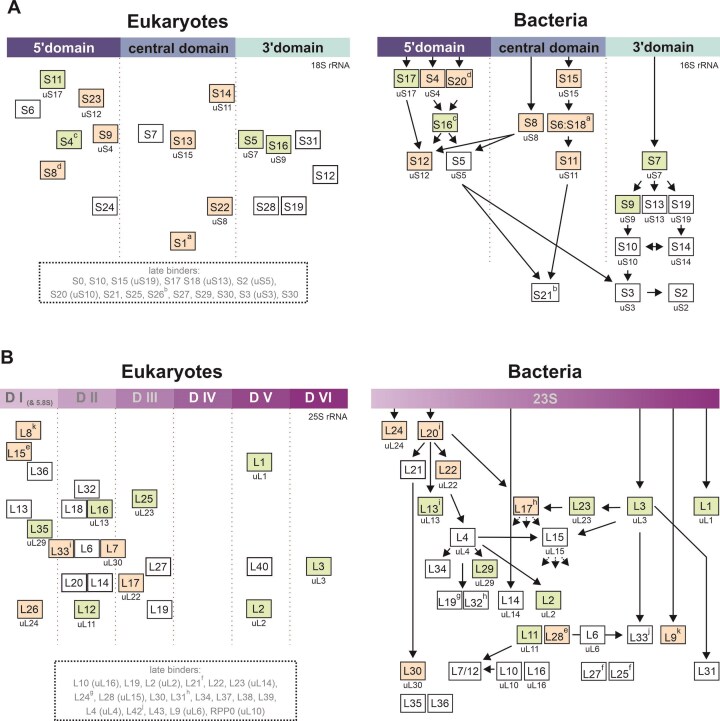 Figure 5
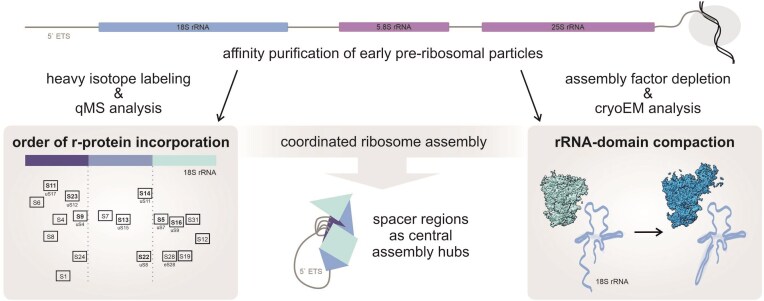 Figure 6
Peer Reviews
No public reviews on file for this paper yet. If you reviewed it on a platform where reviews are public (OpenReview, ICLR, NeurIPS, ICML), you can paste yours below so the community can read it here.
Videos
No videos yet. Explain this paper in a talk, walkthrough, or lecture? Add one.
Taxonomy
TopicsRNA modifications and cancer · RNA and protein synthesis mechanisms · Bacterial Genetics and Biotechnology