Structural plasticity enables broad cAn binding and dual activation of CRISPR-associated ribonuclease Cdn1
Wenxuan Zhang, Jianping Kong, Yuqin Zeng, Yunning Su, Sijun Zhang, Yutao Li, Chunyi Hu, Qihua Chen, Yibei Xiao, Meiling Lu

TL;DR
A CRISPR accessory protein called Cdn1 can bind and be activated by multiple cyclic oligoadenylates, showing structural flexibility that enhances microbial defense against viruses.
Contribution
Discovery of a CRISPR-associated protein with broad cyclic oligoadenylate binding and dual activation through structural plasticity.
Findings
Cdn1 binds to cA3, cA4, and cA6 but is activated by cA4 and cA6 with varying efficacy.
Structural analysis reveals conformational changes upon cyclic oligoadenylate binding, enabling RNA cleavage.
The dual activation mechanism reflects evolutionary adaptation for enhanced antiviral defense.
Abstract
Prokaryotes have naturally evolved diverse RNA-guided defense systems against viral infections, with the type III CRISPR–Cas systems representing the most intricate. These systems feature accessory proteins activated by cyclic oligoadenylates (cOAs) produced upon target RNA recognition, synergizing with the CRISPR–Cas machinery to defend against exogenous invaders. Typically, each accessory protein is activated by only one specific cOA type. Here, we characterize Cdn1, a type III-B CRISPR accessory protein from Psychrobacter lutiphocae, which binds to cA3, cA4, and cA6, but activated by cA4 and cA6 with different efficacies to catalyze ssRNA cleavage. Combined structural and biochemical analyses reveal that cOA binding triggers dramatic conformational reorganization, including the formation of a dimerization interface of nuclease domains, the emergence of substrate binding cleft, and…
Genes, proteins, chemicals, diseases, species, mutations and cell lines named across the full text — each resolved to its canonical identifier and authoritative record.
Click any figure to enlarge with its caption.
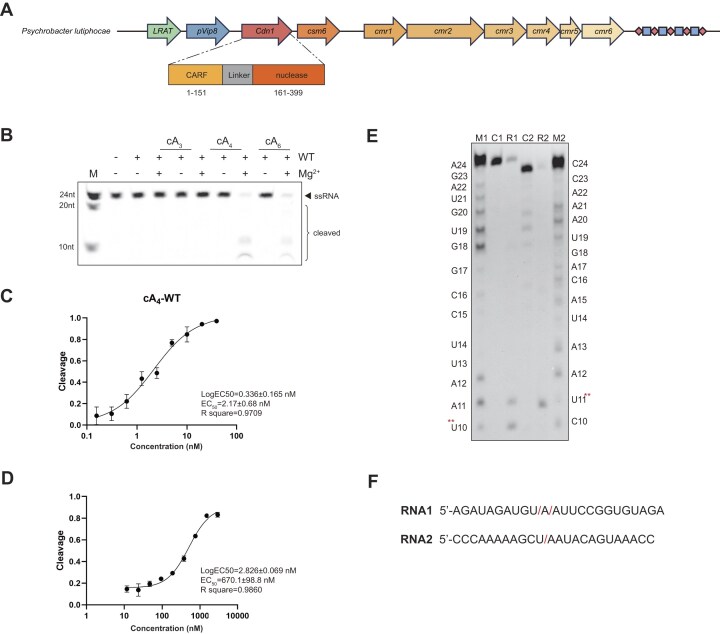 Figure 1
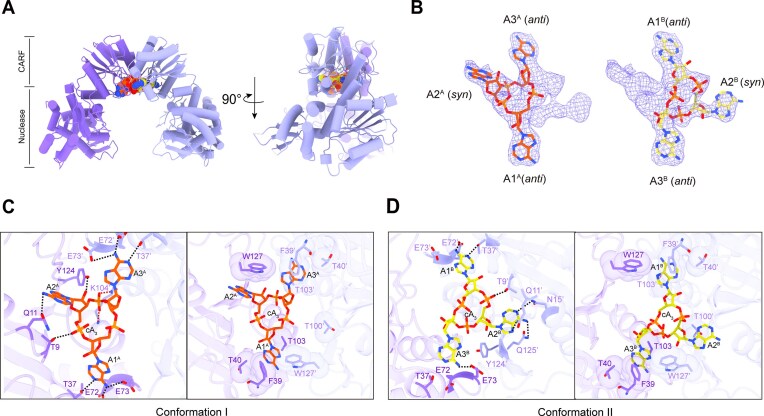 Figure 2
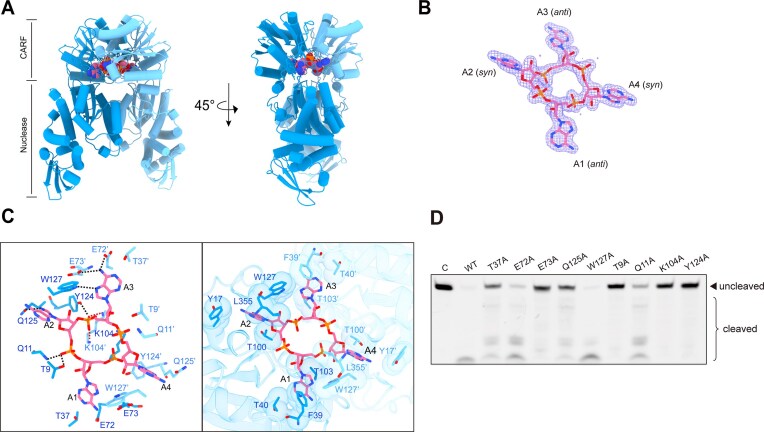 Figure 3
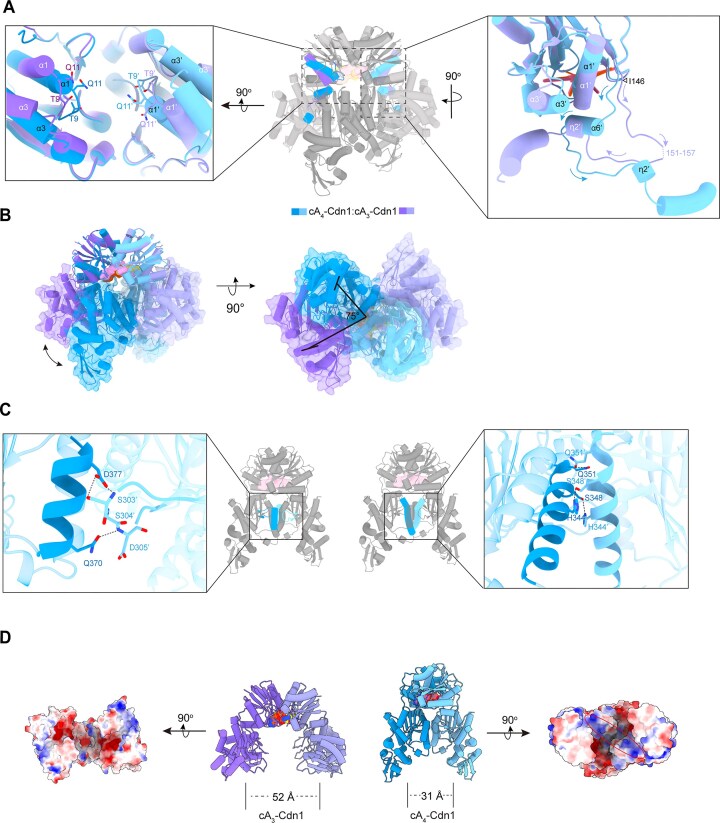 Figure 4
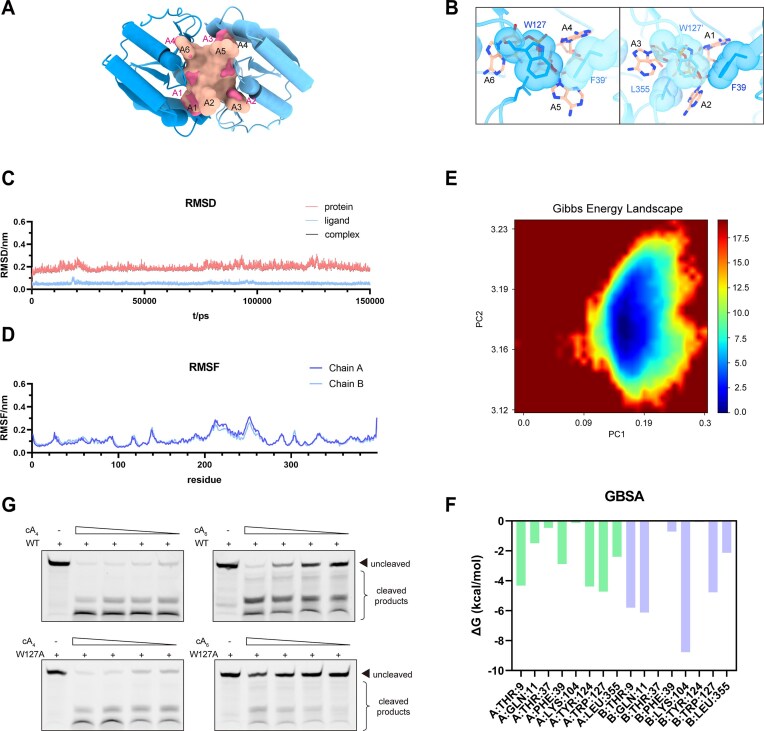 Figure 5
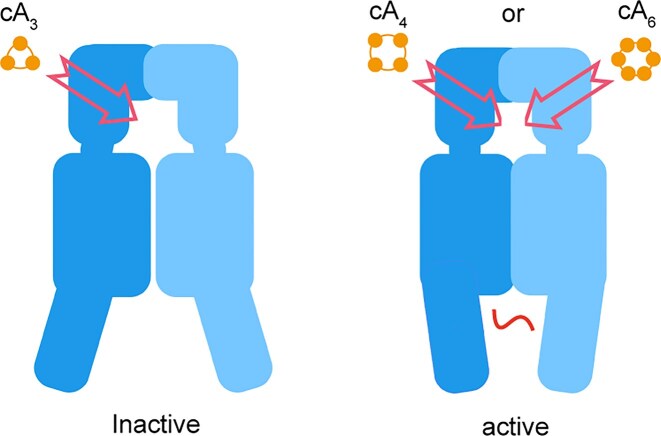 Figure 6
Peer Reviews
No public reviews on file for this paper yet. If you reviewed it on a platform where reviews are public (OpenReview, ICLR, NeurIPS, ICML), you can paste yours below so the community can read it here.
Videos
No videos yet. Explain this paper in a talk, walkthrough, or lecture? Add one.
Taxonomy
TopicsCRISPR and Genetic Engineering · RNA and protein synthesis mechanisms · Bacterial Genetics and Biotechnology