Lack of sustained improvements in erectile function following low-intensity extracorporeal shockwave therapy correlate with decreases in corporal brain-derived neurotropic factor: a pilot study and prospective clinical trial
Skye Coffey, Vy Nguyen, Ashley N Matthew, Bridget S Kastelberg, Maria E Teves, Mina Ghatas, Adam P Klausner, Ryan P Smith, Sarah C Krzastek

TL;DR
This study explores how low-intensity shockwave therapy affects erectile function by measuring changes in growth factors in penile blood.
Contribution
The first molecular study in human tissues to quantify neurogenesis and neovascularization following Li-ESWT for ED.
Findings
Levels of eNOS, nNOS, and VEGF showed an upward trend post-treatment but did not reach statistical significance.
BDNF levels decreased following Li-ESWT treatment.
Corporal blood aspirates may serve as surrogates for histological studies in understanding Li-ESWT effects.
Abstract
Low-intensity extracorporeal shockwave therapy (Li-ESWT) is thought to treat erectile dysfunction (ED) by stimulating neovascularization and nerve regeneration as demonstrated in animal models by histologically increased angiogenesis and neuronal-related growth factors, though corresponding human studies are limited. We hypothesized that Li-ESWT results in appreciable increases in growth factors in human tissues, and in this proof-of-concept study we aimed to determine whether markers for neovascularization and nerve regeneration can be detected in the corporal blood of men following Li-ESWT treatment. Patients were prospectively enrolled in a clinical trial of Li-ESWT for ED. Patients received 12 bi-weekly Li-ESWT treatments of 0.2 mJ/mm2 at 5 Hz, 1500 shocks delivered per treatment, with follow up at 1-2 weeks, 4-6 weeks, 3 months, and 6 months post-treatment. Cavernosal penile…
Genes, proteins, chemicals, diseases, species, mutations and cell lines named across the full text — each resolved to its canonical identifier and authoritative record.
Click any figure to enlarge with its caption.
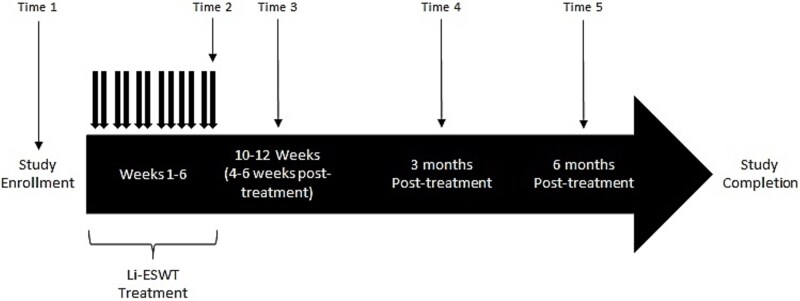 Figure 1
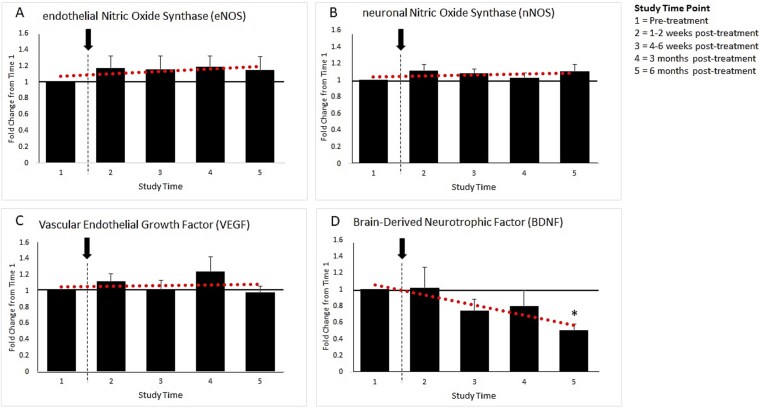 Figure 2
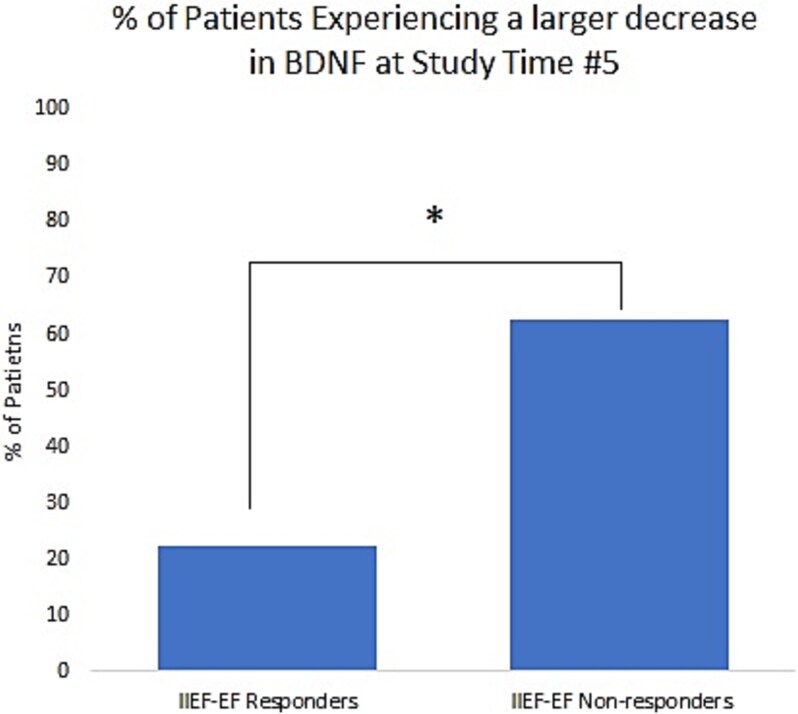 Figure 3
Peer Reviews
No public reviews on file for this paper yet. If you reviewed it on a platform where reviews are public (OpenReview, ICLR, NeurIPS, ICML), you can paste yours below so the community can read it here.
Videos
No videos yet. Explain this paper in a talk, walkthrough, or lecture? Add one.
Taxonomy
TopicsSexual function and dysfunction studies · Urinary Bladder and Prostate Research · Tendon Structure and Treatment