B-cell–driven relapse and anti-CD20 rescue therapy after Alemtuzumab in RRMS: case report and literature review
Pietro Antonio Bruno, Stefania Barone, Angelo Pascarella, Pier Luigi Lanza, Emanuele Tinelli, Antonio Gambardella, Paola Valentino

TL;DR
A patient with multiple sclerosis experienced a severe relapse after alemtuzumab treatment, which was linked to B-cell overactivity and resolved with anti-CD20 therapy.
Contribution
This case report highlights a novel B-cell–driven mechanism of relapse after alemtuzumab and suggests anti-CD20 therapy as a potential rescue treatment.
Findings
A patient with RRMS had a severe steroid-resistant relapse linked to B-cell overactivity after alemtuzumab.
Switching to anti-CD20 therapy (ocrelizumab) led to rapid recovery and sustained stability.
A review of similar cases suggests a distinct B-cell–driven mechanism of inflammation after alemtuzumab.
Abstract
Alemtuzumab is an immune reconstitution therapy (IRT) approved for highly active relapsing–remitting multiple sclerosis (RRMS). Notably, the differential reconstitution of B and T cells after alemtuzumab may trigger paradoxical B–cell–mediated inflammation and secondary autoimmunity. We describe the case of a 44-year-old woman with RRMS who experienced a severe, steroid-resistant relapse nine months after her second alemtuzumab cycle. Lymphocyte subtyping revealed disproportionate B-cell repopulation, suggesting a B-cell–mediated immunopathogenesis. Early ocrelizumab switch resulted in rapid clinical and radiological recovery and sustained stability. We conducted a narrative review of early and paradoxical disease reactivation after alemtuzumab, identifying common features: early onset, poor steroid response, large or tumefactive lesions, and marked B-cell hyperrepopulation. Anti-CD20…
Genes, proteins, chemicals, diseases, species, mutations and cell lines named across the full text — each resolved to its canonical identifier and authoritative record.
Click any figure to enlarge with its caption.
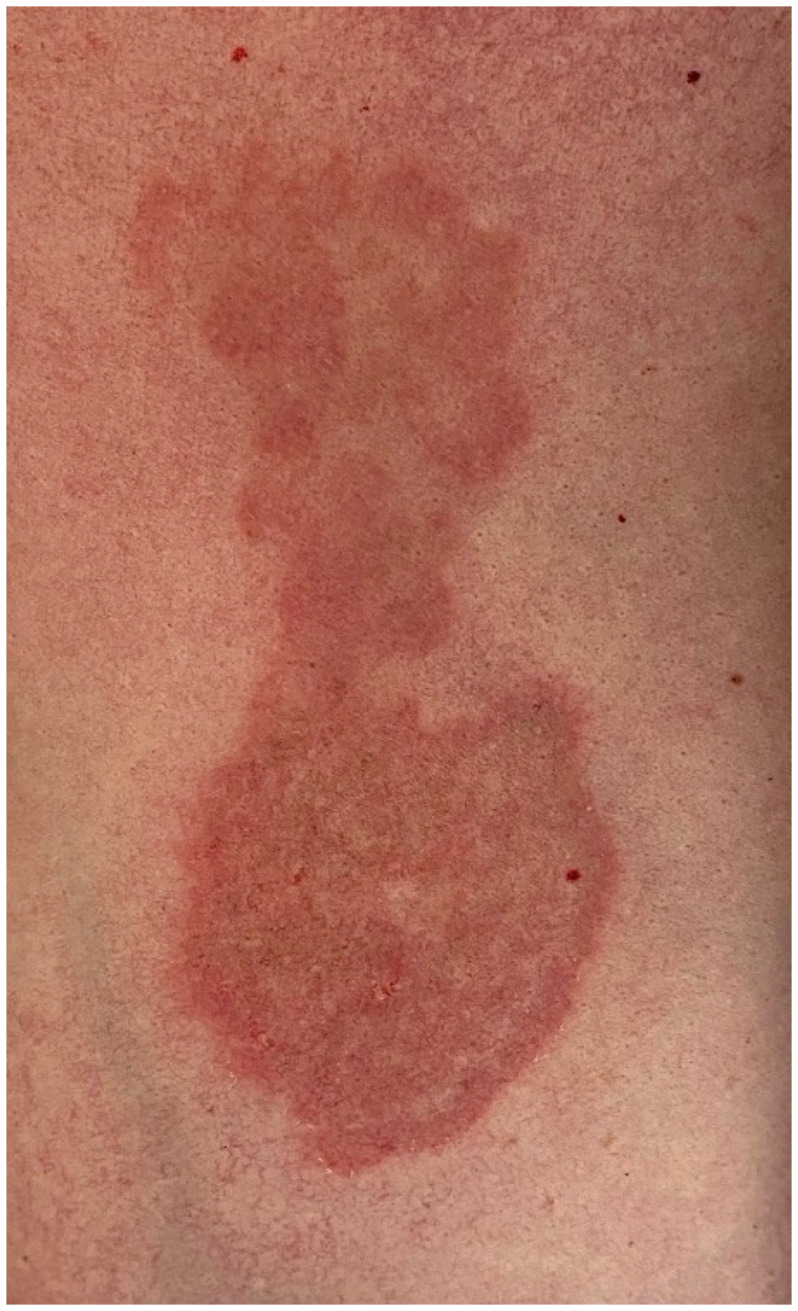 Figure 1
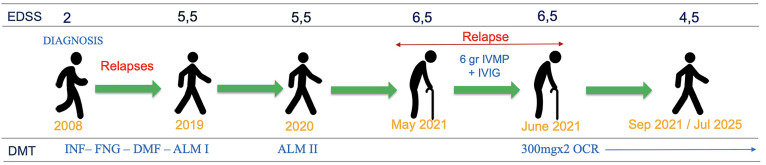 Figure 2
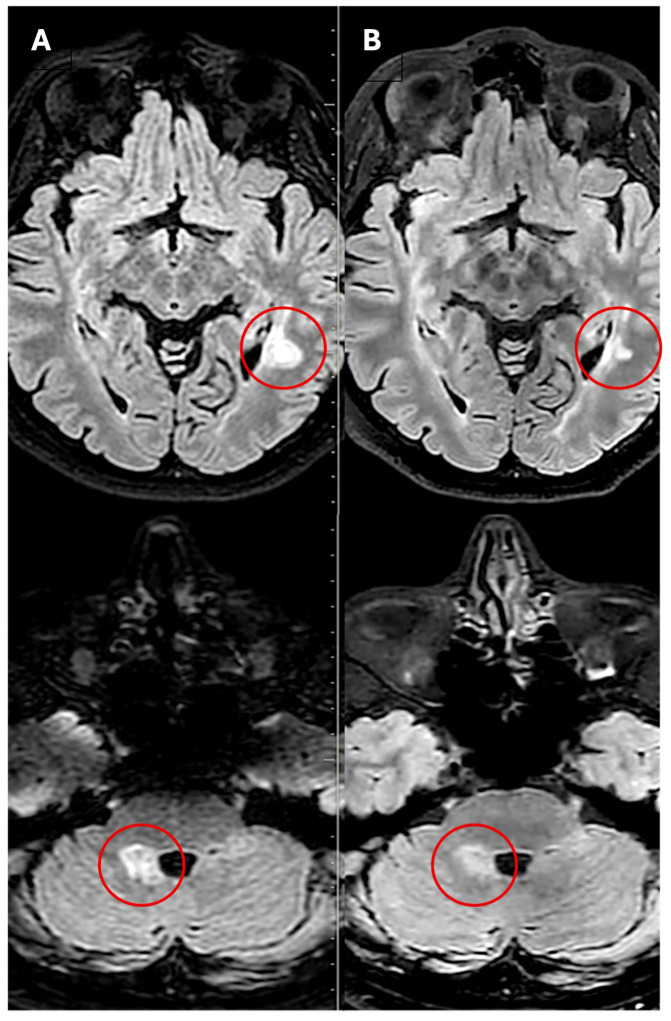 Figure 3
Peer Reviews
No public reviews on file for this paper yet. If you reviewed it on a platform where reviews are public (OpenReview, ICLR, NeurIPS, ICML), you can paste yours below so the community can read it here.
Videos
No videos yet. Explain this paper in a talk, walkthrough, or lecture? Add one.
Taxonomy
TopicsMultiple Sclerosis Research Studies · Peripheral Neuropathies and Disorders · Rheumatoid Arthritis Research and Therapies