Stressors and coping strategies among Egyptian medical students under the integrated curriculum: a multicenter cross-sectional study
Mahmoud Abd El-Nasser, Aya Elsayed Abdelwahed, Nour Edin Darwish, Mohamed Rabiea Abdelnaby Fathallah Hamad, Aya Muhammed Ali Suleiman, Khloud Ahmed Saad Elsayed, Rahma AbdElfattah Ibrahim, Marwa M.I. Ghallab, Ahmed F. Elbialy, Ahmed F. Elbialy, Rafik F. Khalil, Mahmoud A. Said

TL;DR
Egyptian medical students under a new curriculum experience high academic stress, with females and those with chronic illnesses being most affected.
Contribution
This study identifies key stressors and coping strategies among Egyptian medical students under an integrated curriculum, highlighting gender and socioeconomic disparities.
Findings
Academic-related stressors had the highest stress levels, with 'lack of time to review' and 'large content load' being top stressors.
Female students and those with chronic illnesses experienced higher stress and lower coping scores.
Students predominantly used emotion-focused and avoidance coping strategies rather than problem-focused ones.
Abstract
Egypt’s recent shift to an integrated (5+2) medical curriculum aims to enhance clinical competence but may also intensify stress among students. Understanding stressors and coping mechanisms is critical for promoting student well-being. This study aims to assess the levels and domains of stress, identify their predictors, and evaluate coping strategies among undergraduate medical students in Egypt. A multicenter cross-sectional study was conducted among 984 undergraduate medical students from Egyptian universities between April and May 2024 with response rate of 98.4%. Data were collected via a structured online questionnaire including demographics, the validated Medical Student Stressor Questionnaire (MSSQ), and the Coping Scale. Stressor domains were scored on a 0–4 Likert scale and coping on a 1–4 scale. Univariate and multivariate regression analyses identified predictors of stress…
Genes, proteins, chemicals, diseases, species, mutations and cell lines named across the full text — each resolved to its canonical identifier and authoritative record.
Click any figure to enlarge with its caption.
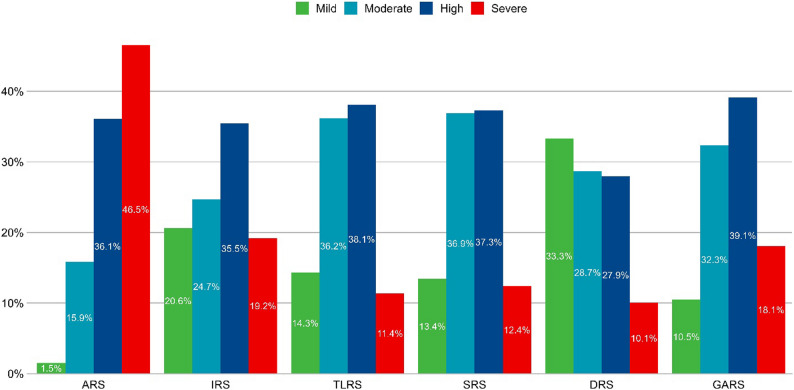 Figure 1
Peer Reviews
No public reviews on file for this paper yet. If you reviewed it on a platform where reviews are public (OpenReview, ICLR, NeurIPS, ICML), you can paste yours below so the community can read it here.
Videos
No videos yet. Explain this paper in a talk, walkthrough, or lecture? Add one.
Taxonomy
TopicsHealthcare professionals’ stress and burnout · Medical Education and Admissions · Empathy and Medical Education