PXDN regulated by WTAP/YTHDF1-mediated m6A modification activates PI3K/AKT signaling pathway through extracellular matrix remodeling to promote progression in nasopharyngeal carcinoma
Ying Li, Zongwei Huang, Xingwu Huang, Wanzun Lin, Qin Ding, Wankai Fu, Ronghui Chen, Jinghua Lai, Jianmin Wang, Qinying Liu, Sufang Qiu

TL;DR
This study shows that PXDN, regulated by m6A modification, promotes the spread of nasopharyngeal carcinoma by activating the PI3K/AKT pathway through changes in the extracellular matrix.
Contribution
The study identifies a novel m6A-based regulatory axis involving WTAP/YTHDF1 and PXDN that drives cancer progression in nasopharyngeal carcinoma.
Findings
PXDN is highly expressed in NPC and linked to poor prognosis, with its suppression reducing cancer cell growth and metastasis.
PXDN activates the ITGB1-PI3K-AKT pathway through extracellular matrix remodeling, promoting cancer aggressiveness.
YTHDF1 enhances PXDN RNA stability and translation by recognizing WTAP-mediated m6A methylation, and demethylation reduces PXDN expression.
Abstract
Recurrence and metastasis remain the primary causes of treatment failure in nasopharyngeal carcinoma (NPC). This study aims to explore the functional role and regulatory mechanisms of peroxidasin (PXDN) in NPC progression. Weighted gene co-expression network analysis was performed to screen the module most relevant to the malignant progression of NPC from our internal cohort (Fujian cohort 1, N = 192), from which the PXDN was identified as the key molecule. Clinical significance of PXDN was assessed in the GEO database and NPC tissue microarrays from Fujian cohort 2 (N = 103). Functional experiments were used to determine the biological role of PXDN in NPC. Methylated RNA immunoprecipitation sequencing was used to identify PXDN N6-methyladenosine (m6A) modification site, and verified by a dual-luciferase reporter gene assay. RNA immunoprecipitation, RNA stability assay, and RNA…
Genes, proteins, chemicals, diseases, species, mutations and cell lines named across the full text — each resolved to its canonical identifier and authoritative record.
Click any figure to enlarge with its caption.
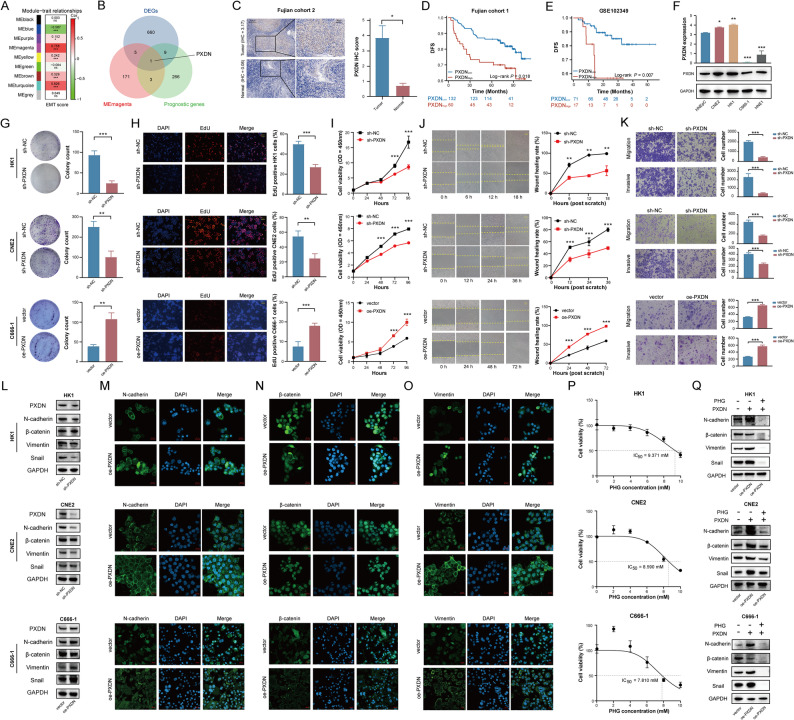 Figure 1
 Figure 2
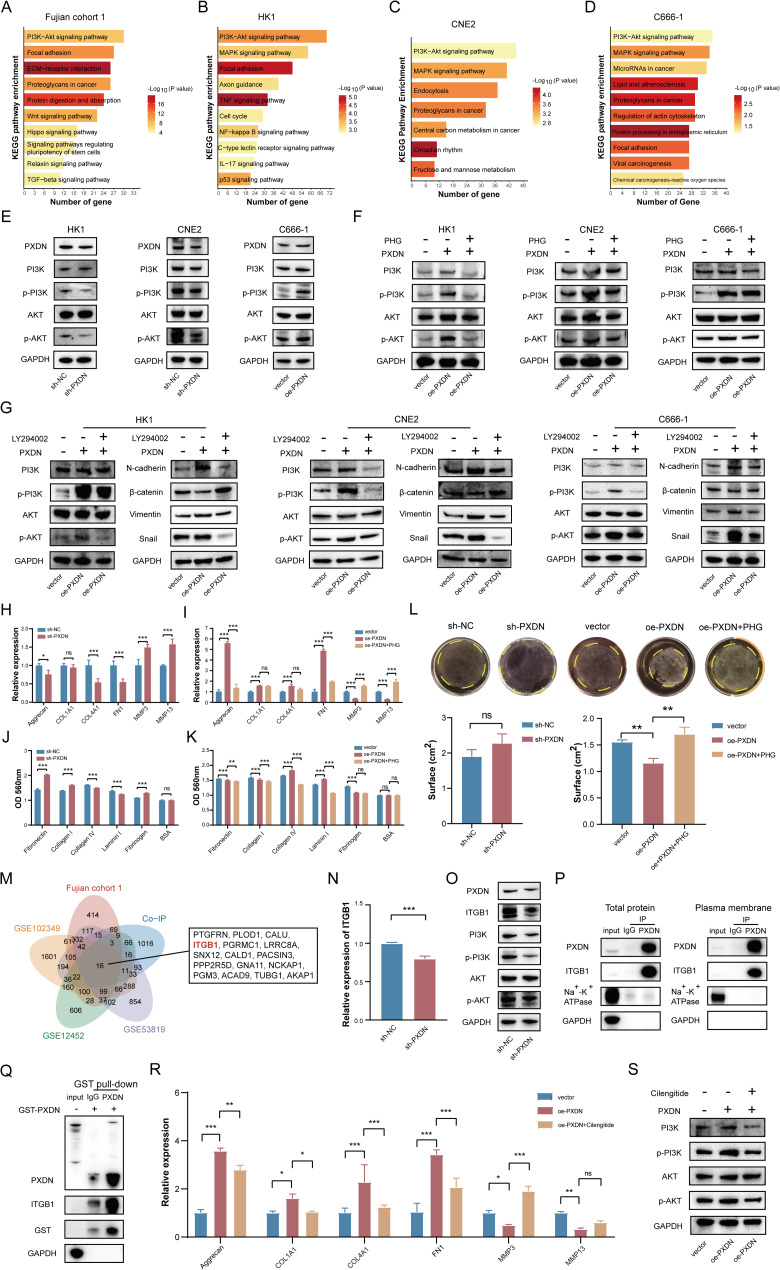 Figure 3
 Figure 4
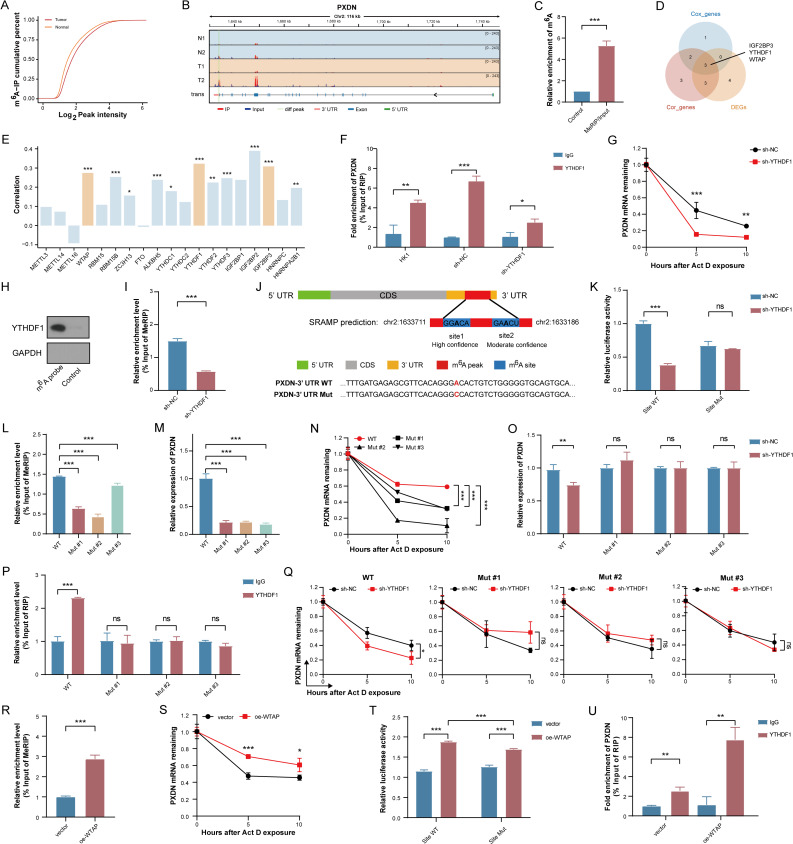 Figure 5
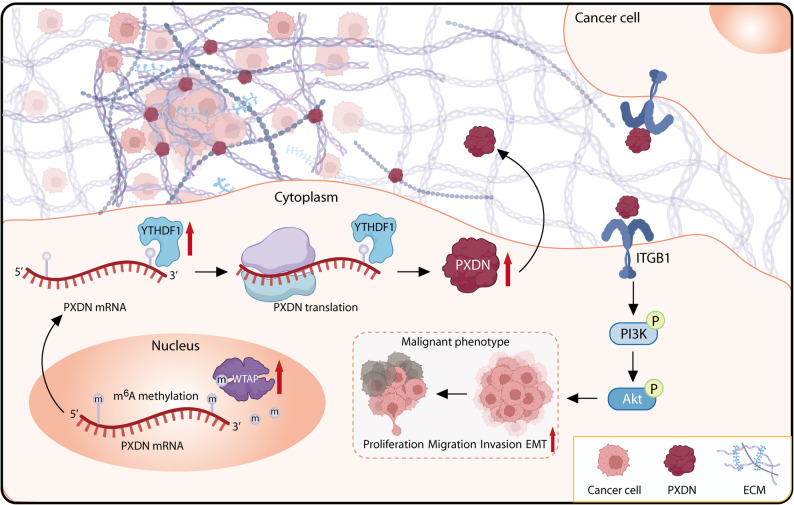 Figure 6
Peer Reviews
No public reviews on file for this paper yet. If you reviewed it on a platform where reviews are public (OpenReview, ICLR, NeurIPS, ICML), you can paste yours below so the community can read it here.
Videos
No videos yet. Explain this paper in a talk, walkthrough, or lecture? Add one.
Taxonomy
TopicsRNA modifications and cancer · Neutrophil, Myeloperoxidase and Oxidative Mechanisms · Ubiquitin and proteasome pathways