Kinetics of Hypohalous Acid Intermediates Governing Disinfection Byproduct Formation in Peracetic Acid-Treated Halide-Containing Waters
Jiaqi Li, Samantha DiLoreto, Ching-Hua Huang

TL;DR
This study explores how peracetic acid interacts with halides in water, forming disinfection byproducts and how adding hydrogen peroxide can reduce these harmful byproducts.
Contribution
The study introduces a refined kinetic model and new rate constants for PAA/halide reactions, revealing mechanisms and mitigation strategies for DBP formation.
Findings
Dibromoacetic acid is the dominant brominated DBP, with many unidentified byproducts indicated by TOBr analysis.
Total organic iodine (TOI) formation is the main iodide sink in PAA/I–/NOM systems, with limited iodate formation.
Using a PAA/H2O2 molar ratio of 1:2 reduces known DBPs by 85–90% and TOBr/TOI by 33–44%.
Abstract
Peracetic acid (PAA) has emerged as an alternative disinfectant because of its lower reactivity with natural organic matter (NOM) and minimal halogenation. However, PAA may react with halides (Br–, I–) in water to form hypohalous acids, which can contribute to halogenated disinfection byproduct (DBP) formation. Meanwhile, coexisting hydrogen peroxide (H2O2) can reduce HOBr/HOI back to halides. To assess and mitigate the DBP risks of PAA in halide-containing waters, this study investigated the oxidant change and DBP formation in PAA/halide/NOM systems. A refined kinetic model accurately simulates PAA/Br– and PAA/Br–/NOM reactions, revealing that a small fraction of NOM is highly reactive with HOBr and drives brominated DBP formation. Dibromoacetic acid dominated the identified DBPs, while total organic bromine (TOBr) analysis suggested a majority of the unidentified byproducts. In PAA/I–…
Genes, proteins, chemicals, diseases, species, mutations and cell lines named across the full text — each resolved to its canonical identifier and authoritative record.
Click any figure to enlarge with its caption.
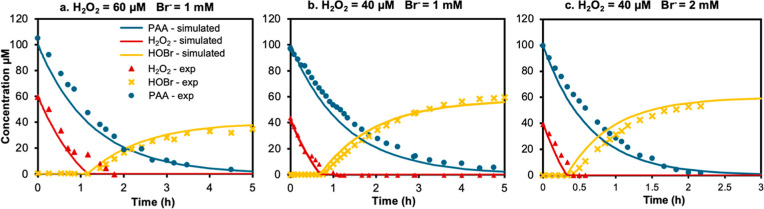 Figure 1
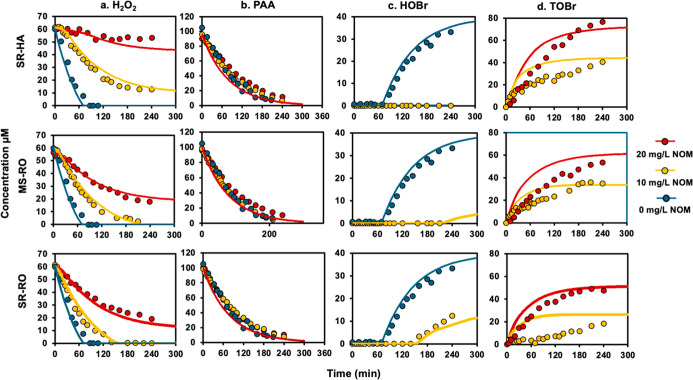 Figure 2
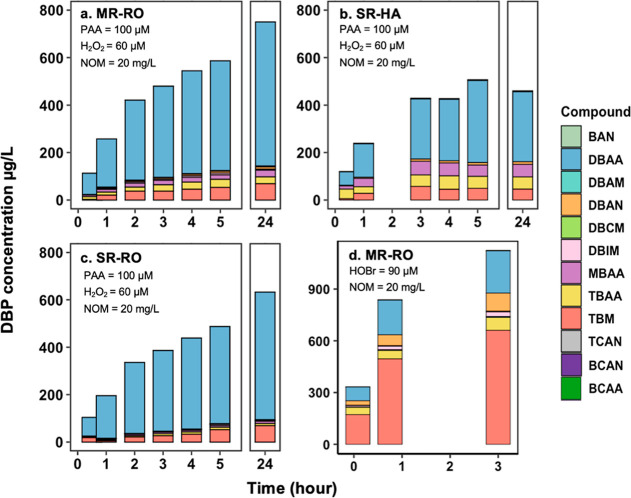 Figure 3
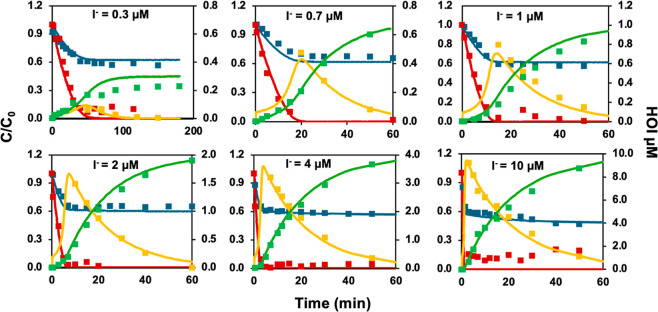 Figure 4
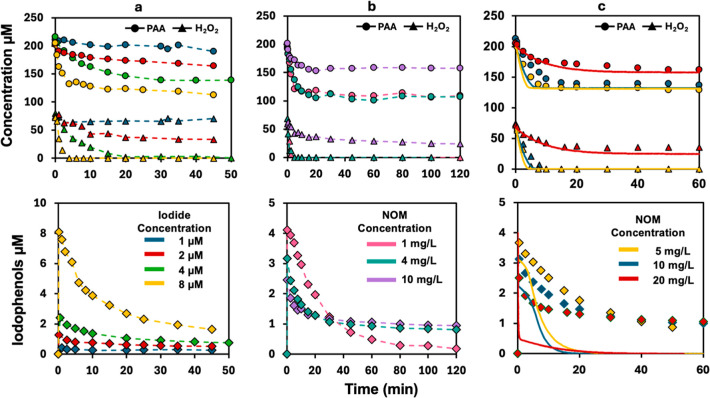 Figure 5
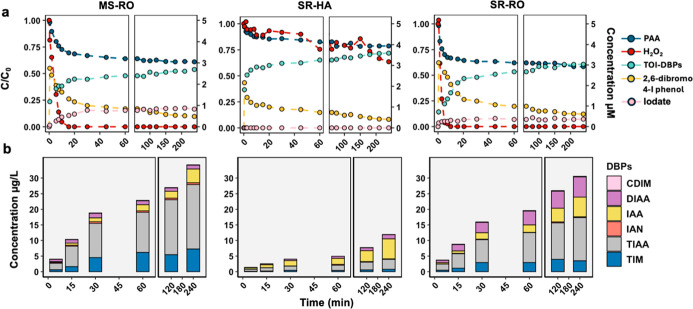 Figure 6
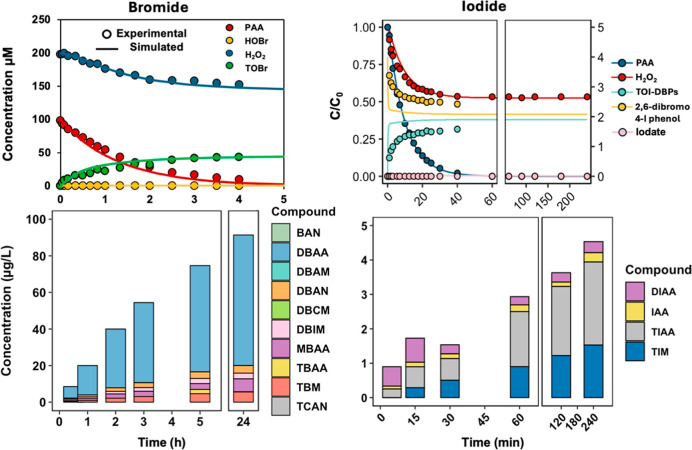 Figure 7
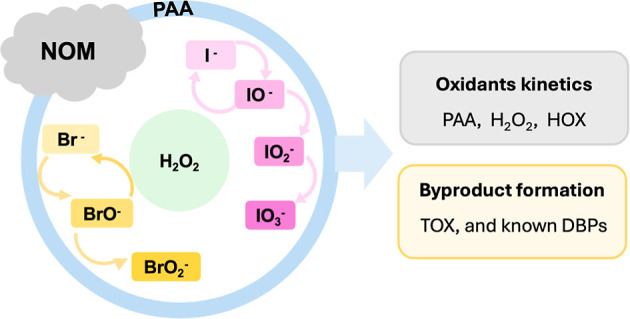 Figure 8
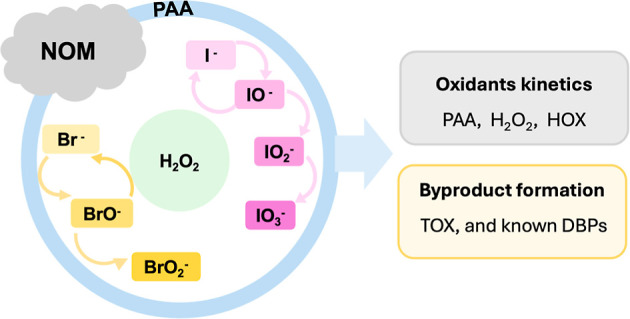 Figure 9
 Figure 10
 Figure 11
 Figure 12
 Figure 13
 Figure 14
 Figure 15
 Figure 16
 Figure 17
 Figure 18
 Figure 19
 Figure 20
Peer Reviews
No public reviews on file for this paper yet. If you reviewed it on a platform where reviews are public (OpenReview, ICLR, NeurIPS, ICML), you can paste yours below so the community can read it here.
Videos
No videos yet. Explain this paper in a talk, walkthrough, or lecture? Add one.
Taxonomy
TopicsWater Treatment and Disinfection · Listeria monocytogenes in Food Safety · Advanced oxidation water treatment