Deletion of the Mouse Homolog of Human FHR1 (muFHR1) Alleviates Atherosclerosis in ApoE-/- mice
Luce Perie, Sarah M. Herr, Tomas Ghebreslassie, Sonia Wulf, Ina Löschmann, Andjela Sekulic, Abdulhadi Suwandi, Anna-Karina B. Maier, Luca Rowlin, Berit Jungnickel, Sascha Schäuble, Gianni Panagiotou, Olaf Strauß, Thorsten Wiech, Peter F. Zipfel, Svante L. H. Zipfel

TL;DR
Deleting a mouse protein similar to human FHR1 reduces atherosclerosis in mice, suggesting it could be a new target for treating heart disease.
Contribution
This study shows that deleting muFHR1 reduces atherosclerosis in ApoE-/- mice by altering lipid metabolism and inflammation.
Findings
Deletion of muFHR1 in mice improved lipid conversion in the liver and normalized cholesterol levels.
muFHR1-/-ApoE-/- mice had reduced inflammation and plaque formation compared to ApoE-/- mice.
Human FHR1 levels correlate with non-HDL cholesterol and inflammation in atherosclerosis patients.
Abstract
Atherosclerosis is the leading cause of heart attack and stroke worldwide. The key characteristic of atherosclerosis is accumulation of LDL cholesterol in artery walls, the subsequent infiltration by monocytes/macrophages, and the development of inflammation. Recently, we reported that plasma protein complement factor H-related 1 (FHR1) binds to the necrotic surfaces of cardiovascular plaques and induces inflammation. Moreover, the concentration of FHR1 is higher, whereas CFHR1 gene deletion frequency is significantly lower in patients with atherosclerosis in comparison to healthy controls. Here we generated muFHR1-/- (the murine homolog of FHR1) knockout mice and then crossed them with ApoE-/- knockout mice (a model of human hyperlipidemia). Notably, deletion of muFHR1 enhanced lipid conversion in the liver as evidenced by RNAseq analysis. This resulted in normalized cholesterol…
Genes, proteins, chemicals, diseases, species, mutations and cell lines named across the full text — each resolved to its canonical identifier and authoritative record.
Click any figure to enlarge with its caption.
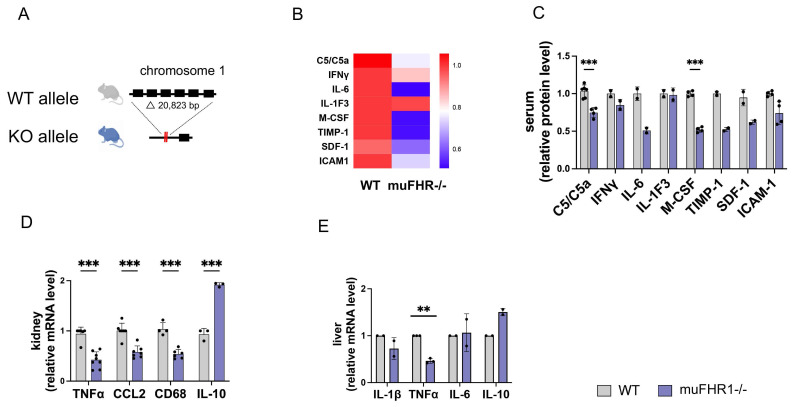 Figure 1
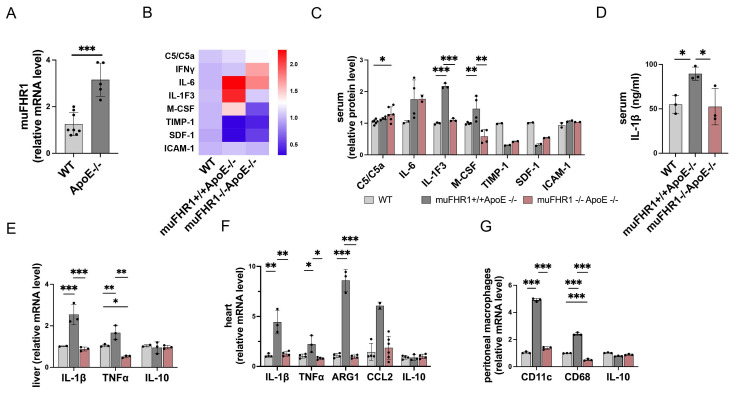 Figure 2
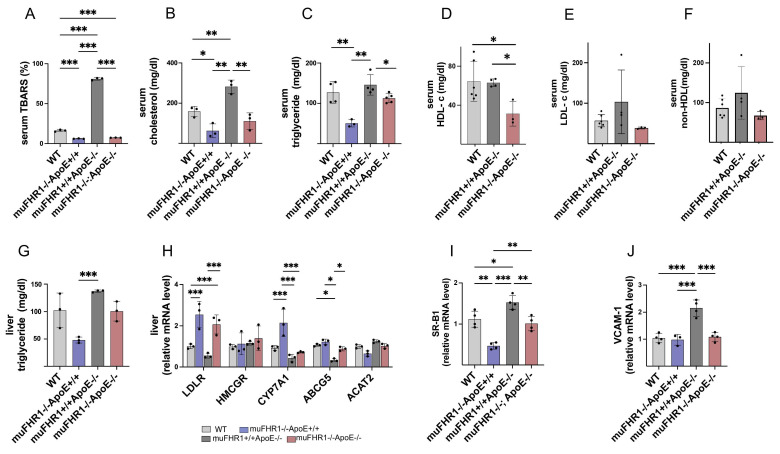 Figure 3
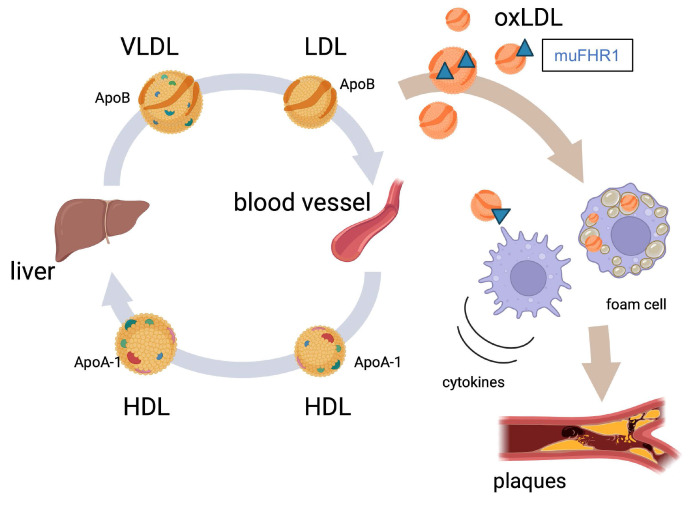 Figure 4
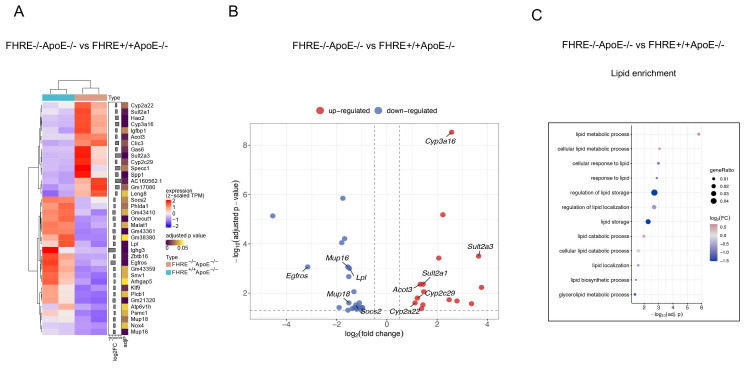 Figure 5
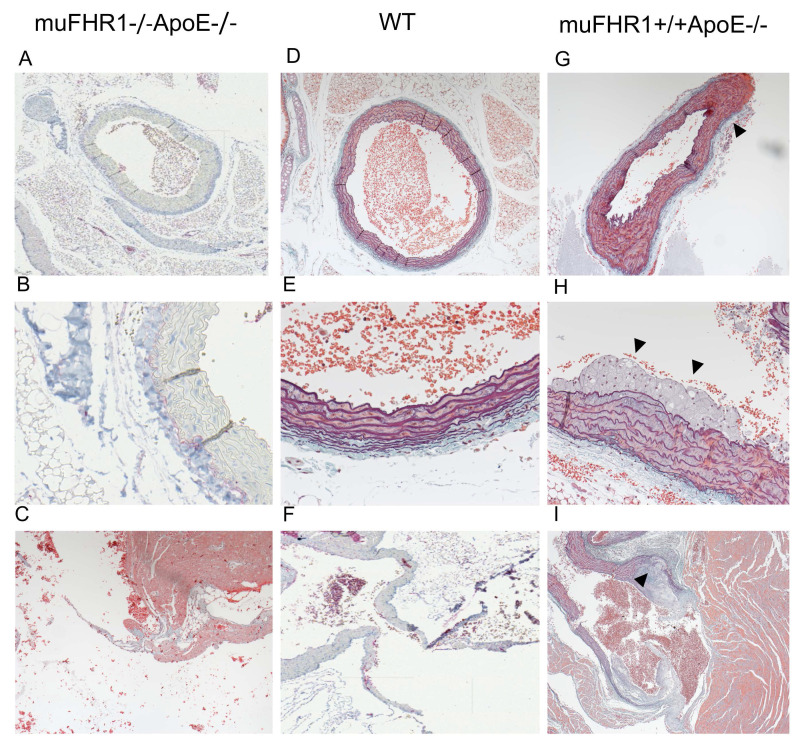 Figure 6
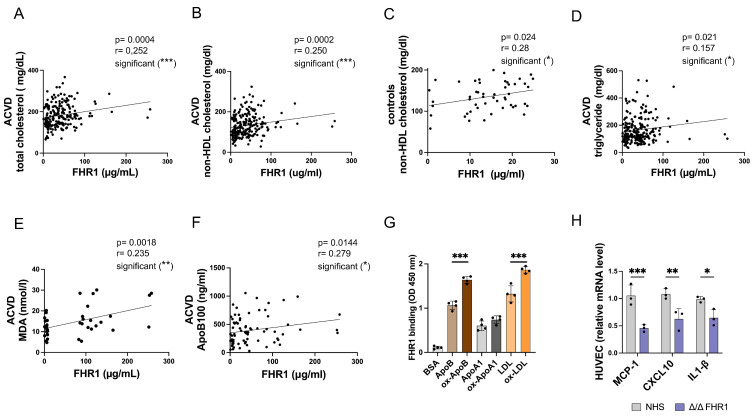 Figure 7
Peer Reviews
No public reviews on file for this paper yet. If you reviewed it on a platform where reviews are public (OpenReview, ICLR, NeurIPS, ICML), you can paste yours below so the community can read it here.
Videos
No videos yet. Explain this paper in a talk, walkthrough, or lecture? Add one.
Taxonomy
TopicsBlood groups and transfusion · Genetic Associations and Epidemiology · Glycosylation and Glycoproteins Research