Recovering European River Invertebrate Communities Homogenize or Differentiate Depending on Anthropogenic Stress
Daniela Cortés‐Guzmán, Diana E. Bowler, Marie Anne Eurie Forio, Peter Goethals, Ioannis Karaouzas, Ariane Moulinec, James S. Sinclair, Rudy Vannevel, Peter Haase, Ellen A. R. Welti

TL;DR
European river invertebrate communities either become more similar or more different depending on the level of human-caused stress, affecting biodiversity recovery.
Contribution
The study shows that β-diversity in river invertebrates responds asymmetrically to anthropogenic stress, with homogenization at high stress and differentiation at low stress.
Findings
Communities in low-stress river basins showed biotic differentiation, while high-stress basins experienced homogenization.
Trait composition, rather than specific taxa or traits gained or lost, mediates community responses to anthropogenic stress.
Recovery from stress initially leads to homogenization, but differentiation occurs only when stress levels are sufficiently reduced.
Abstract
Biodiversity loss can lead to biotic homogenization, whereby local communities within a region become increasingly similar over time, resulting in simplified communities with reduced functionality. However, our understanding of whether alleviating anthropogenic stress can reverse homogenization and promote biotic differentiation (i.e., increasing dissimilarity) remains limited, partly because the effectiveness of conservation actions is often assessed only at the local scale (e.g., increases in local diversity). Here, we examined evidence for biotic differentiation in European river invertebrate communities, a system that has generally shown signs of local recovery. We analyzed 447 time series of river invertebrate communities from 1994 to 2023, spanning 48 river basins across 15 European countries. We then related trends in community similarity within each basin, measured as taxonomic…
Genes, proteins, chemicals, diseases, species, mutations and cell lines named across the full text — each resolved to its canonical identifier and authoritative record.
Click any figure to enlarge with its caption.
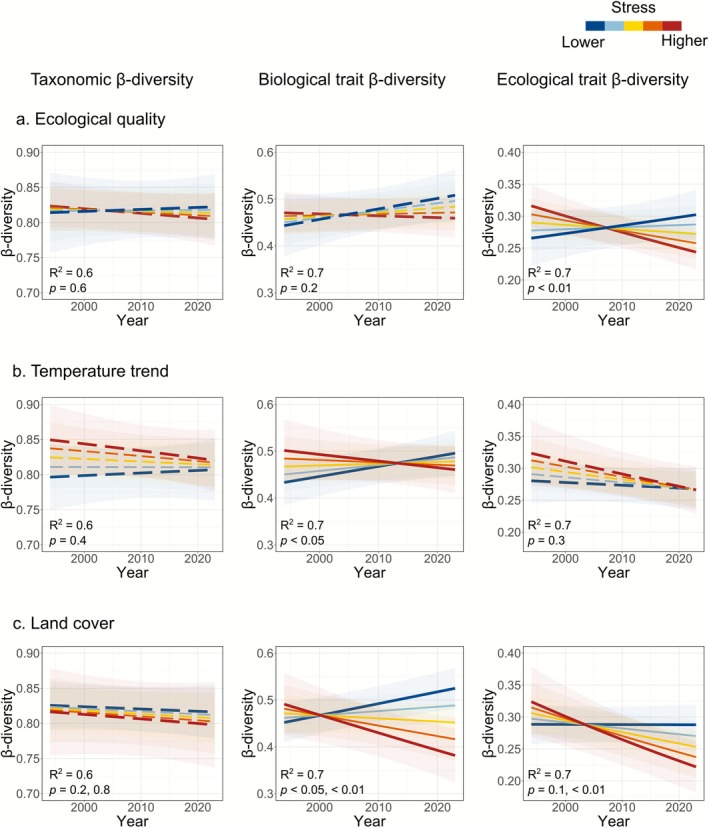 Figure 1
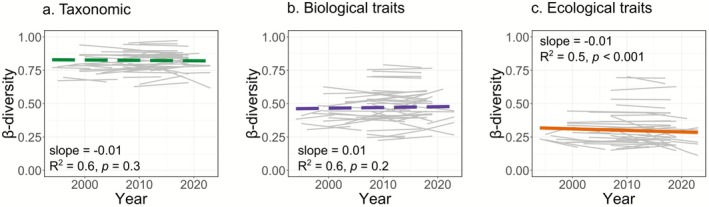 Figure 2
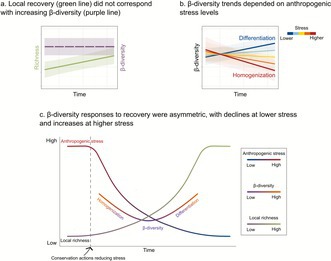 Figure 3
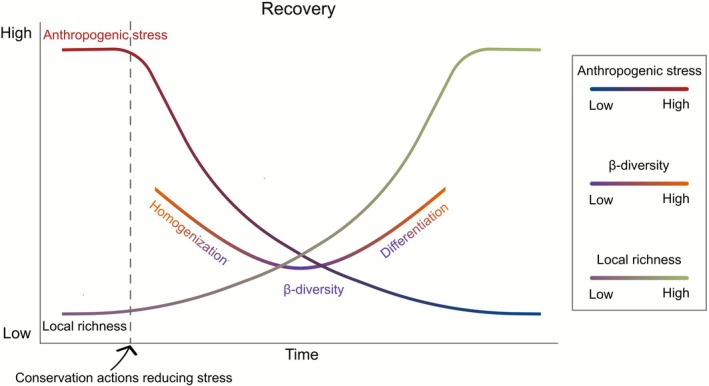 Figure 4
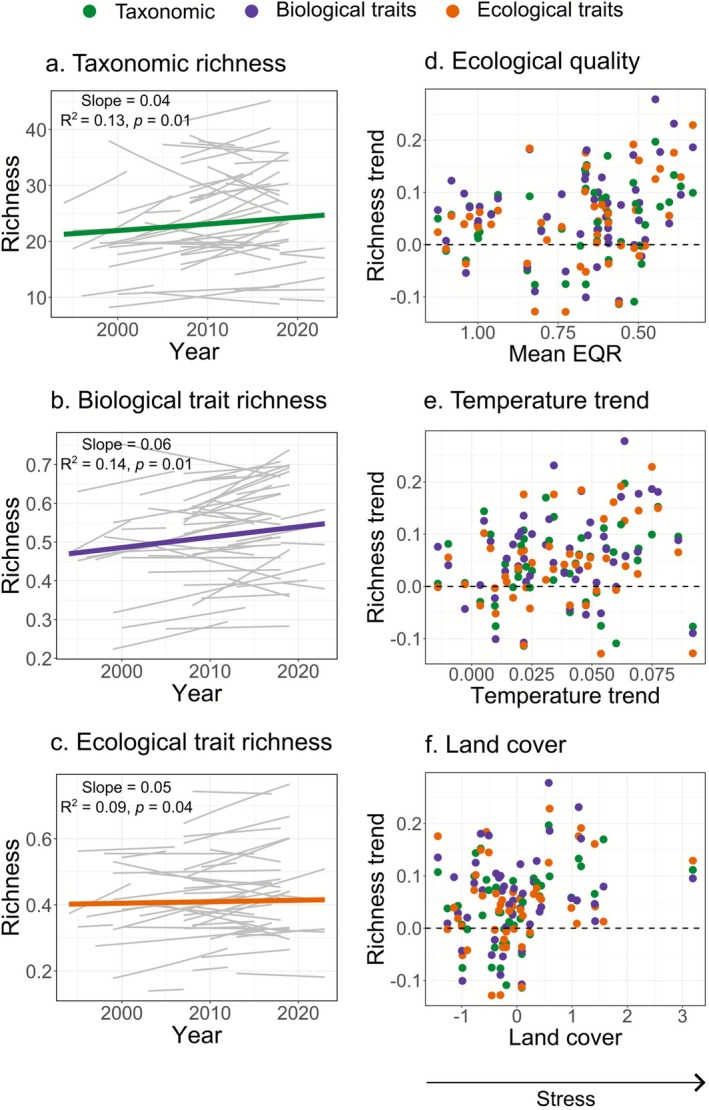 Figure 5
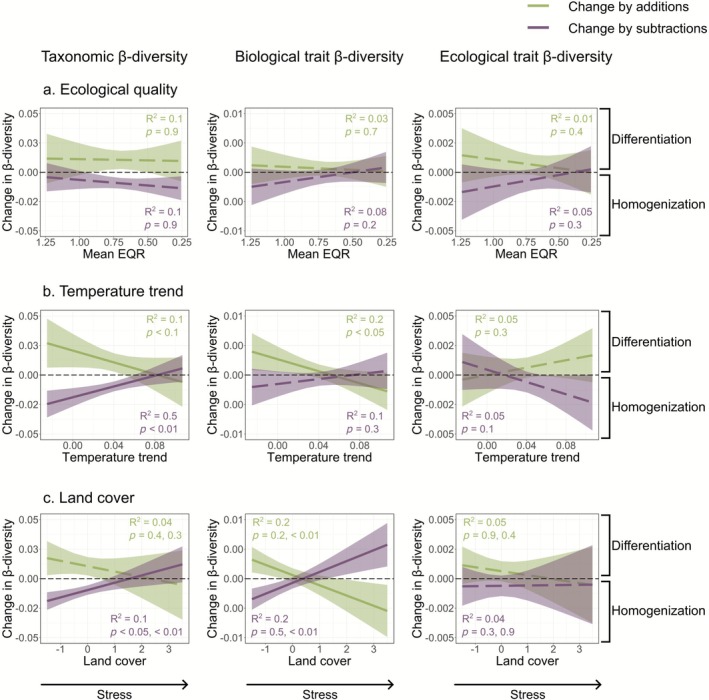 Figure 6
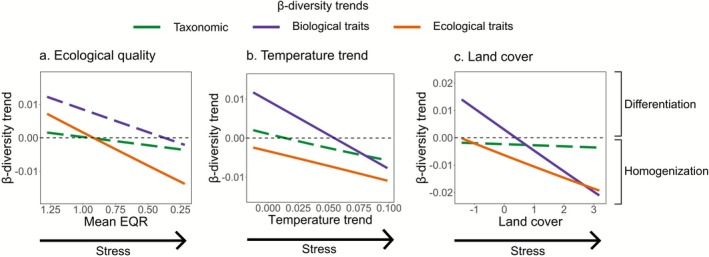 Figure 7
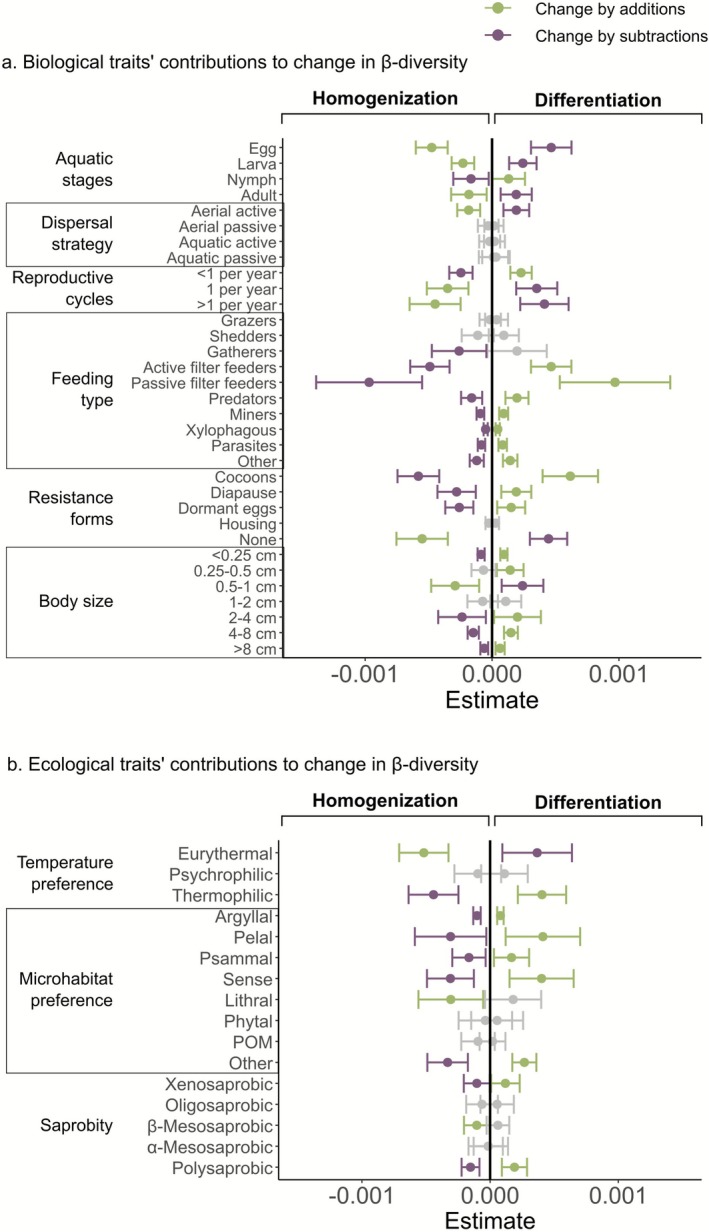 Figure 8
Peer Reviews
No public reviews on file for this paper yet. If you reviewed it on a platform where reviews are public (OpenReview, ICLR, NeurIPS, ICML), you can paste yours below so the community can read it here.
Videos
No videos yet. Explain this paper in a talk, walkthrough, or lecture? Add one.
Taxonomy
TopicsFreshwater macroinvertebrate diversity and ecology · Isotope Analysis in Ecology · Environmental DNA in Biodiversity Studies