Sugar-Based Polyesters: From Glux-Diol Synthesis to Its Enzymatic Polymerization
Federico Acciaretti, Andrea Pasquale, Giacomo Lombardo, Giacomo Damonte, Simona Petroni, Luca Leuzzi, Marco Mangiagalli, Stefania Brocca, Alessandro Pellis, Laura Cipolla

TL;DR
Researchers developed a new way to make biobased polyesters using a sugar-derived compound and enzyme-based polymerization.
Contribution
A new purification method and enzymatic polymerization process for producing biobased polyesters from glux-diol.
Findings
Glux-diol was synthesized efficiently using protection, esterification, and reduction steps.
Enzymatic polymerization produced oligomers with molecular weights between 900 and 2200 g mol–1.
The resulting polyesters showed thermal stabilities between 391 and 419 °C.
Abstract
This work details the synthesis of 2,4:3,5-di-O-methylene-d-glucitol (glux-diol), a bicyclic acetal derivative of d-glucose obtained from d-glucono-1,5-lactone, and also explores its subsequent polymerization to produce biobased polyesters. Key steps for the synthesis of glux-diol are (i) protection with paraformaldehyde, (ii) Fischer esterification, and (iii) reduction with lithium aluminum hydride (LiAlH4). A new purification method was developed to effectively remove inorganic salt byproducts, which can hinder polymerization. The sugar-based monomer was then copolymerized with C4–C10 dimethyl esters using Candida antarctica lipase B as a biocatalyst in Cygnet 2.0, a green, high-boiling solvent. The biocatalytic polycondensation produced oligomers with number-average molecular weights (M n) between 900 and 2200 g mol–1. These materials exhibited thermal stabilities ranging from 391 to…
Genes, proteins, chemicals, diseases, species, mutations and cell lines named across the full text — each resolved to its canonical identifier and authoritative record.
Click any figure to enlarge with its caption.
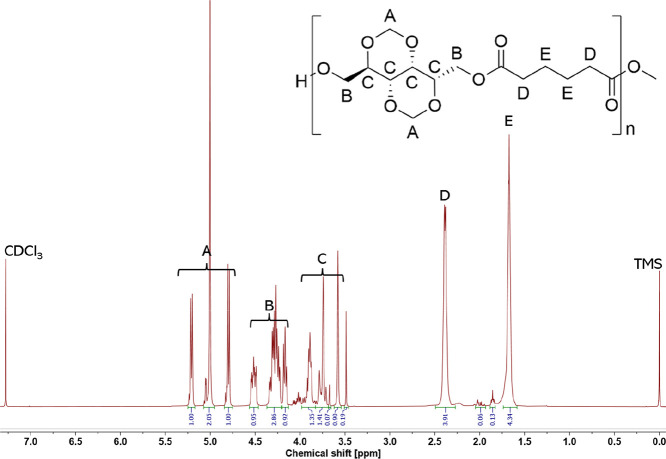 Figure 1
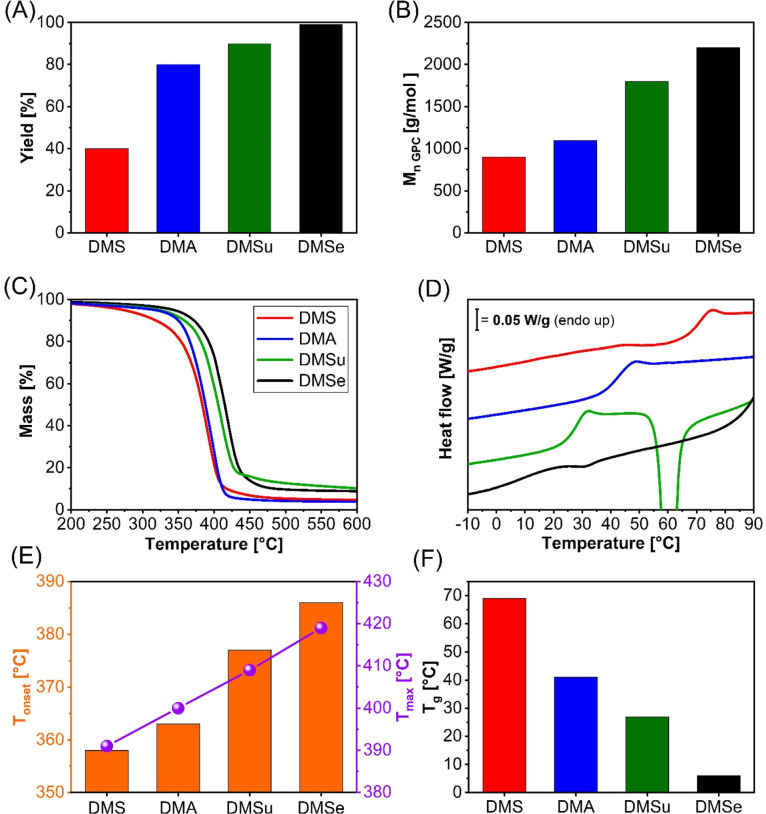 Figure 2
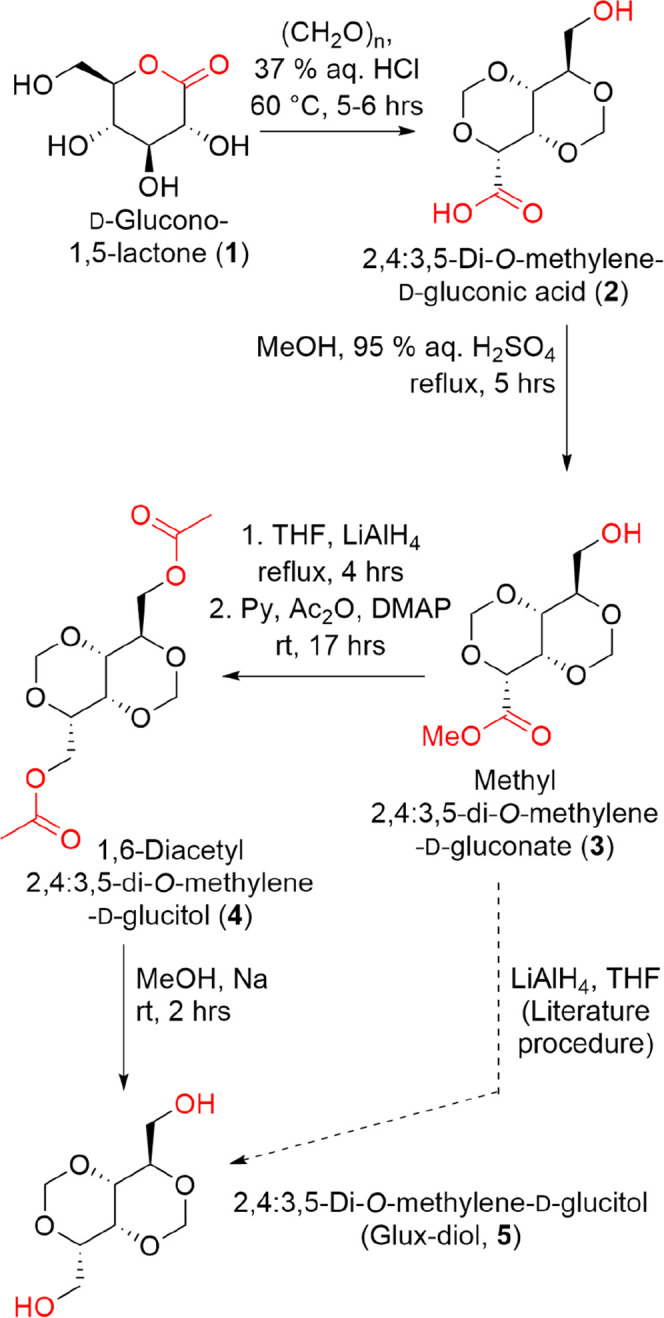 Figure 3
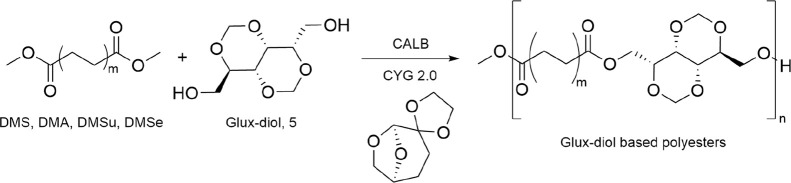 Figure 4
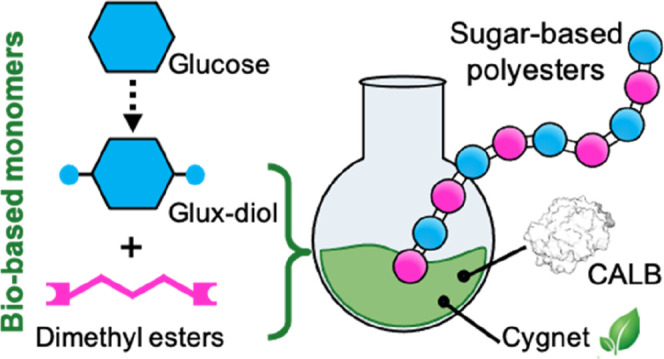 Figure 5
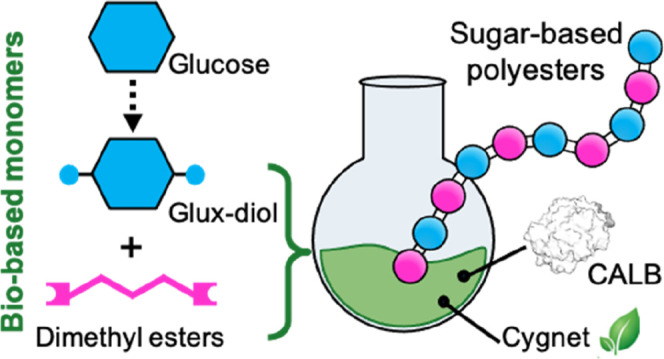 Figure 6
Peer Reviews
No public reviews on file for this paper yet. If you reviewed it on a platform where reviews are public (OpenReview, ICLR, NeurIPS, ICML), you can paste yours below so the community can read it here.
Videos
No videos yet. Explain this paper in a talk, walkthrough, or lecture? Add one.
Taxonomy
Topicsbiodegradable polymer synthesis and properties · Catalysis for Biomass Conversion · Carbon dioxide utilization in catalysis