LiMA: Robust inference of molecular mediation from summary statistics
Kaido Lepik, Chiara Auwerx, Marie C. Sadler, Adriaan van der Graaf, Sven Erik Ojavee, Zoltán Kutalik

TL;DR
LiMA is a new method that improves the accuracy of identifying molecular mediators in causal relationships between risk factors and complex traits.
Contribution
LiMA introduces a likelihood-based framework that jointly models variability in summary statistics, reducing bias and false positives in mediation analysis.
Findings
LiMA achieves several-fold lower bias and better type I error control compared to existing methods in simulations.
Real data applications identified metabolites like glutamate and carnitine, and proteins mediating obesity-related cardiometabolic risk.
LiMA accommodates variability in summary statistics, enabling robust mediation analysis across large mediator sets.
Abstract
Understanding the molecular mechanisms mediating the causal effects of epidemiological risk factors on complex traits can advance targeted disease interventions. Statistical mediation analysis facilitates this by disentangling direct and indirect causal effects. Current approaches to causal mediation leverage Mendelian randomization, using summary statistics from the exposure, mediator, and outcome studies that estimate the genetic effects of instruments. However, differences in study sample sizes (measurement errors) lead to substantial biases and poorly controlled type I error rates for these methods, which become especially pronounced when simultaneously estimating the mediation proportion of numerous mediators. To address these limitations, we introduce Likelihood-based Mediation Analysis (LiMA), which estimates molecular mediation more accurately and robustly by jointly modeling…
Genes, proteins, chemicals, diseases, species, mutations and cell lines named across the full text — each resolved to its canonical identifier and authoritative record.
Click any figure to enlarge with its caption.
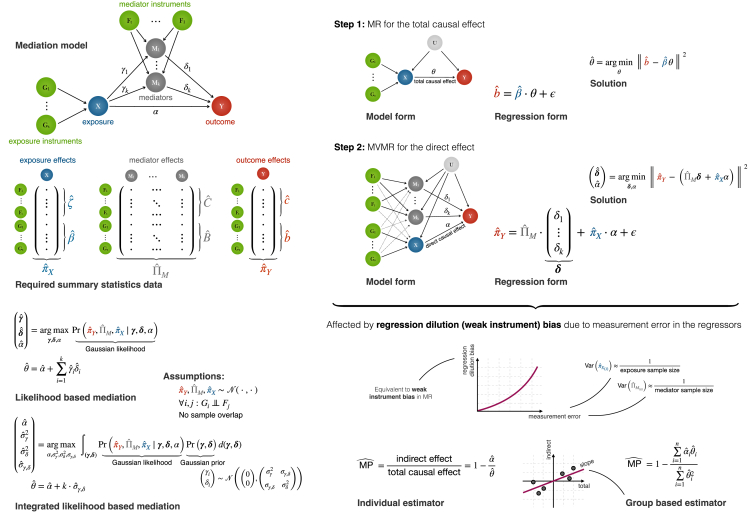 Figure 1
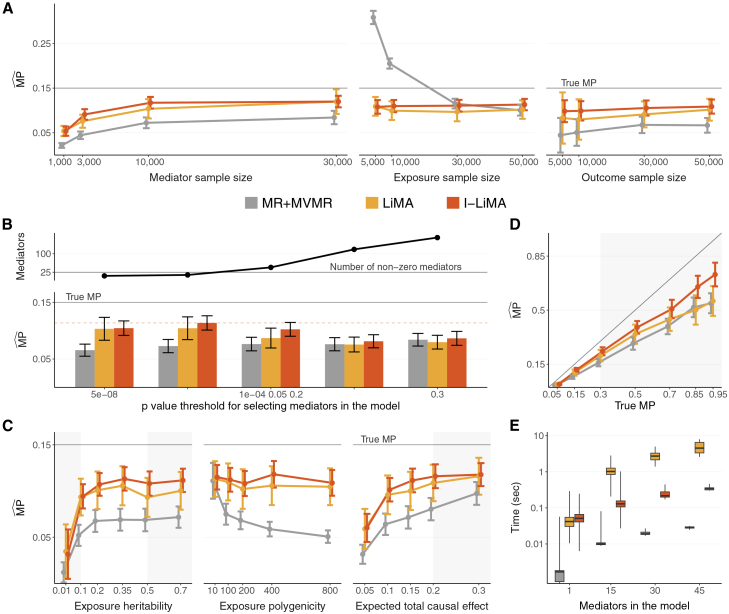 Figure 2
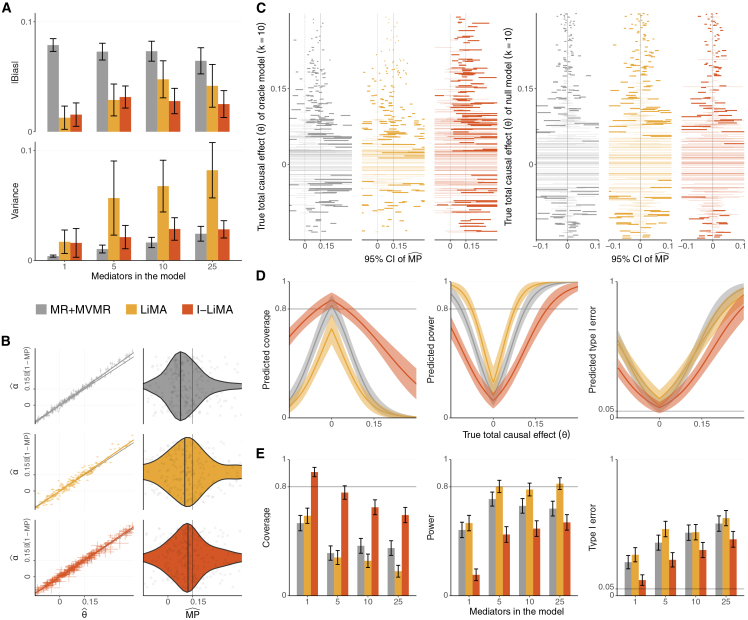 Figure 3
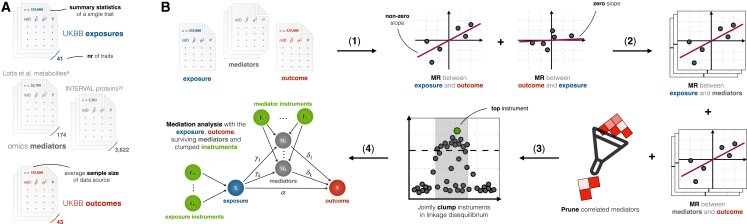 Figure 4
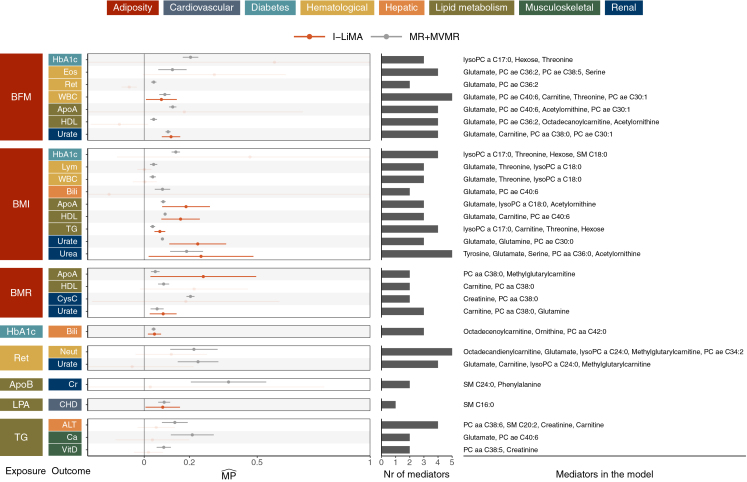 Figure 5
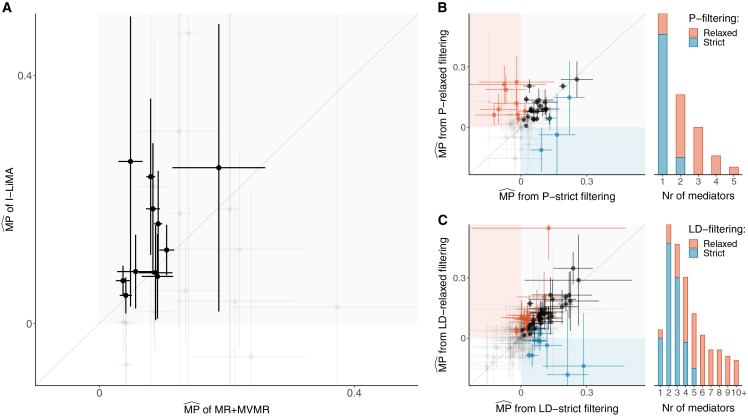 Figure 6
Peer Reviews
No public reviews on file for this paper yet. If you reviewed it on a platform where reviews are public (OpenReview, ICLR, NeurIPS, ICML), you can paste yours below so the community can read it here.
Videos
No videos yet. Explain this paper in a talk, walkthrough, or lecture? Add one.
Taxonomy
TopicsGenetic Associations and Epidemiology · Advanced Causal Inference Techniques · Genetic Mapping and Diversity in Plants and Animals