Just-in-Time Adaptive Intervention to Promote Walking Behavior and Reduce Stationary Time in Physically Inactive Adults: Protocol for the Walking With JITAIs Study
Cora J Firkin, Ajith Vemuri, Tanvir Rahman, Barry Bodt, Elizabeth Orsega-Smith, Keith Decker, Gregory M Dominick

TL;DR
This study tests a smart system that sends personalized walking prompts via Apple Watch to help inactive adults walk more and sit less.
Contribution
The study introduces a novel JITAI approach that tailors walking prompts based on real-time context and user receptiveness.
Findings
The JITAI system uses real-time data like location and weather to deliver personalized walking prompts.
The study includes a 2-week learning phase to assess receptiveness before delivering tailored interventions.
Feasibility will be evaluated through metrics like adherence and user feedback.
Abstract
A Just-in-Time Adaptive Intervention (JITAI) recognizes the dynamic nature of individuals’ states and contexts, predicts support needs, and sends tailored support at more opportune, actionable times. This paper outlines the application architecture and protocol for the pilot “Walking With Just-in-Time Adaptive Interventions” (WWJ) study, which uses a JITAI approach to improve walking behavior—duration, speed, and distance—and reduce stationary time, defined as idle sitting or standing. This study targets 20 adults who are physically inactive and leverages the Apple Watch to deliver fully automated tailored intervention notifications to “walk faster,” “walk longer,” or “stand up and move around” based on real-time data and contextual factors, including time-of-day activity patterns, geographic locations (eg, home, work, park, and gymnasium), weather conditions (eg, precipitation, wind…
Genes, proteins, chemicals, diseases, species, mutations and cell lines named across the full text — each resolved to its canonical identifier and authoritative record.
Click any figure to enlarge with its caption.
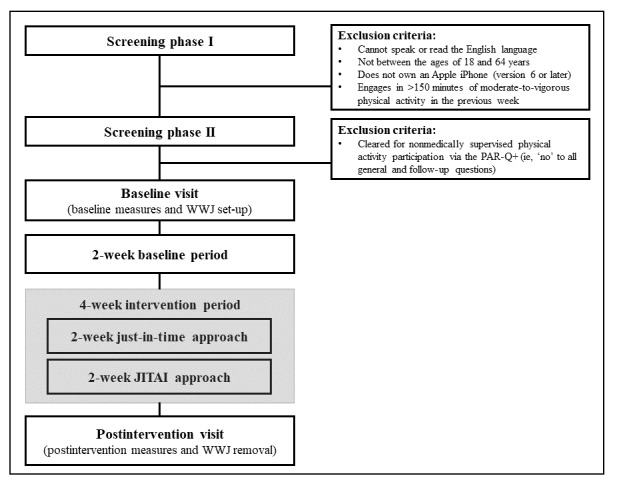 Figure 1
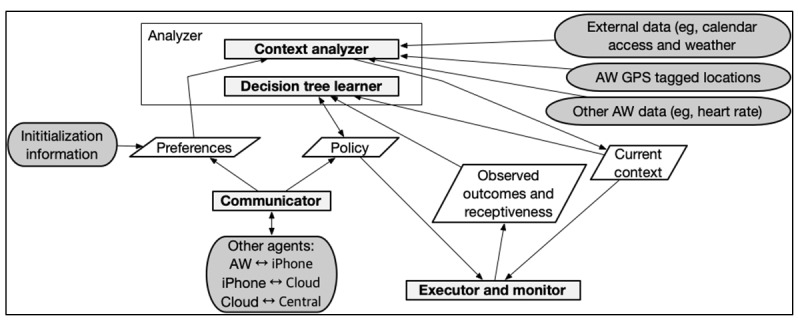 Figure 2
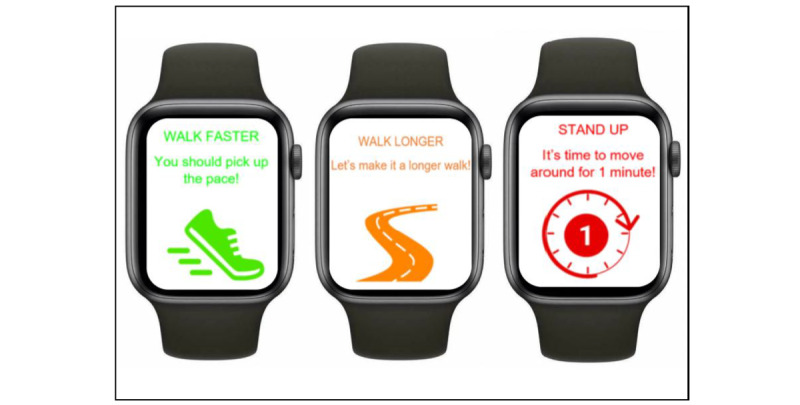 Figure 3
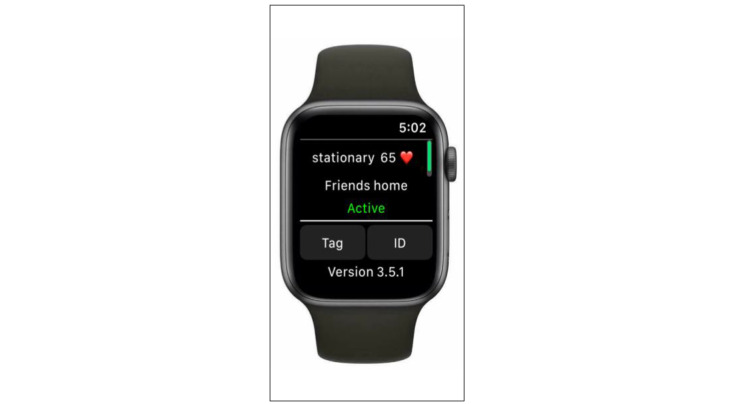 Figure 4
Peer Reviews
No public reviews on file for this paper yet. If you reviewed it on a platform where reviews are public (OpenReview, ICLR, NeurIPS, ICML), you can paste yours below so the community can read it here.
Videos
No videos yet. Explain this paper in a talk, walkthrough, or lecture? Add one.
Taxonomy
TopicsPhysical Activity and Health · Balance, Gait, and Falls Prevention · Down syndrome and intellectual disability research