Assessing the Quality of AI Responses to Patient Concerns About Axial Spondyloarthritis: Delphi-Based Evaluation
Jiaxin Bai, Xiaojian Ji, Jiali Yu, Yiwen Wang, Yufei Guo, Chao Xue, Wenrui Zhang, Jian Zhu

TL;DR
This study evaluates how well AI models provide health advice for axial spondyloarthritis patients, finding that while some models perform well, risks like hallucinations remain.
Contribution
A Delphi-based tool was developed to assess AI responses for axSpA, revealing age-related and clinician-patient differences in health priorities.
Findings
Younger patients prioritized symptom management and medication side effects more than older patients.
LLMs showed higher accuracy in diagnosis/examination than in treatment/medication domains.
GPT-4.0 and Kimi k1.5 had the best readability, but hallucinations remain a critical barrier to safe AI use.
Abstract
Axial spondyloarthritis (axSpA) is a chronic autoinflammatory disease with heterogeneous clinical features, presenting considerable complexity for sustained patient self-management. Although the use of large language models (LLMs) in health care is rapidly expanding, there has been no rigorous assessment of their capacity to provide axSpA-specific health guidance. This study aimed to develop a patient-centered needs assessment tool and conduct a systematic evaluation of the quality of LLM-generated health advice for patients with axSpA. A 2-round Delphi consensus process guided the design of the questionnaire, which was subsequently administered to 84 patients with axSpA and 26 rheumatologists. Patient-identified key concerns were formulated and input into 5 LLM platforms (GPT-4.0, DeepSeek R1, Hunyuan T1, Kimi k1.5, and Wenxin X1), with all prompts and model outputs in Chinese.…
Genes, proteins, chemicals, diseases, species, mutations and cell lines named across the full text — each resolved to its canonical identifier and authoritative record.
Click any figure to enlarge with its caption.
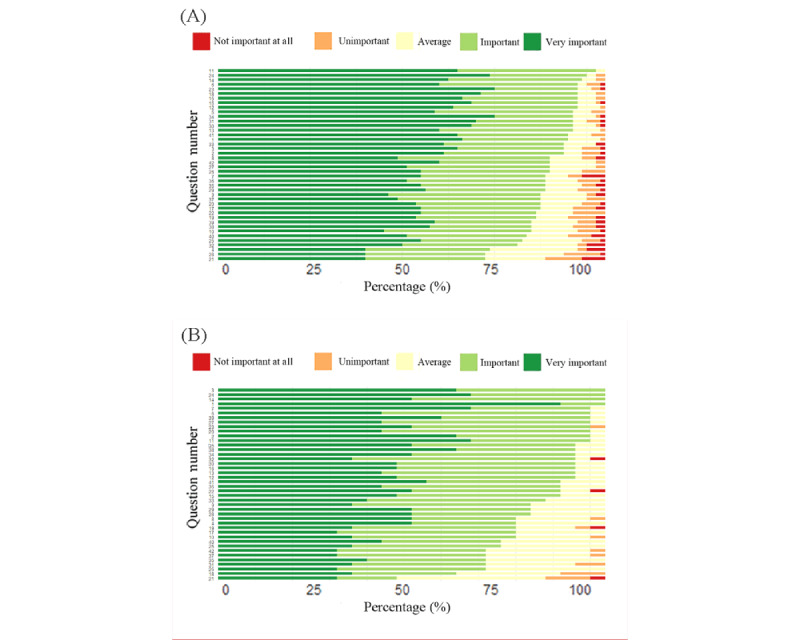 Figure 1
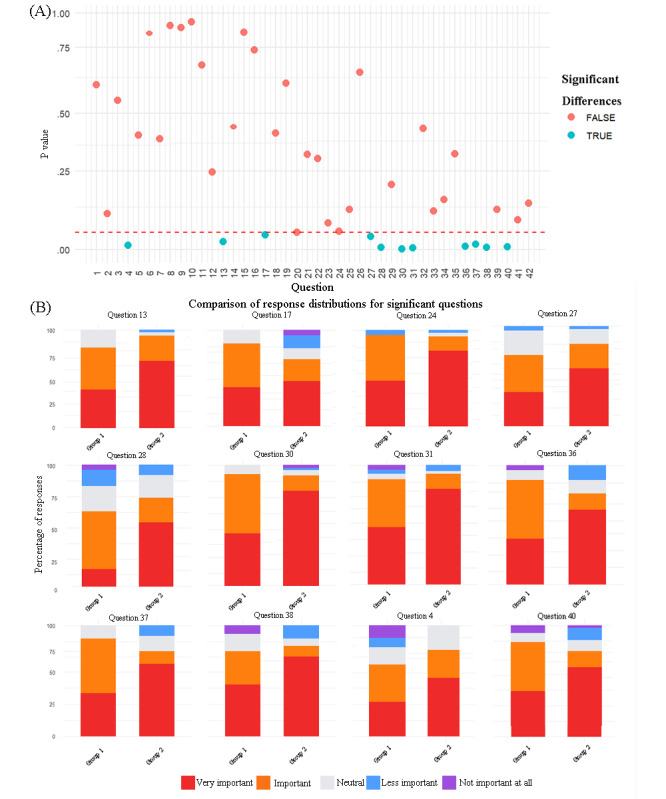 Figure 2
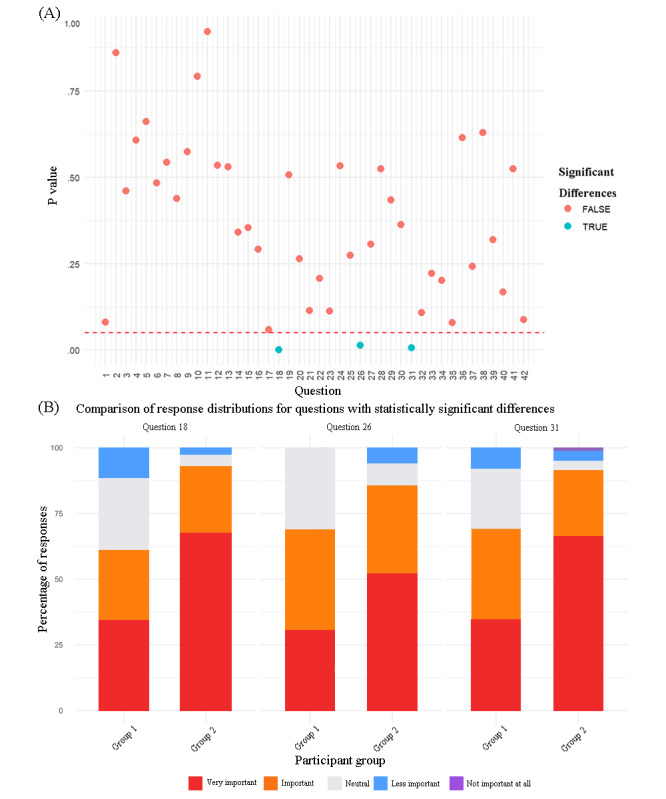 Figure 3
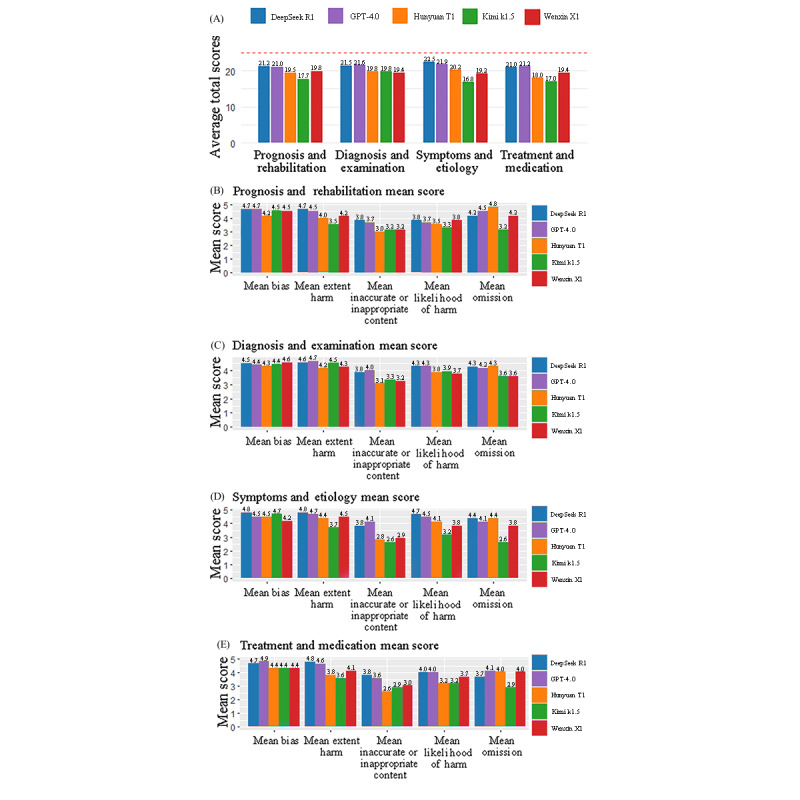 Figure 4
Peer Reviews
No public reviews on file for this paper yet. If you reviewed it on a platform where reviews are public (OpenReview, ICLR, NeurIPS, ICML), you can paste yours below so the community can read it here.
Videos
No videos yet. Explain this paper in a talk, walkthrough, or lecture? Add one.
Taxonomy
TopicsArtificial Intelligence in Healthcare and Education · Fibromyalgia and Chronic Fatigue Syndrome Research · Spondyloarthritis Studies and Treatments