The first whole-genome sequence of a prospective novel sponge-associated Streptomyces strain from Indonesia with a long 1.5 Mbp terminal inverted repeat
Rahadian Pratama, Linda Sukmarini, Akhirta Atikana, Shanti Ratnakomala, Fahrurrozi Fahrurrozi, Puspita Lisdiyanti, Matsapume Detcharoen, Linda Sukmarini, Arzu Karahan, Linda Sukmarini

TL;DR
Scientists sequenced the genome of a new Streptomyces strain from an Indonesian sponge, finding a unique 1.5 Mbp inverted repeat and potential for bioactive compounds.
Contribution
This is the first whole-genome sequence of a novel sponge-associated Streptomyces strain with a long terminal inverted repeat.
Findings
The genome of Streptomyces sp. BTA 1-131 is 10.23 Mbp with a GC content of 71.57%.
A 1.5 Mbp long-terminal inverted repeat was identified in the genome.
The strain likely represents a new species within the Streptomyces genus.
Abstract
Streptomyces sp. BTA 1-131 was isolated from the marine sponge Melophlus sarasinorum collected in Indonesia. The crude extracts of this strain displayed antibacterial and cytotoxic activity, and therefore, to further investigate the bioactive potential of the strain, whole genome sequencing was performed in this study. The whole genome sequencing of Streptomyces sp. BTA 1-131 was conducted using both Illumina NextSeq and Oxford Nanopore platforms with a de novo hybrid assembly approach. The high-quality genome obtained is 10.23 Mbp with a GC content of 71.57%. It is organised into a single chromosomal contig, two linear plasmids, and one circular plasmid. Interestingly, a long-terminal inverted repeat (L-TIR) sequence of 1.5 Mbp has been confirmed in the strain genome. Phylogenomic analysis suggested that the strain BTA 1-131 likely represents a new species within the genus…
Genes, proteins, chemicals, diseases, species, mutations and cell lines named across the full text — each resolved to its canonical identifier and authoritative record.
Click any figure to enlarge with its caption.
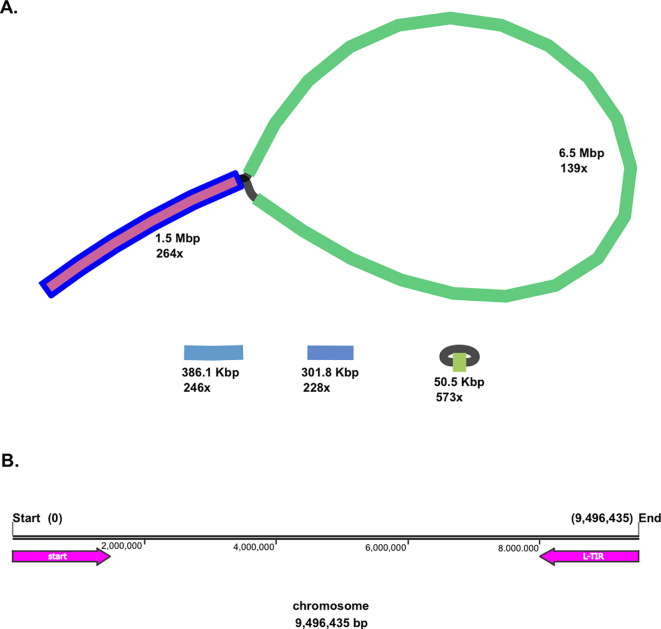 Figure 1
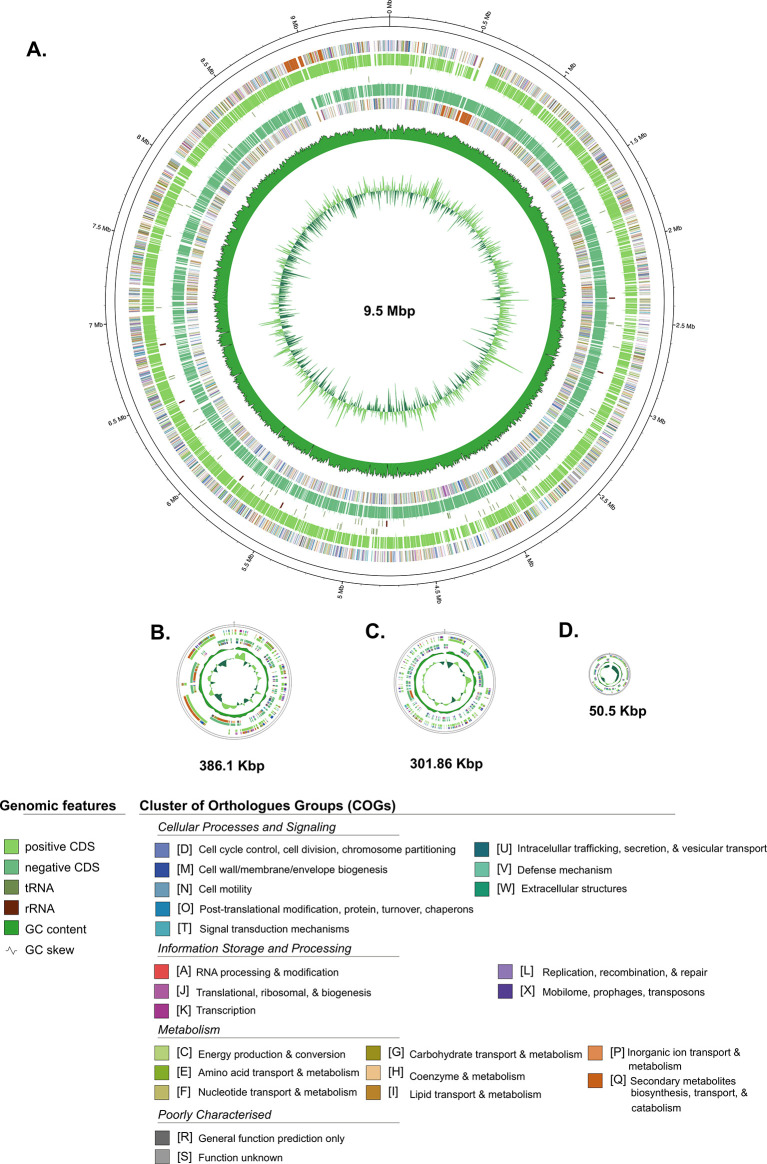 Figure 2
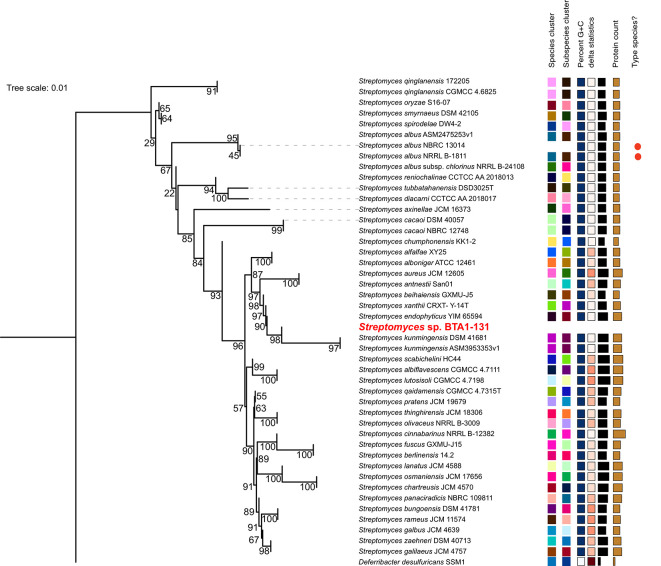 Figure 3
Peer Reviews
No public reviews on file for this paper yet. If you reviewed it on a platform where reviews are public (OpenReview, ICLR, NeurIPS, ICML), you can paste yours below so the community can read it here.
Videos
No videos yet. Explain this paper in a talk, walkthrough, or lecture? Add one.
Taxonomy
TopicsMicrobial Natural Products and Biosynthesis · Synthetic Organic Chemistry Methods · Marine Sponges and Natural Products