Determination of the Lethal Concentrations of Two Phenolic Acid Derivatives Originated From the Edible Red Marine Macroalga (Bangia fuscopurpurea) Using the In Vivo Zebrafish Eleutheroembryo Model and Their In Silico Structure–Toxicity Relationship Study
Shi‐Ying Huang, Guiling Li, Yi‐Jia Shih, Chang‐Wei Hsieh, Yun‐Sheng Lin, Jingwen Liu, Tao Sun, Chien‐Wei Feng

TL;DR
This study evaluates the toxicity of two compounds from a red marine algae using zebrafish embryos and computer models, finding one compound safer than the other.
Contribution
The study introduces a combined in vivo and in silico approach to assess toxicity of phenolic acid derivatives from Bangia fuscopurpurea.
Findings
HBP2 showed lower toxicity in zebrafish embryos and in silico models compared to HBP3.
HBP3 exhibited higher cytotoxicity in human neuronal cells, linked to Bcl-2 downregulation and caspase-3 activation.
HBP2's safety advantages may be due to a higher degree of hydroxylation.
Abstract
A 2023 study identified two phenolic acid derivatives (HBP2–3) in the extract from the edible macroalga (Bangia fuscopurpurea), and we previously demonstrated the in vitro neuroprotective effects of HBP2–3. However, the appropriate starting experimental concentration range for HBP2–3 in animals remained unclear, and it was uncertain which compound might carry a lower toxicity risk. This study assessed the in vivo lethal dose of HBP2–3 and analyzed their in silico toxicological profiles to support a structure–toxicity relationship (STR) analysis. We predicted their LD50 using the tools GUSAR and DL‐AOT, and determined their lethal concentrations (LC) using the in vivo zebrafish eleutheroembryo model. We predicted their toxicological properties using the tools (ADMETlab 3.0, TISBE, and embryoTox). An in vitro model was further selected to assess their toxicity. In in silico models, HBP2–3…
Genes, proteins, chemicals, diseases, species, mutations and cell lines named across the full text — each resolved to its canonical identifier and authoritative record.
Click any figure to enlarge with its caption.
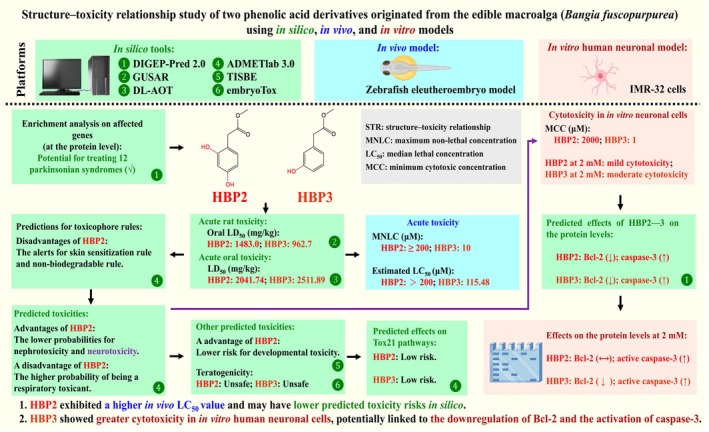 Figure 1
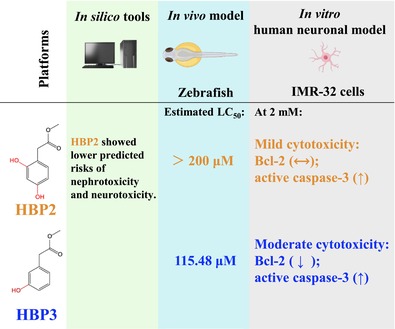 Figure 2
 Figure 3
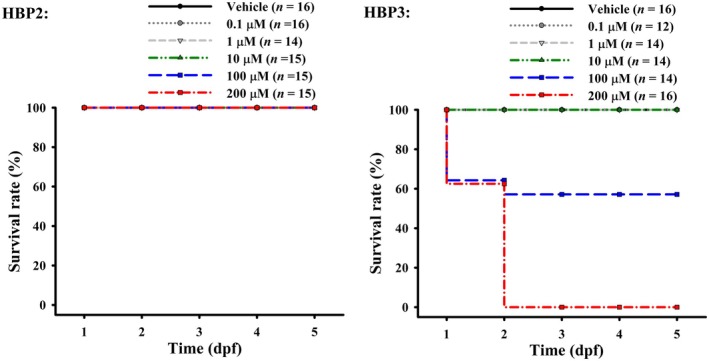 Figure 4
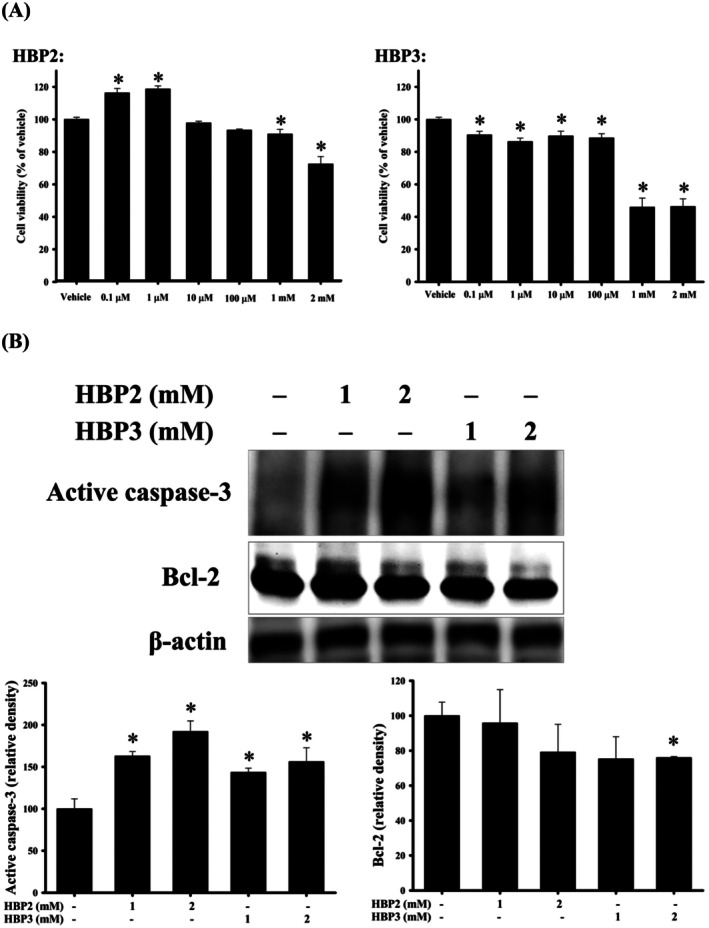 Figure 5
 Figure 6
Peer Reviews
No public reviews on file for this paper yet. If you reviewed it on a platform where reviews are public (OpenReview, ICLR, NeurIPS, ICML), you can paste yours below so the community can read it here.
Videos
No videos yet. Explain this paper in a talk, walkthrough, or lecture? Add one.
Taxonomy
TopicsSeaweed-derived Bioactive Compounds · Zebrafish Biomedical Research Applications · Marine Toxins and Detection Methods