Impact of Column Load and Signal‐to‐Noise Threshold on the Accuracy and Repeatability of Jet A Hydrocarbon Profiling via GC×GC/FID
Brent A. Modereger, Louis Edwards Caceres‐Martinez, Michael E. Peretich, Hilkka I. Kenttämaa, Gozdem Kilaz

TL;DR
This study shows how adjusting column load and signal-to-noise thresholds affects the accuracy of hydrocarbon measurements in jet fuel using GC×GC/FID.
Contribution
The paper systematically investigates the impact of column load and S/N threshold on GC×GC/FID hydrocarbon profiling accuracy and repeatability.
Findings
Higher column load (2.5 nL) improves accuracy and repeatability compared to lower load (0.05 nL).
Lower signal-to-noise thresholds improve accuracy and repeatability of hydrocarbon composition measurements.
Optimizing column load and minimizing S/N threshold enhances GC×GC/FID measurement quality.
Abstract
Comprehensive two‐dimensional gas chromatography with flame ionization detection (GC×GC/FID) is a powerful technique for quantifying hydrocarbons in jet fuel. However, factors such as column load and the signal‐to‐noise (S/N) ratio threshold used for peak inclusion can significantly influence the accuracy and repeatability of hydrocarbon composition measurements. Despite their importance, the effects of these parameters have not been systematically studied. Accurate and precise quantitation of individual hydrocarbon groups (e.g., C7 isoalkanes) is particularly critical, as specific jet fuel properties, such as flash point, freezing point, and kinematic viscosity, are highly dependent on the concentrations of specific hydrocarbon classes. In this study, we investigated the influence of column load (0.05 vs. 2.5 nL) and S/N threshold (0–150) on the measured hydrocarbon composition of Jet…
Genes, proteins, chemicals, diseases, species, mutations and cell lines named across the full text — each resolved to its canonical identifier and authoritative record.
Click any figure to enlarge with its caption.
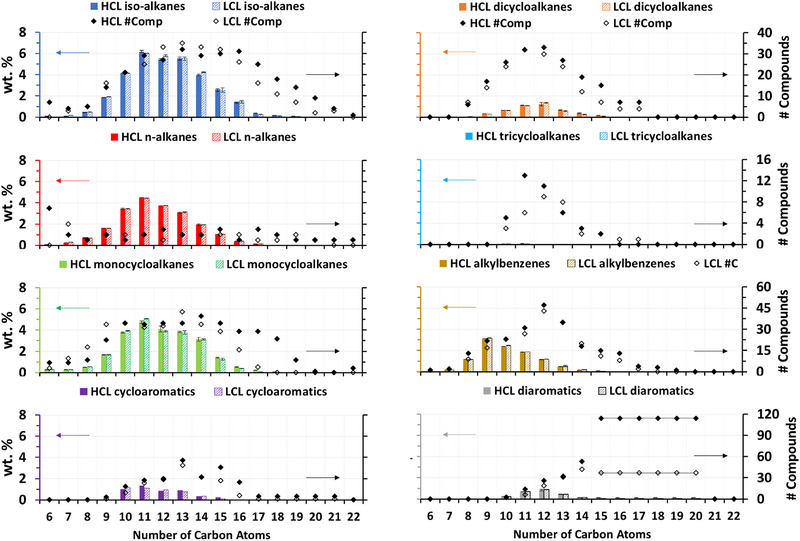 Figure 1
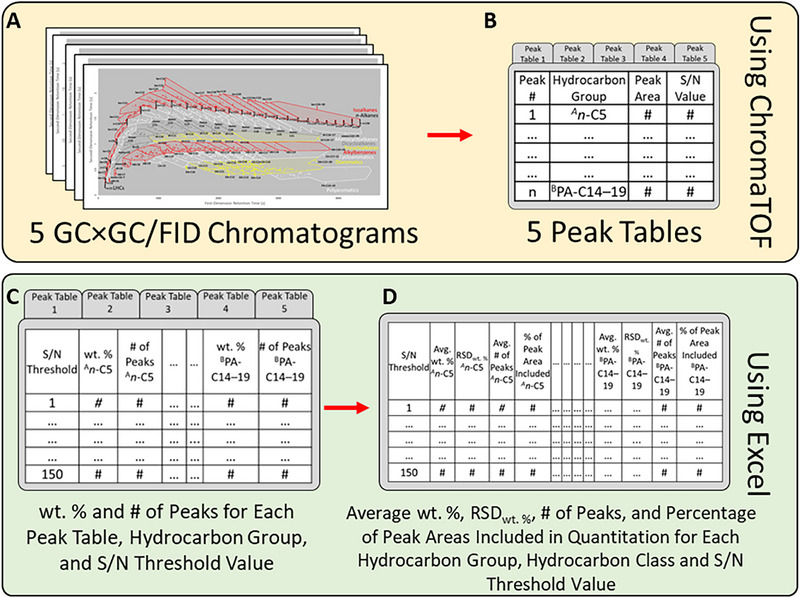 Figure 2
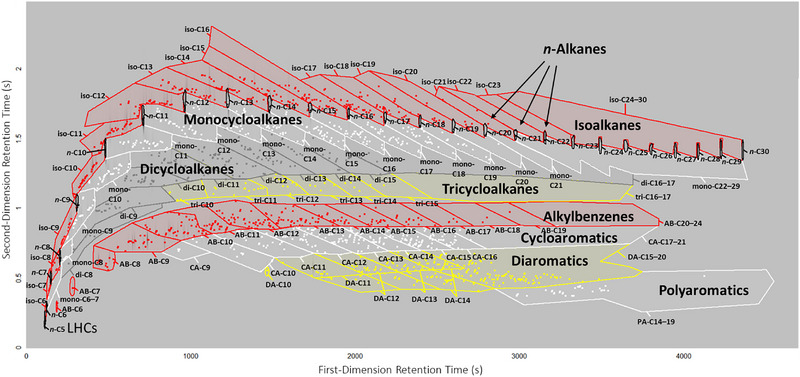 Figure 3
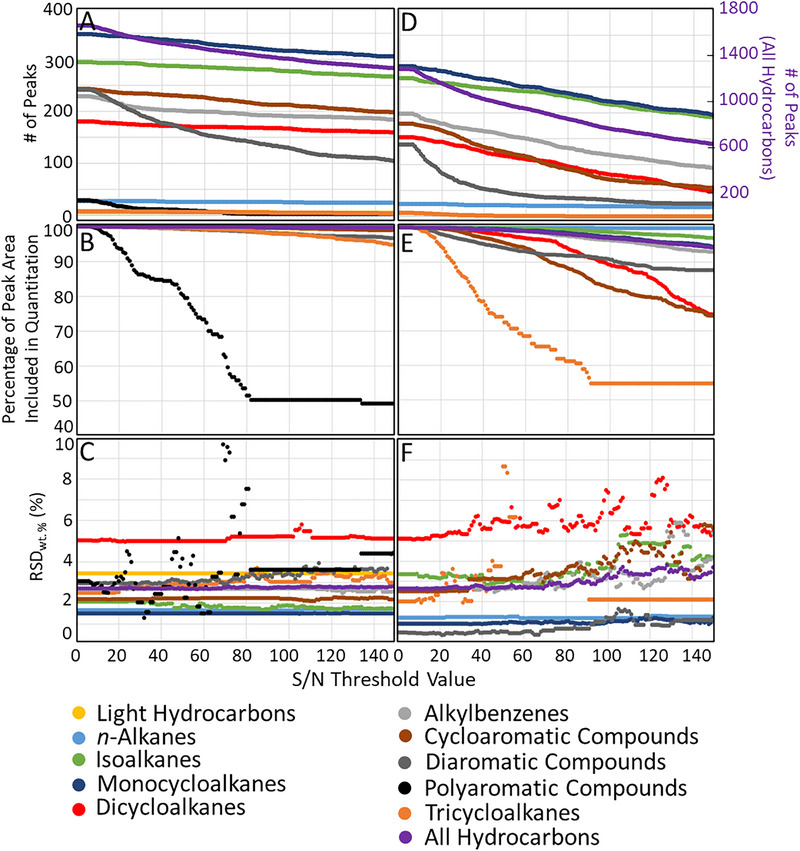 Figure 4
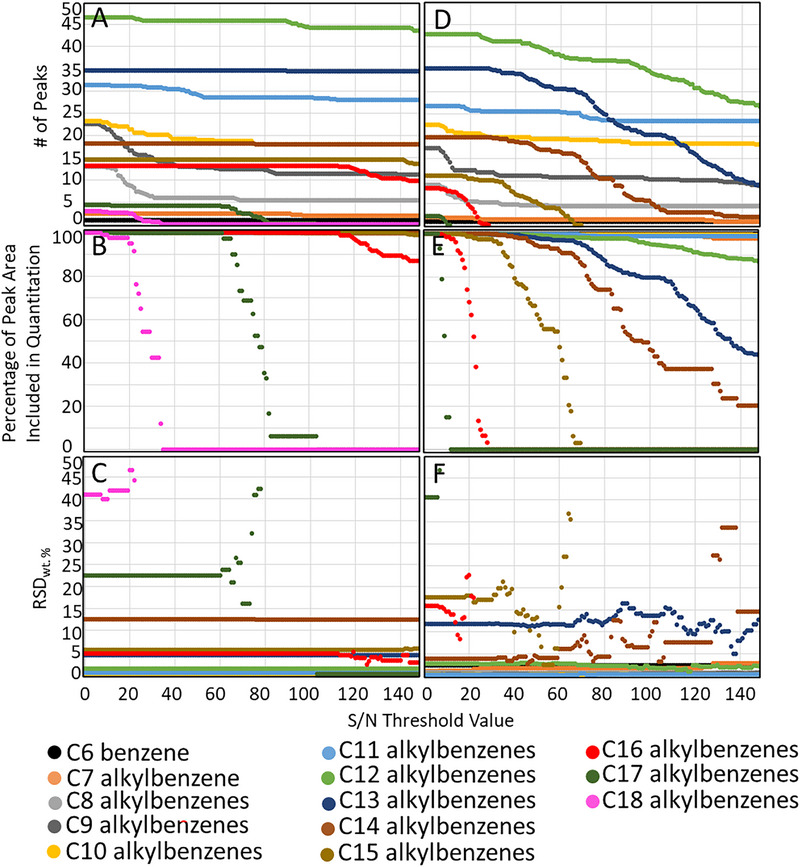 Figure 5
Peer Reviews
No public reviews on file for this paper yet. If you reviewed it on a platform where reviews are public (OpenReview, ICLR, NeurIPS, ICML), you can paste yours below so the community can read it here.
Videos
No videos yet. Explain this paper in a talk, walkthrough, or lecture? Add one.
Taxonomy
TopicsAnalytical Chemistry and Chromatography · Petroleum Processing and Analysis · Heat transfer and supercritical fluids