Perioperative Hereditary Angioedema Triggered by Laryngeal Mask Airway: A Case Report and Anesthetic Implications
Riccardo Pulitanò, Francesca Romana Misiti, Letizia Isidori, Marco Giudice, Francesca La Verde

TL;DR
A 79-year-old man with hereditary angioedema experienced a severe reaction after surgery, highlighting the need for careful perioperative management.
Contribution
This case report highlights the use of a laryngeal mask airway as a potential trigger for HAE and emphasizes perioperative management strategies.
Findings
The patient developed acute facial edema after using a supraglottic airway device.
Prompt recognition and treatment led to rapid resolution and uneventful recovery.
The case emphasizes the importance of perioperative awareness and planning for HAE patients.
Abstract
Hereditary angioedema (HAE) is a rare condition characterized by episodic subcutaneous or mucosal edema, which may pose significant challenges in the perioperative setting. We report the management of a 79‑year-old male patient undergoing transurethral resection of a bladder tumor under general anesthesia with a supraglottic airway device. Postoperatively, the patient developed acute facial edema requiring prompt recognition and disease‑specific intervention. Rapid resolution was achieved, and the patient had an uneventful recovery. This case underscores the importance of perioperative awareness, early recognition, and careful planning to prevent airway complications in patients with HAE.
Genes, proteins, chemicals, diseases, species, mutations and cell lines named across the full text — each resolved to its canonical identifier and authoritative record.
Click any figure to enlarge with its caption.
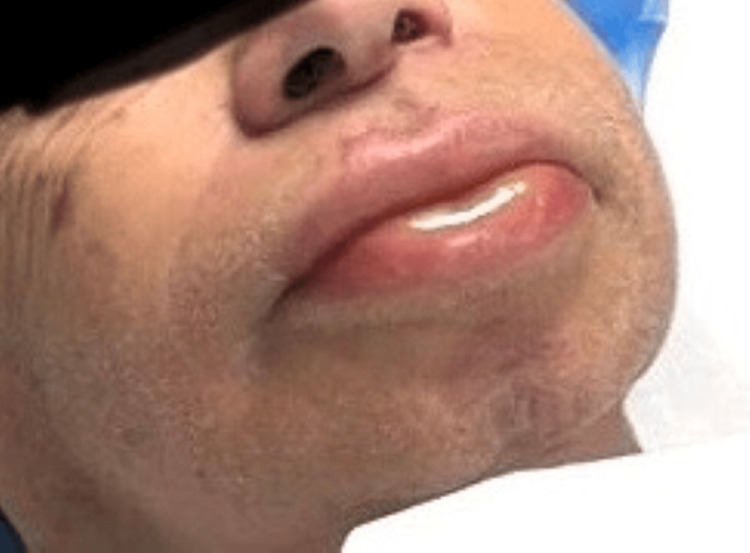 Figure 1
Peer Reviews
No public reviews on file for this paper yet. If you reviewed it on a platform where reviews are public (OpenReview, ICLR, NeurIPS, ICML), you can paste yours below so the community can read it here.
Videos
No videos yet. Explain this paper in a talk, walkthrough, or lecture? Add one.
Taxonomy
TopicsCoagulation, Bradykinin, Polyphosphates, and Angioedema · Hemophilia Treatment and Research · Urticaria and Related Conditions