Autodesmotic reactions for general strain energy evaluation in polycyclic aromatic nanocarbons
Yang Wang

TL;DR
This paper introduces a new method called autodesmotic reactions to accurately evaluate strain energy in complex carbon nanomaterials using a single quantum calculation.
Contribution
The novel autodesmotic reaction framework enables efficient and accurate strain energy evaluation in polycyclic aromatic nanocarbons.
Findings
Autodesmotic reactions preserve molecular topology and ensure proper π-energy balance.
The method is accurate and robust, validated across diverse carbon nanobelts and other structures.
It reveals strain–structure–property relationships and requires only one quantum chemical calculation per molecule.
Abstract
Strain energy fundamentally shapes the structure, stability, and reactivity of π-conjugated nanocarbons, making its accurate quantification essential for rational molecular design. However, existing approaches rely on arbitrary reference choices, overlook critical π-energy balance, or demand extensive computations, limiting their reliability and scope. Here we introduce autodesmotic reactions, a general and efficient framework that maps any strained π-conjugated nanocarbon onto an operationally defined single-molecule reference while preserving molecular topology and ensuring proper π-energy balance. This reference resides within a virtual chemical space constructed from physically motivated models trained on planar benzenoid hydrocarbons. Benchmarking across diverse carbon nanobelts confirms the accuracy and robustness of the method, and applications to circulenes, helicenes,…
Genes, proteins, chemicals, diseases, species, mutations and cell lines named across the full text — each resolved to its canonical identifier and authoritative record.
Click any figure to enlarge with its caption.
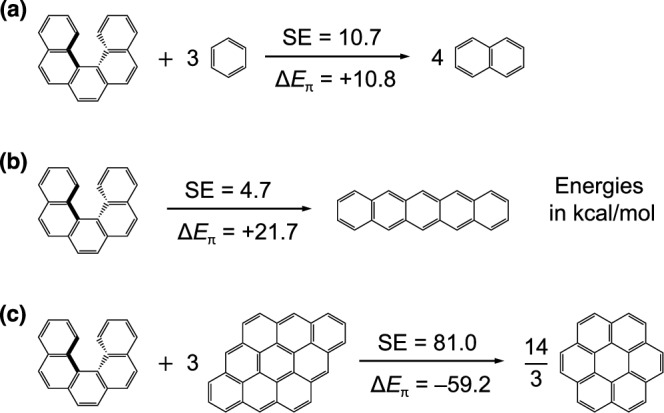 Figure 1
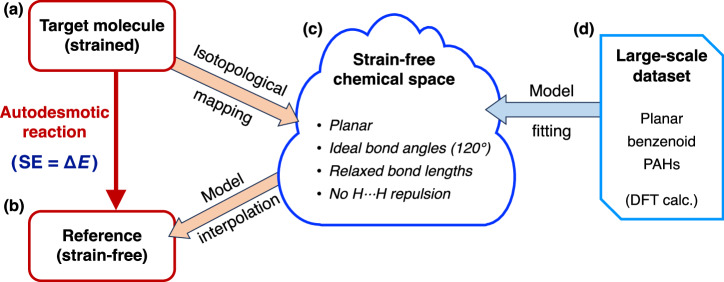 Figure 2
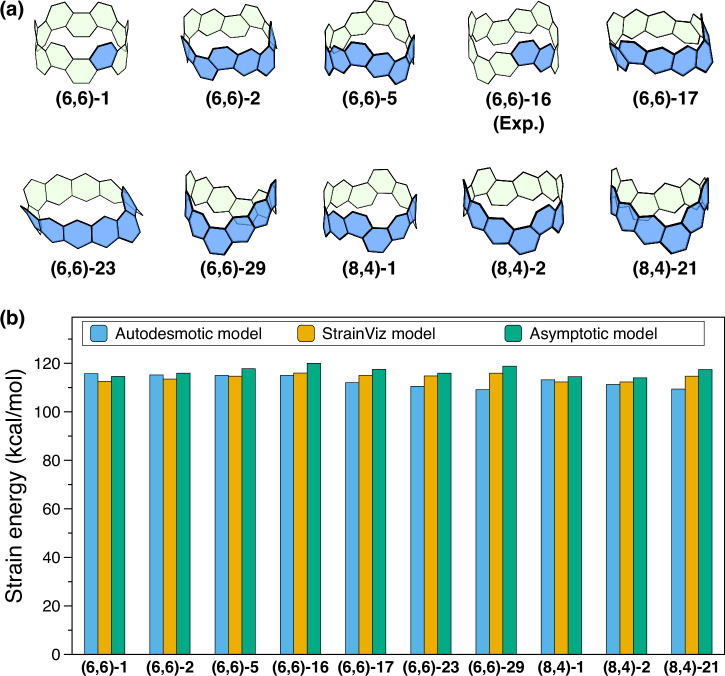 Figure 3
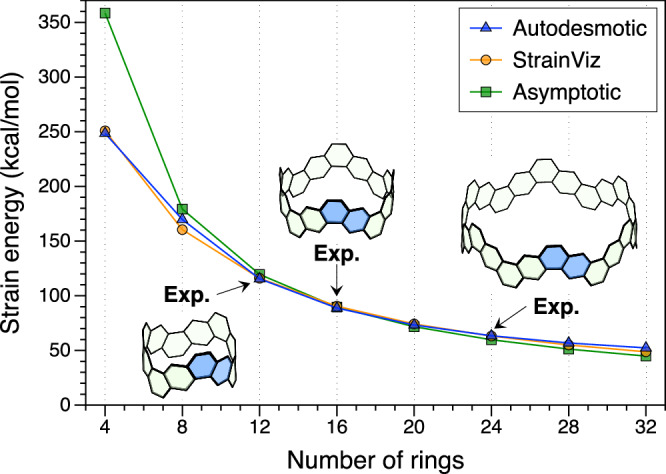 Figure 4
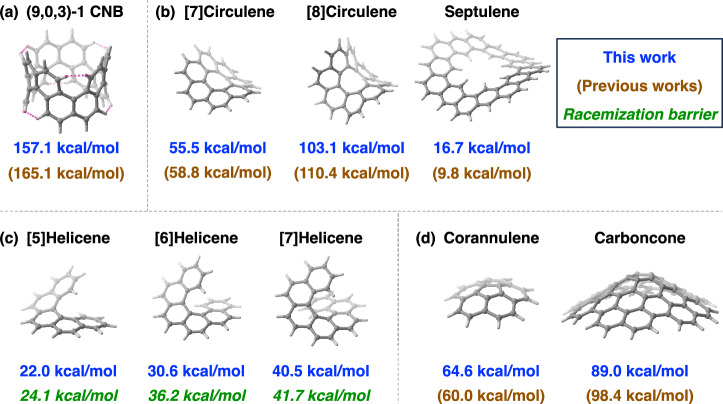 Figure 5
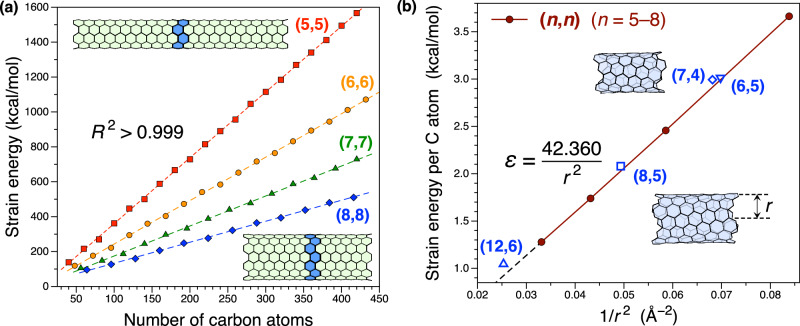 Figure 6
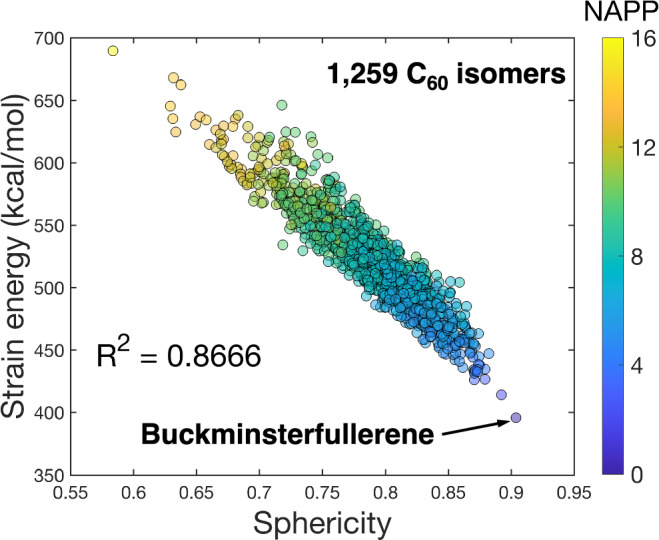 Figure 7
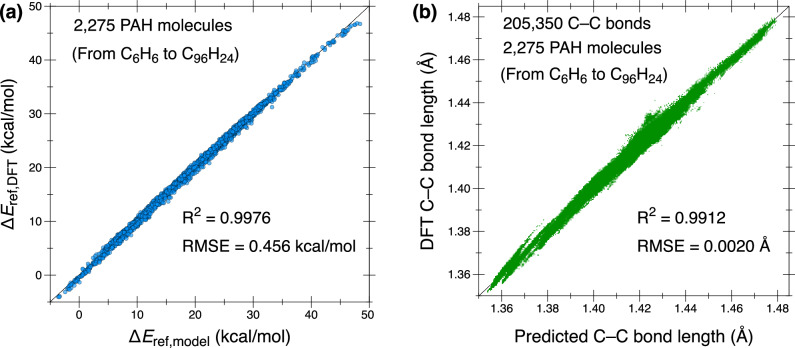 Figure 8
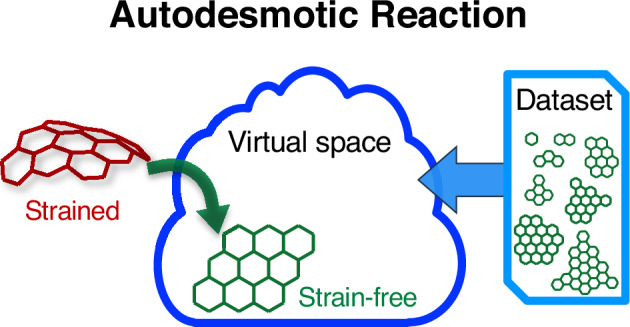 Figure 9
Peer Reviews
No public reviews on file for this paper yet. If you reviewed it on a platform where reviews are public (OpenReview, ICLR, NeurIPS, ICML), you can paste yours below so the community can read it here.
Videos
No videos yet. Explain this paper in a talk, walkthrough, or lecture? Add one.
Taxonomy
TopicsSynthesis and Properties of Aromatic Compounds · Fullerene Chemistry and Applications · Carbon Nanotubes in Composites