Three years of medication-use sequences in incident bipolar disorder in Sweden reveal divergent patterns in native-born and immigrant populations
Alexander Kautzky, Katalin Gémes, Bergný Ármannsdóttir, Ridwanul Amin, Aemal Akhtar, Johannes Lieslehto, Antti Tanskanen, Heidi Taipale, Ellenor Mittendorfer-Rutz

TL;DR
This study finds that immigrants in Sweden with bipolar disorder are less likely to receive adequate medication compared to native Swedes, highlighting disparities in mental health treatment.
Contribution
The study introduces state sequence analysis to compare medication-use patterns in bipolar disorder across native and immigrant populations in Sweden.
Findings
Immigrant groups, especially refugees, show higher rates of treatment failure compared to Swedish-born individuals.
Transitions to adequate treatment are rare across all population groups.
Adjusting for covariates reveals non-refugee and refugee immigrants have the highest probabilities of treatment failure.
Abstract
Guideline-conform treatment of mental disorders is compromised in immigrant populations, but longitudinal pharmacoepidemiologic patterns in bipolar disorder (BD) remain unknown. We aimed to close this knowledge gap by applying state sequence analysis (SSA) to comprehensively assess individual-level medication use. Psychopharmacological medication use was assessed among Swedish-born, second-generation, non-refugee and refugee first-generation immigrants with incident BD diagnosed in Sweden 2006–2015 (n = 24,578, 16–65 years). Three years of medication-use were conceptualized with SSA as consecutive sequences of three-month periods. Anticonvulsant mood-stabilizer, lithium and antipsychotic use was considered adequate treatment. Typologies were identified by clustering and associated with population groups and covariates applying multinomial logistic regression, yielding odds ratios (OR)…
Genes, proteins, chemicals, diseases, species, mutations and cell lines named across the full text — each resolved to its canonical identifier and authoritative record.
Click any figure to enlarge with its caption.
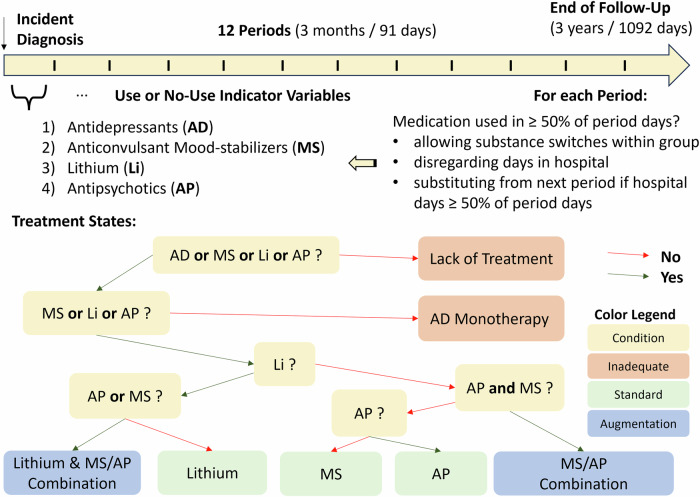 Figure 1
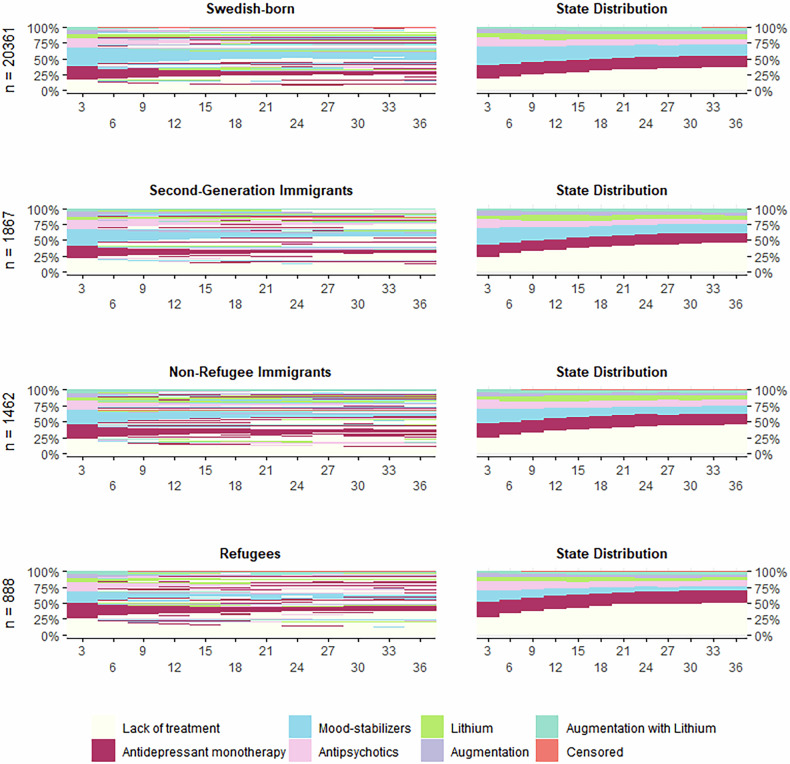 Figure 2
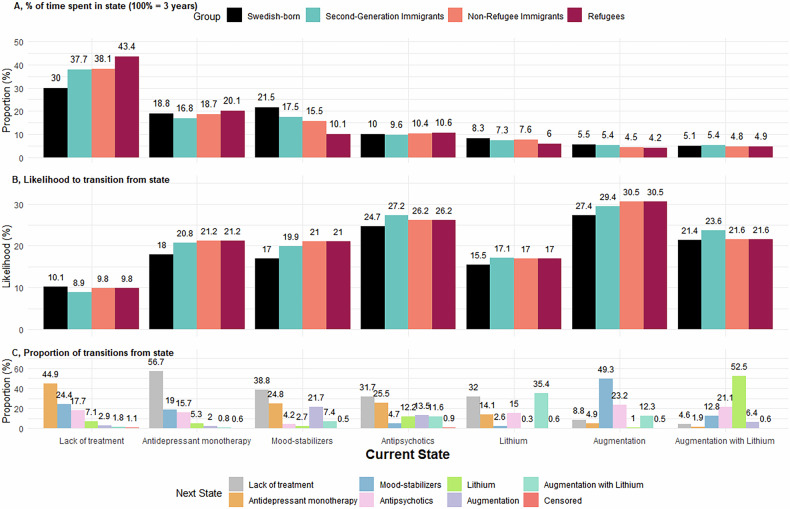 Figure 3
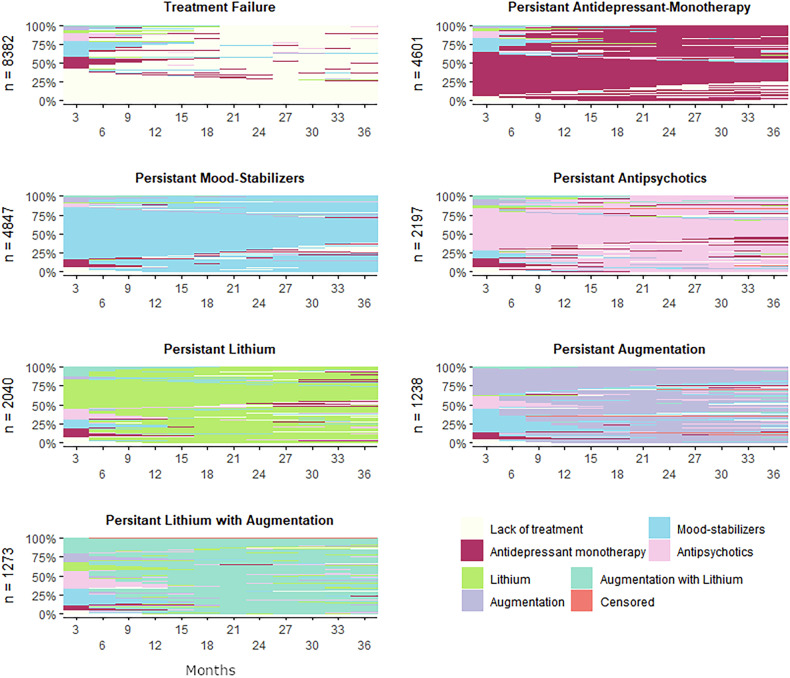 Figure 4
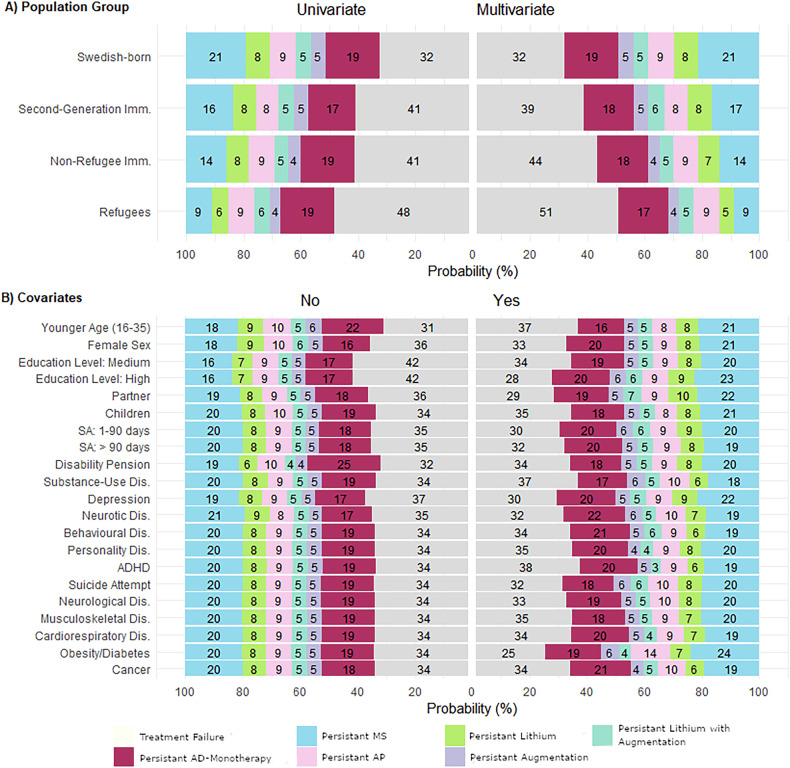 Figure 5
Peer Reviews
No public reviews on file for this paper yet. If you reviewed it on a platform where reviews are public (OpenReview, ICLR, NeurIPS, ICML), you can paste yours below so the community can read it here.
Videos
No videos yet. Explain this paper in a talk, walkthrough, or lecture? Add one.
Taxonomy
TopicsBipolar Disorder and Treatment · Schizophrenia research and treatment · Mental Health Research Topics