Expression of DNA-damage response genes after exposure to high LET particles used in BNCT in glioblastoma cells with altered radiosensitivity
Martyna Araszkiewicz, Agnieszka Korgul, Katarzyna Tymińska, Urszula Kaźmierczak, Kinga Dyka, Patrycja Chuchała, Renata Grzela, Patrycja Kamińska, Roman Kuczma, Bohdan Paterczyk, Anna Stankiewicz-Drogoń, Beata Wielgus-Kutrowska, Agata Kustra, Michał Fryc, Piotr Bednarczyk

TL;DR
This study shows how DNA-PKcs deficiency in glioblastoma cells affects DNA repair gene expression and radiosensitivity after alpha particle exposure.
Contribution
The study reveals compensatory DNA repair activation in DNA-PKcs-deficient glioblastoma cells exposed to high LET radiation.
Findings
DNA-PKcs-deficient M059J cells showed higher metabolic activity and survival after α-particle irradiation compared to M059K cells.
M059J cells exhibited broad upregulation of multiple DNA repair pathways, while M059K cells showed restricted PRKDC upregulation.
DNA-PKcs status significantly influences DNA damage response and radiosensitivity in glioblastoma cells.
Abstract
DNA-dependent protein kinase catalytic subunit (DNA-PKcs) plays a central role in the repair of double-strand breaks (DSBs), but its deficiency alters the broader DNA damage response in glioblastoma cells exposed to α particle irradiation. Here, we investigated transcriptional changes in DNA repair pathways and cellular radiosensitivity in two isogenic glioblastoma cell lines differing in DNA-PKcs status: M059J (DNA-PKcs-deficient) and M059K (DNA-PKcs-proficient). Using pathway-focused qPCR, we profiled 30 genes involved in key DNA repair pathways and evaluated cell survival by clonogenic and MTT assays. M059J cells, despite DNA-PKcs deficiency, exhibited comparable survival fractions and higher metabolic activity than DNA-PKcs-proficient M059K cells following α particle irradiation. Irradiated M059J cells exhibited broad transcriptional upregulation of genes involved in double-strand…
Genes, proteins, chemicals, diseases, species, mutations and cell lines named across the full text — each resolved to its canonical identifier and authoritative record.
Click any figure to enlarge with its caption.
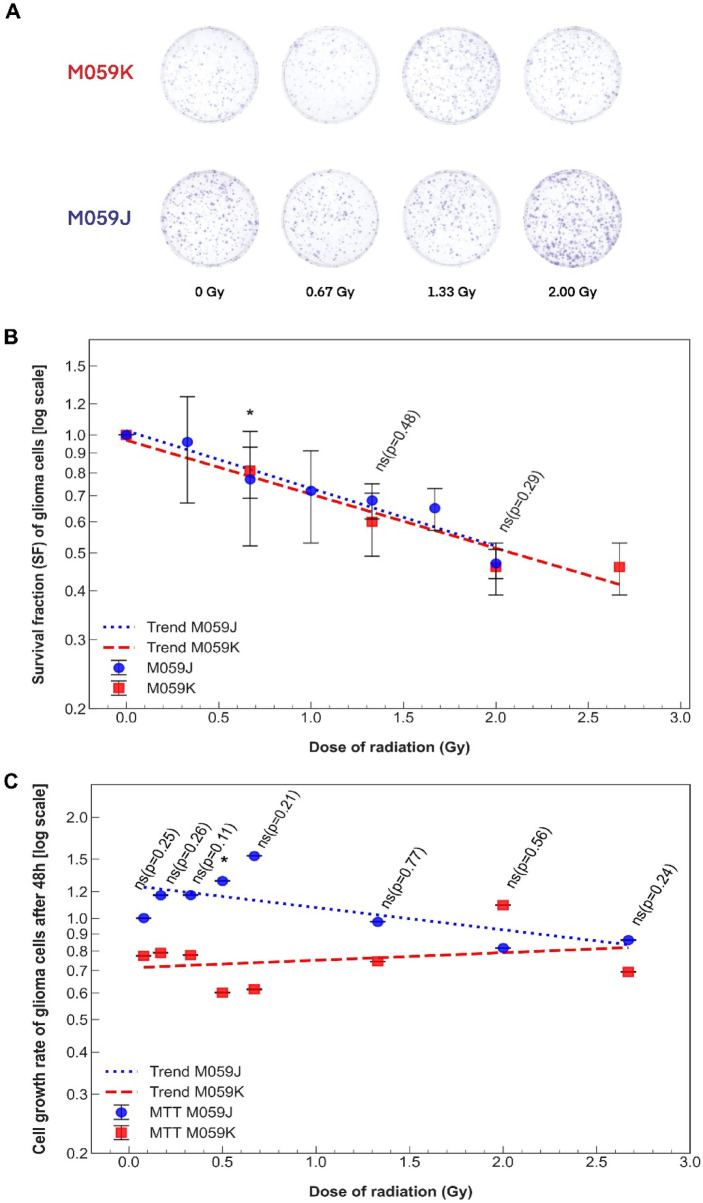 Figure 1
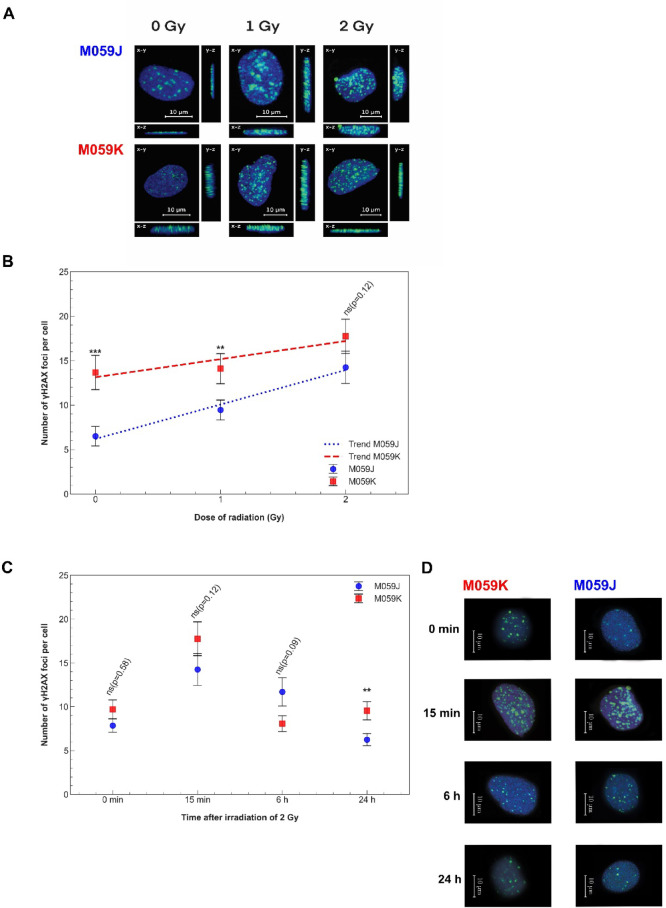 Figure 2
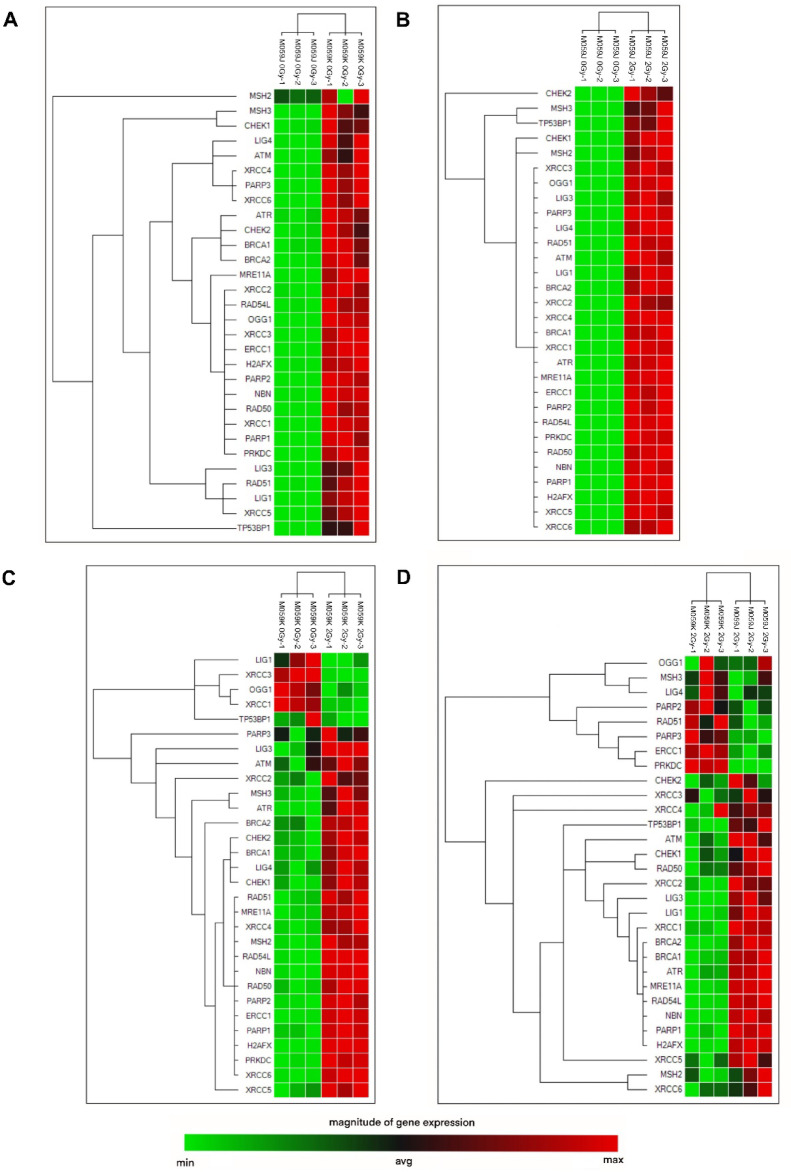 Figure 3
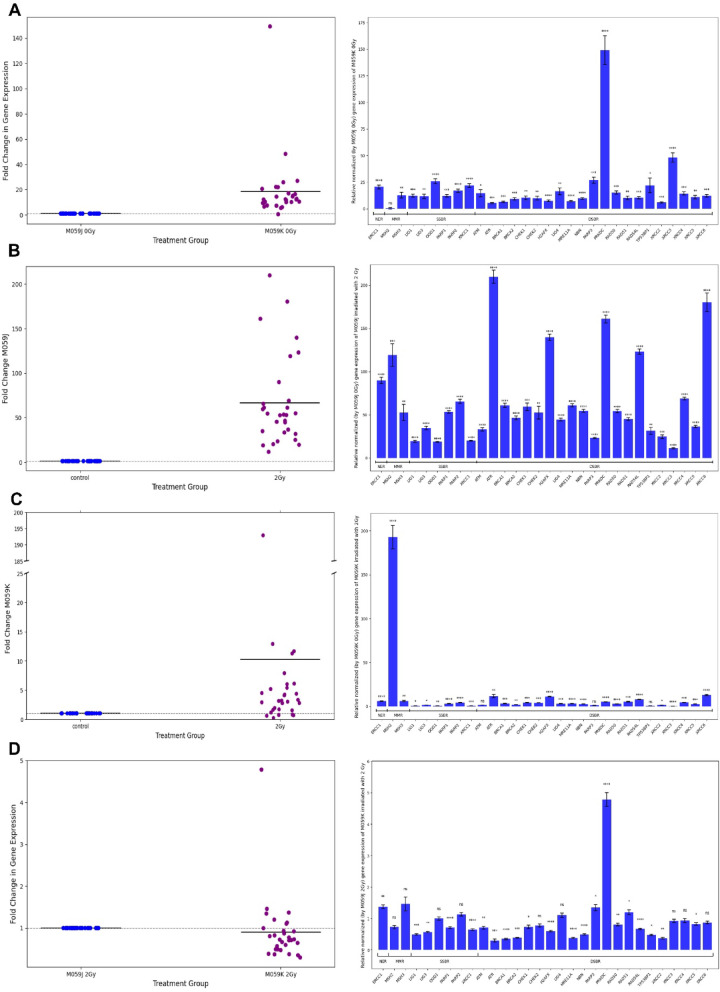 Figure 4
Peer Reviews
No public reviews on file for this paper yet. If you reviewed it on a platform where reviews are public (OpenReview, ICLR, NeurIPS, ICML), you can paste yours below so the community can read it here.
Videos
No videos yet. Explain this paper in a talk, walkthrough, or lecture? Add one.
Taxonomy
TopicsDNA Repair Mechanisms · PARP inhibition in cancer therapy · Carcinogens and Genotoxicity Assessment