Cryo-electron tomography reveals coupled flavivirus replication, budding and maturation
Selma Dahmane, Erin Schexnaydre, Jianguo Zhang, Bina K. Singh, Ebba Rosendal, Nunya Chotiwan, Kiran B. Sharma, Emma Nilsson, Marie B. A. Peters, Wai-Lok Yau, Sebastian Rönfeldt, Richard Lundmark, Benjamin A. Barad, Danielle A. Grotjahn, Susanne Liese, Andreas Carlson

TL;DR
This study uses cryo-electron tomography to show how tick-borne flaviviruses coordinate replication, budding, and maturation within infected human cells.
Contribution
The study reveals the spatial coupling of flavivirus replication, budding, and maturation using cryo-electron tomography.
Findings
The RO membrane bud is shaped by curvature-establishing modifications and intraluminal RNA pressure.
Immature virus particles bud from a protein complex at the RO base.
Furin site variants determine virus maturation near replication organelles.
Abstract
Flaviviruses replicate their genomes in replication organelles (ROs) formed as bud-like invaginations on the endoplasmic reticulum membrane, which also functions as the site for virion assembly. While this localization is well established, it is not known to what extent viral membrane remodeling, genome replication, virion assembly, and maturation are coordinated. Here, we image tick-borne flavivirus replication in human cells using cryo-electron tomography. We find that the RO membrane bud is shaped by a combination of a curvature-establishing membrane modification and the pressure from intraluminal template RNA. A protein complex at the RO base extends to an adjacent membrane, where immature virus particles bud. Naturally occurring furin site variants determine whether virus particles mature in the immediate vicinity of ROs. We further visualize replication in mouse brain tissue by…
Genes, proteins, chemicals, diseases, species, mutations and cell lines named across the full text — each resolved to its canonical identifier and authoritative record.
Click any figure to enlarge with its caption.
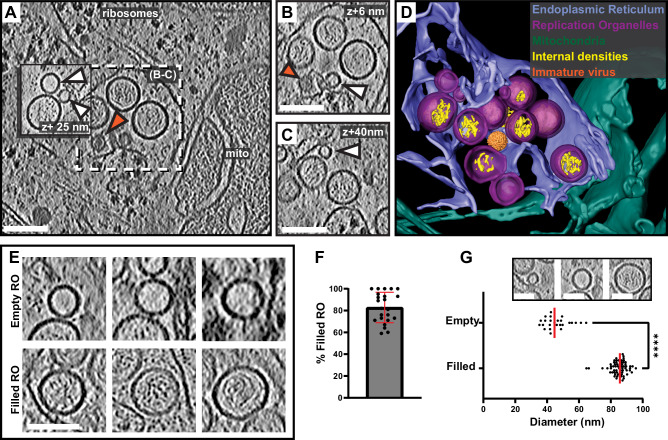 Figure 1
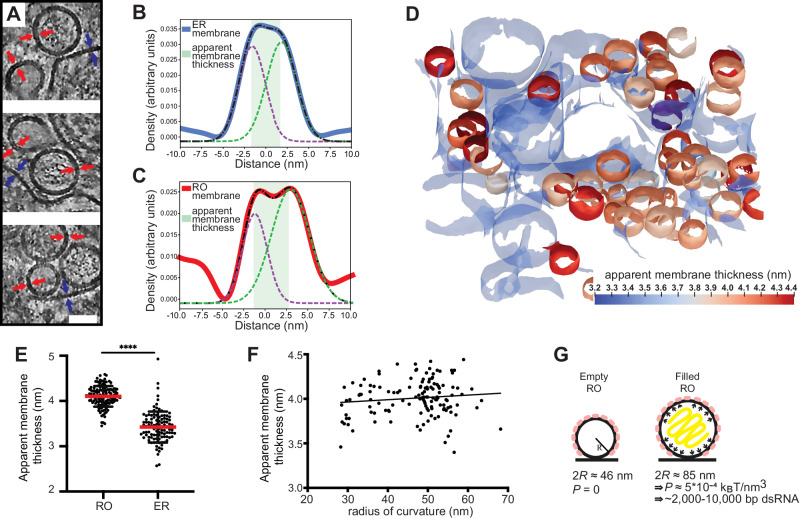 Figure 2
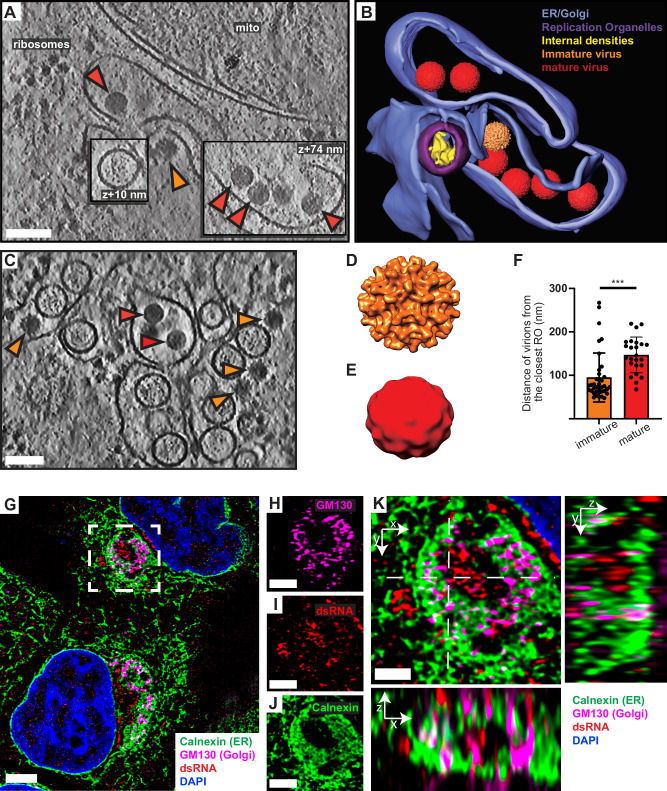 Figure 3
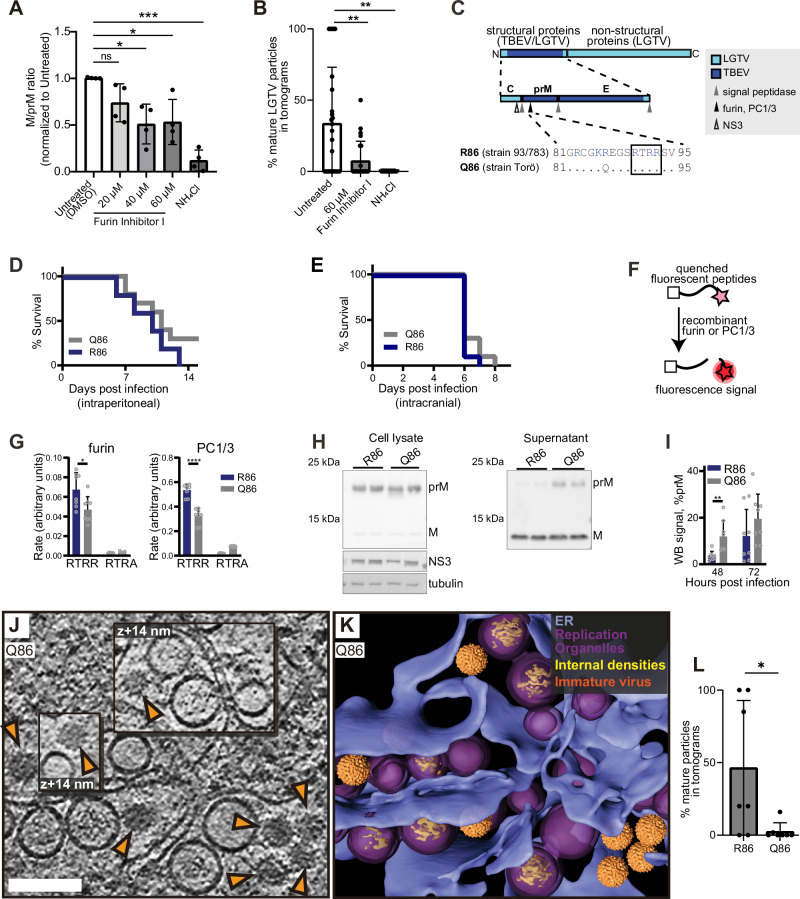 Figure 4
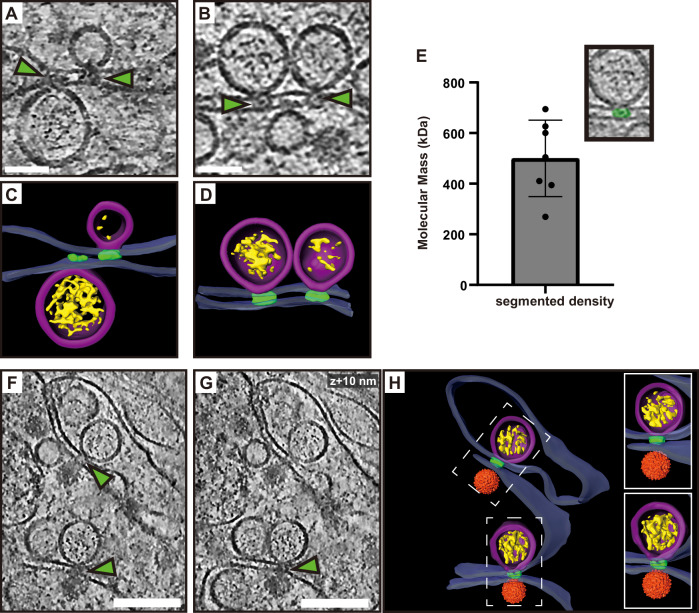 Figure 5
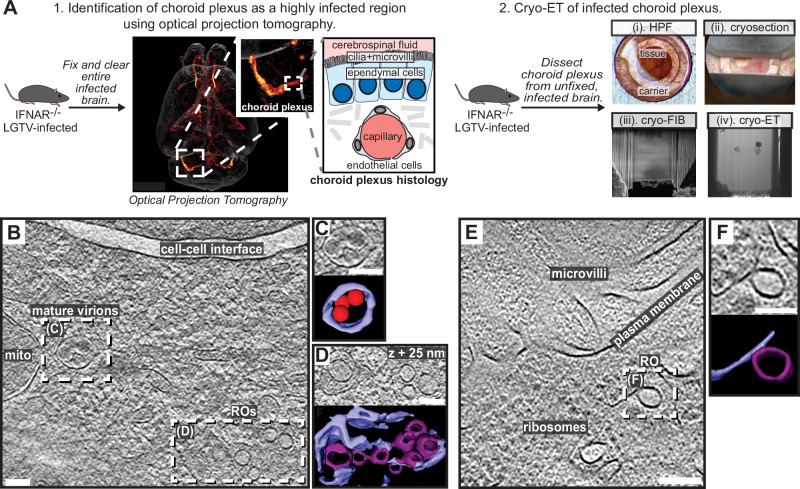 Figure 6
Peer Reviews
No public reviews on file for this paper yet. If you reviewed it on a platform where reviews are public (OpenReview, ICLR, NeurIPS, ICML), you can paste yours below so the community can read it here.
Videos
No videos yet. Explain this paper in a talk, walkthrough, or lecture? Add one.
Taxonomy
TopicsMosquito-borne diseases and control · Plant Virus Research Studies · HIV Research and Treatment