Methylphenidate reorganizes cortical hierarchy through dopaminergic modulation
Dardo Tomasi, Peter Manza, Şükrü Barış Demiral, Weizheng Yan, Kylee B. Miller, Faith Veenker, Joshua Zhao, Christina Lildharrie, Michele-Vera Yonga, Sarah Abey, Michaelene VanDine, Gene-Jack Wang, Nora D. Volkow

TL;DR
Methylphenidate changes brain organization by compressing the hierarchy between sensory and association areas, which may improve attention.
Contribution
The study reveals that methylphenidate compresses cortical gradients, linking dopamine modulation to attention improvements.
Findings
Methylphenidate compresses the principal cortical gradient, reducing segregation between sensory and association areas.
MP-induced gradient compression correlates with attention improvements and striatal dopamine receptor availability.
Abstract
Dopaminergic signaling shapes large-scale brain network architecture, constraining neural communication along a principal gradient that spans unimodal sensorimotor to transmodal association cortices. While more differentiated gradients are typically linked to enhanced cognition, it remains unclear whether dopamine-enhancing psychostimulants, such as methylphenidate (MP), amplify or compress this functional hierarchy to support attention. Across two double-blind, placebo-controlled studies in healthy adults (n = 38 and n = 20), we combined 60 mg oral MP with PET and fMRI to assess striatal dopamine function and cortical organization. MP consistently compressed the principal gradient, reducing segregation between sensory and association areas. The degree of compression predicted individual variation in striatal D1 and D2 receptor availability. MP-induced gradient compression in inferior…
Genes, proteins, chemicals, diseases, species, mutations and cell lines named across the full text — each resolved to its canonical identifier and authoritative record.
Click any figure to enlarge with its caption.
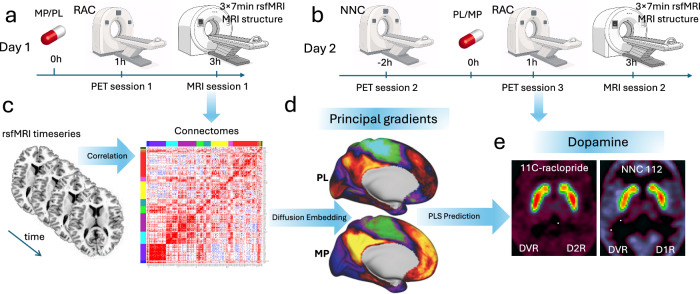 Figure 1
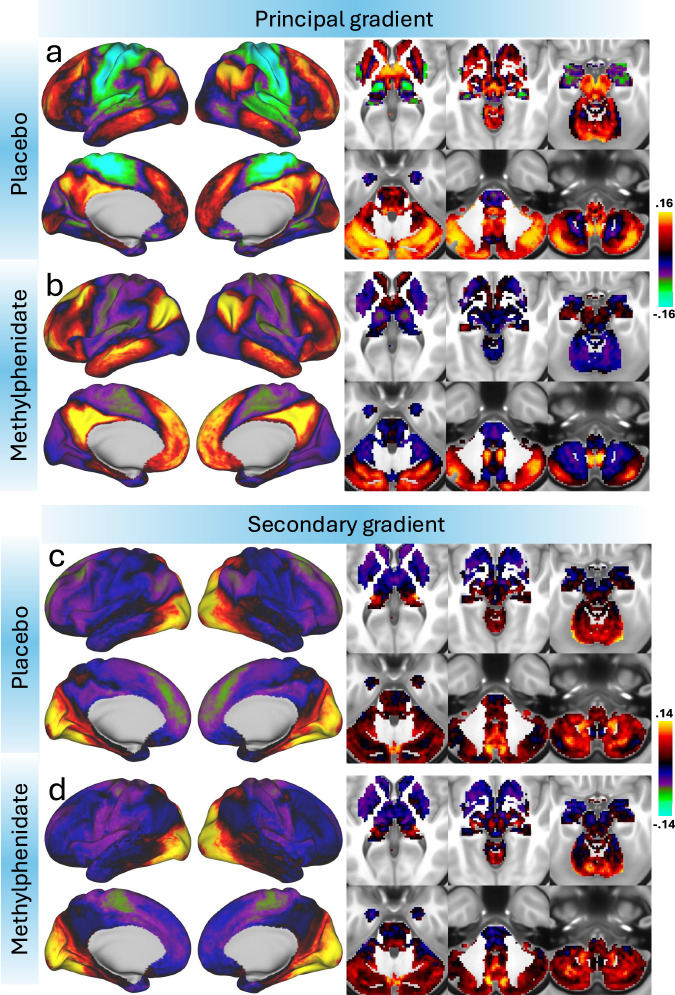 Figure 2
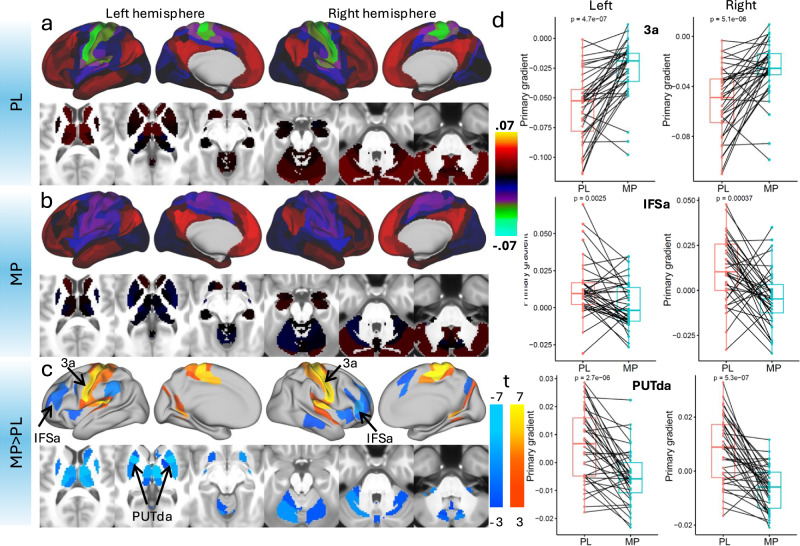 Figure 3
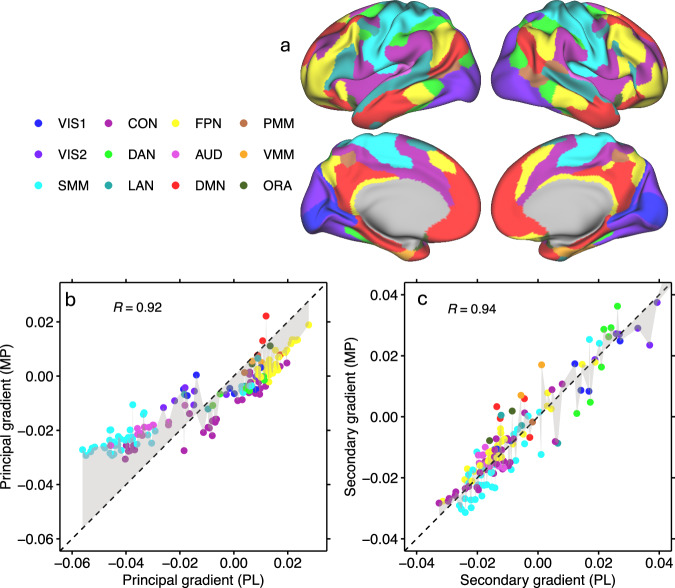 Figure 4
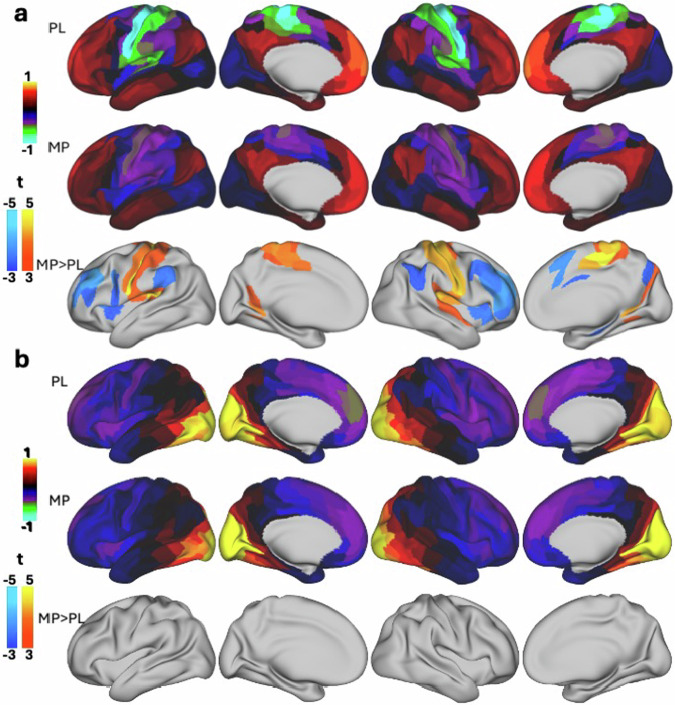 Figure 5
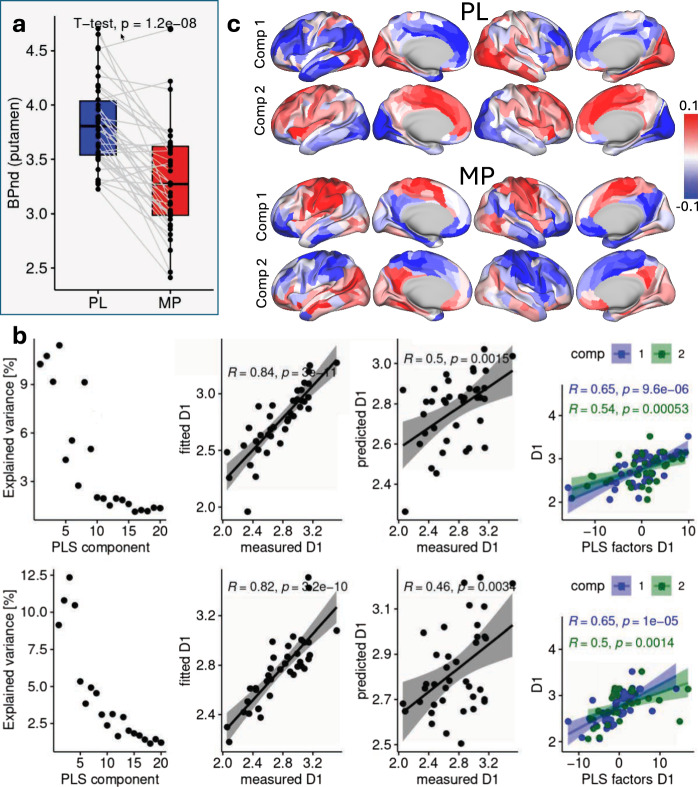 Figure 6
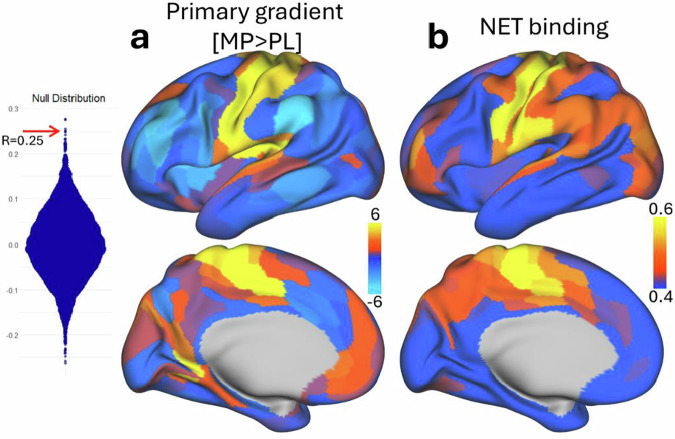 Figure 7
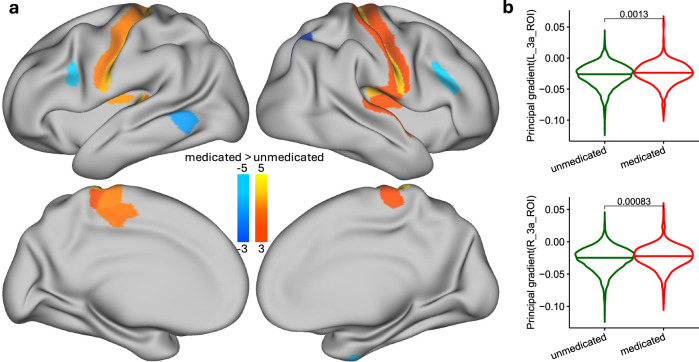 Figure 8
Peer Reviews
No public reviews on file for this paper yet. If you reviewed it on a platform where reviews are public (OpenReview, ICLR, NeurIPS, ICML), you can paste yours below so the community can read it here.
Videos
No videos yet. Explain this paper in a talk, walkthrough, or lecture? Add one.
Taxonomy
TopicsFunctional Brain Connectivity Studies · Neural and Behavioral Psychology Studies · Neurotransmitter Receptor Influence on Behavior