The consequences of using statistical tests on proxy measurements in place of gold standard measurements: an application to magnetic resonance spectroscopy
Michael Treacy, Christoph Juchem, Karl Landheer

TL;DR
This paper shows how using less accurate proxy measurements instead of gold-standard ones can lead to misleading statistical results in biomedical studies, using MRS as an example.
Contribution
The paper introduces a novel analysis of how proxy measurement correlation affects false positive and false negative rates in statistical testing.
Findings
Moderate correlations between proxy and gold-standard measurements can cause large increases in false positive rates.
Imperfect correlation between proxy and gold-standard measurements reduces statistical power, increasing false negative rates.
Small biases in proxy measurements can significantly distort statistical outcomes.
Abstract
The use of proxy measurements in biomedical science is ubiquitous, due to the infeasibility or unavailability of gold-standard (i.e., most precise, accurate, and/or validated) measurements. For example, in magnetic resonance spectroscopy (MRS), short-echo time (TE) sequences are frequently employed to estimate difficult-to-measure metabolites such as GABA, despite J-difference editing being the recommended gold-standard due to improved metabolic specificity. This work investigates the critical relationship between the correlation of proxy and gold-standard measurements and the associated false positive (FPR) and false negative (FNR) rates of statistical tests performed on proxy measurements. Through statistical simulations, we demonstrate that even moderately high correlations (0.6–0.7), reported in the literature for short-TE vs. J-edited estimated GABA, can lead to drastically…
Genes, proteins, chemicals, diseases, species, mutations and cell lines named across the full text — each resolved to its canonical identifier and authoritative record.
Click any figure to enlarge with its caption.
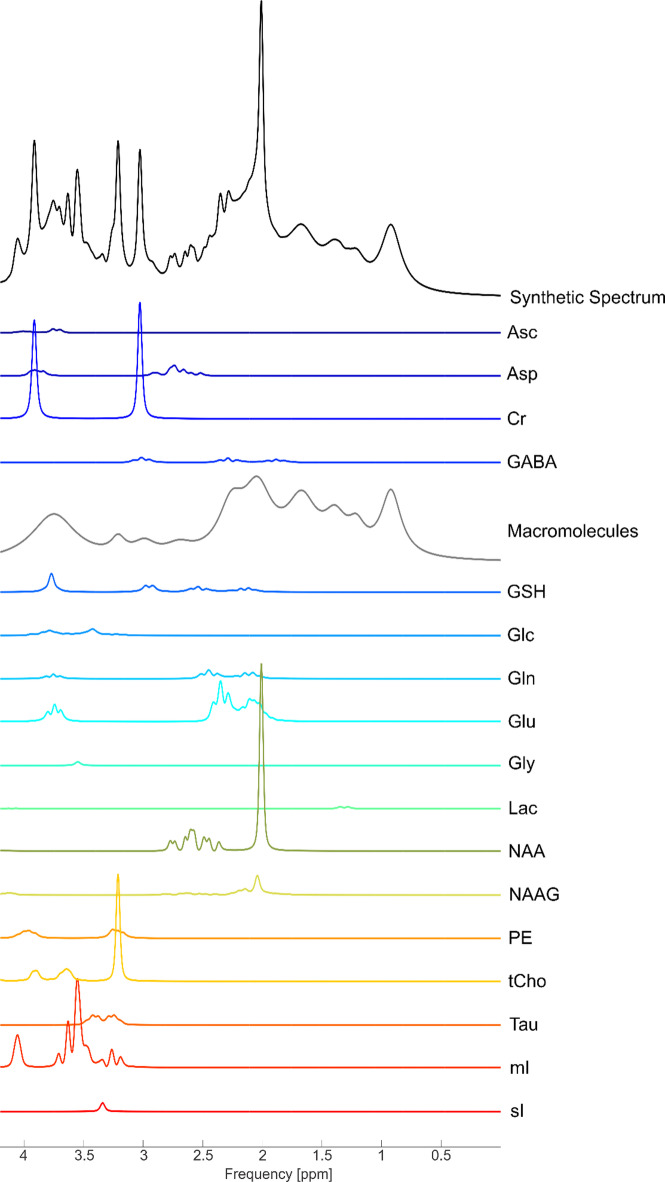 Figure 1
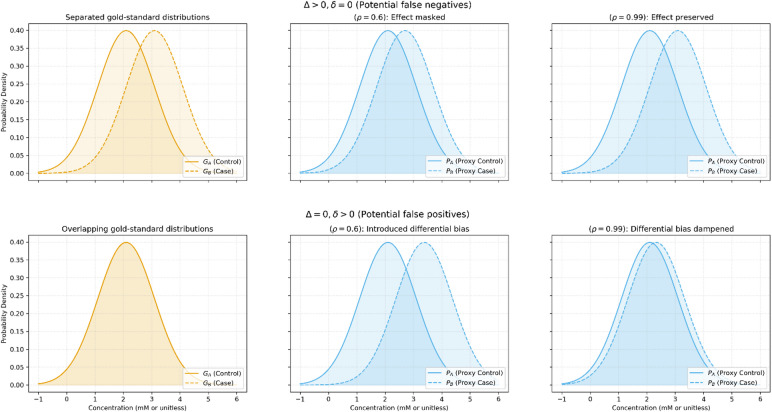 Figure 2
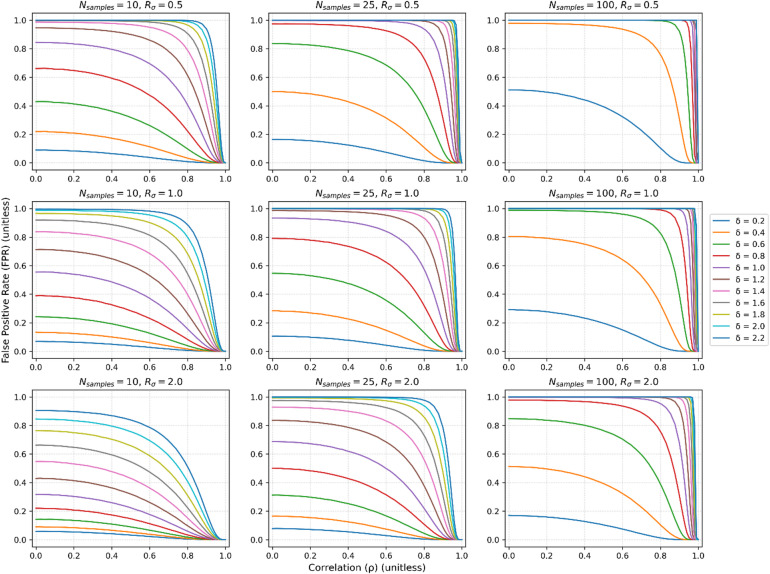 Figure 3
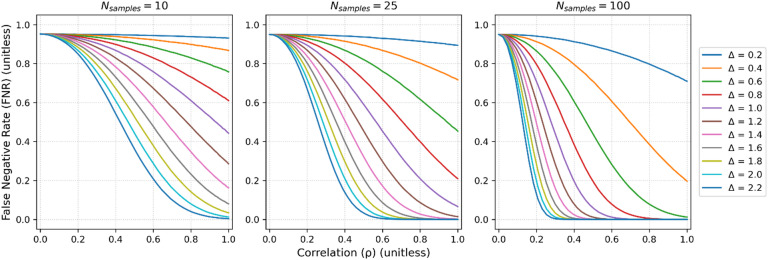 Figure 4
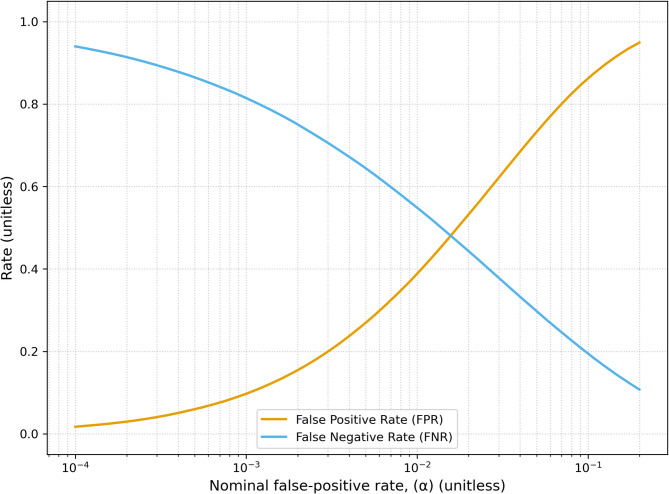 Figure 5
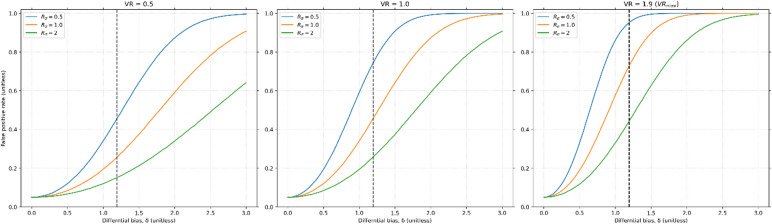 Figure 6
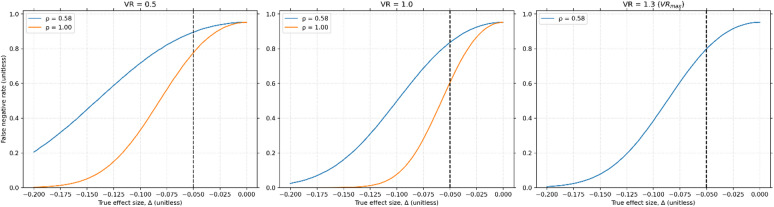 Figure 7
Peer Reviews
No public reviews on file for this paper yet. If you reviewed it on a platform where reviews are public (OpenReview, ICLR, NeurIPS, ICML), you can paste yours below so the community can read it here.
Videos
No videos yet. Explain this paper in a talk, walkthrough, or lecture? Add one.
Taxonomy
TopicsAdvanced MRI Techniques and Applications · Electron Spin Resonance Studies · Advanced NMR Techniques and Applications