Misspecified models create the appearance of adaptive control during value-based choice
Harrison Ritz, Romy Frömer, Amitai Shenhav

TL;DR
This study shows that apparent adaptive control in decision-making can be explained by simpler mechanisms, without needing top-down control.
Contribution
The paper demonstrates that value-based decision models with adaptive control can be misspecified, leading to false conclusions about cognitive control.
Findings
Reported evidence for controlled threshold adjustments can be explained by task confounds and alternative models.
A control-free mechanism better explains value-based decisions than models assuming top-down control.
The findings highlight limitations and potential pitfalls in computational approaches to decision-making.
Abstract
Decision scientists have grown increasingly interested in how people adaptively control their decision making, exploring how metacognitive factors influence how people accumulate evidence and commit to a choice. A recent study proposed a novel form of such adaptive control, whereby the values of one's options contribute to both the formation of a decision and the effortful invigoration of a response. In this framework, the control process was operationalized in a drift diffusion model as the lowering of the decision threshold on difficult trials. Reanalyzing the data from this experiment, we establish alternative explanations for these findings. We show that the reported evidence for controlled threshold adjustments can be explained away by task confounds, time-dependent collapses in decision thresholds, and stimulus-driven dynamics in an alternative form of evidence accumulation. Our…
Genes, proteins, chemicals, diseases, species, mutations and cell lines named across the full text — each resolved to its canonical identifier and authoritative record.
Click any figure to enlarge with its caption.
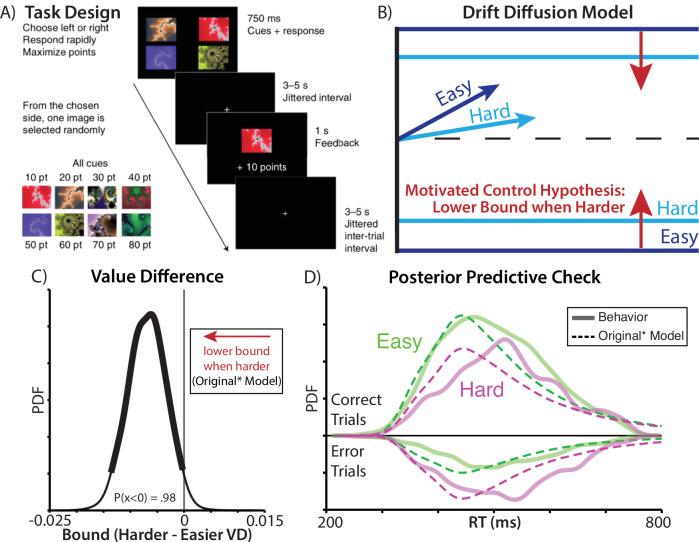 Figure 1
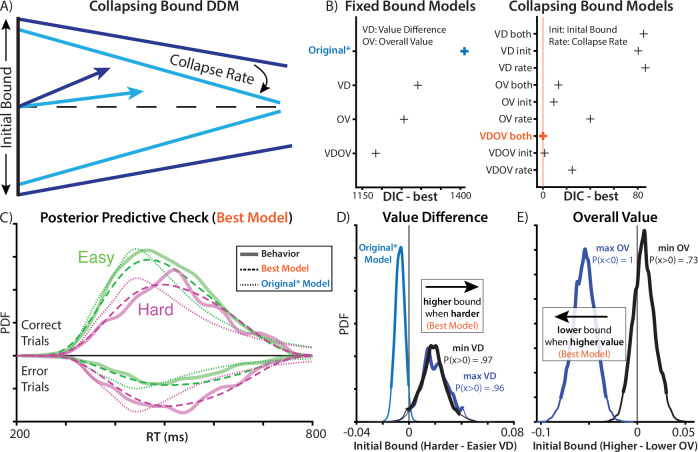 Figure 2
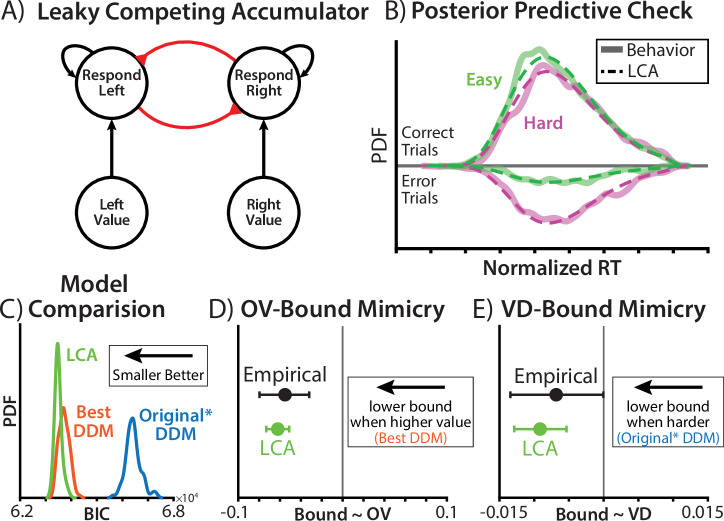 Figure 3
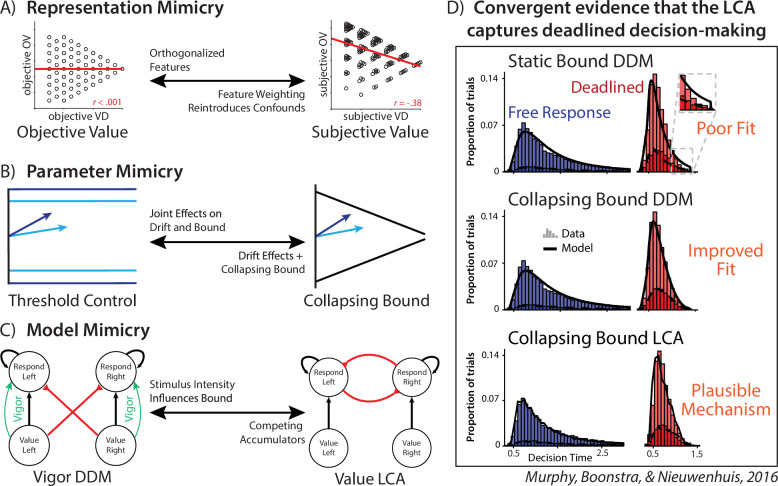 Figure 4
Peer Reviews
No public reviews on file for this paper yet. If you reviewed it on a platform where reviews are public (OpenReview, ICLR, NeurIPS, ICML), you can paste yours below so the community can read it here.
Videos
No videos yet. Explain this paper in a talk, walkthrough, or lecture? Add one.
Taxonomy
TopicsNeural and Behavioral Psychology Studies · Behavioral Health and Interventions · Decision-Making and Behavioral Economics