Adaptive capacity of Asian populations of Lymantria dispar to non preferred plants during northward expansion
E. L. Arzhanova, S. V. Pavlushin, I. A. Belousova, Y. B. Akhanaev, A. S. Bastrygina, V. V. Martemyanov

TL;DR
This study explores how spongy moths from two Asian populations adapt to new host plants as they expand northward due to climate change.
Contribution
The study reveals population-specific physiological adaptations to coniferous hosts, highlighting the species' potential for range expansion.
Findings
Larvae from the Altai population survived equally well on all three host plants, while the Novosibirsk population had lower survival on pine.
Feeding on pine reduced pupal mass and prolonged larval development in both populations.
Alkaline protease activity increased on larch and pine, but decreased on pine relative to larch.
Abstract
The spongy moth (Lymantria dispar) is one of the most widespread insect defoliators in the Holarctic, with a capacity to form regular large-scale outbreaks. In the context of global climate change, the geographic range of this species is undergoing a shift that necessitates adaptation to novel host plants, including conifers. The present study assessed the capacity of insects from two L. dispar populations to use pine and larch as hosts, namely Pinus sylvestris and Larix sibirica, as compared to their habitual birch host, Betula pendula. The survival rate of larvae from a Novosibirsk population (south Siberian steppe) was similar on birch and larch, but lower on pine. In contrast, the survival of larvae from an Altai population (south Siberian mountainous landscape) was similar on all three hosts. However, females from both populations exhibited a reduced tendency to oviposit on pine…
Genes, proteins, chemicals, diseases, species, mutations and cell lines named across the full text — each resolved to its canonical identifier and authoritative record.
Click any figure to enlarge with its caption.
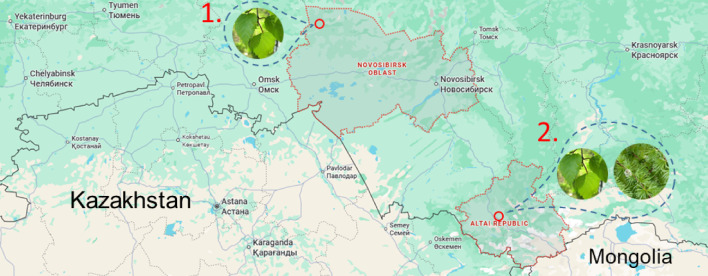 Figure 1
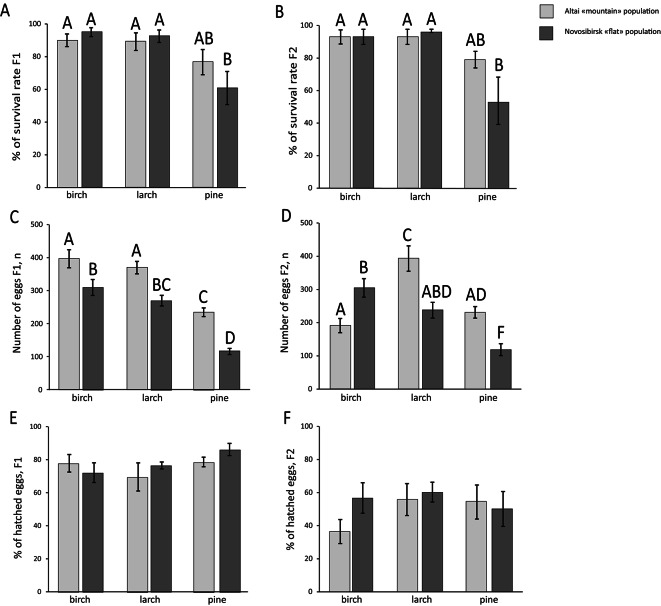 Figure 2
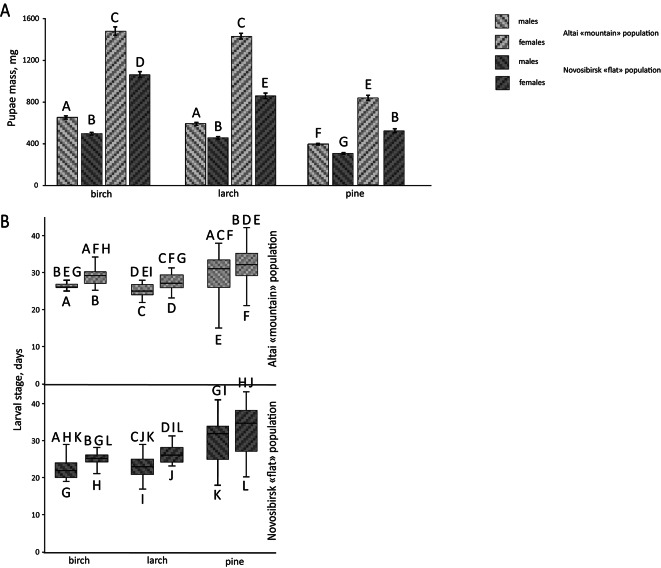 Figure 3
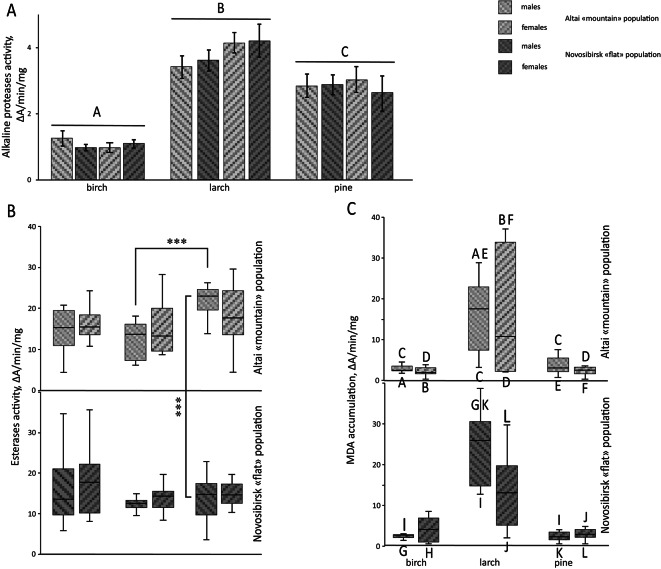 Figure 4
Peer Reviews
No public reviews on file for this paper yet. If you reviewed it on a platform where reviews are public (OpenReview, ICLR, NeurIPS, ICML), you can paste yours below so the community can read it here.
Videos
No videos yet. Explain this paper in a talk, walkthrough, or lecture? Add one.
Taxonomy
TopicsInsect Pheromone Research and Control · Entomological Studies and Ecology · Forest Insect Ecology and Management