Probing the thermal decomposition mechanism of CF3SO2F by deep learning molecular dynamics
Anyang Wang, Zeyuan Li, Shubo Ren, Xue Ke, Xuhao Wan, Rong Han, Xianglian Yan, Wen Wang, Yu Zheng, Yuzheng Guo, Jun Wang

TL;DR
Researchers used machine learning to study how CF3SO2F breaks down at high temperatures, helping assess its viability as a green alternative to SF6 in electrical grids.
Contribution
The study introduces a machine learning-driven approach to analyze the thermal decomposition of CF3SO2F with temperature and pressure dependencies.
Findings
Bond-breaking pathways of CF3SO2F are temperature-dependent, with higher temperatures promoting decomposition.
Elevated gas pressure increases decomposition by enhancing collision frequency among reactants.
N2 inhibits decomposition under high pressure compared to CO2.
Abstract
The urgent need to phase out SF6, an extremely potent greenhouse gas prevalent in electrical grids, drives the search for eco-friendly insulation alternatives. Trifluoromethanesulfonyl fluoride (CF3SO2F) emerges as a promising candidate due to its excellent properties. However, understanding its thermal decomposition pathways and products under operationally relevant conditions is critical for evaluating its environmental feasibility and mitigating potential risks upon accidental release or during fault events. This study investigates the thermal decomposition mechanisms of CF3SO2F using a deep learning potential that combines ab initio accuracy with empirical MD efficiency. By leveraging machine learning driven molecular dynamics, we systematically analyze the yields and components of decomposition products versus temperatures, gas mixing ratios, and buffer gas. The results reveal that…
Genes, proteins, chemicals, diseases, species, mutations and cell lines named across the full text — each resolved to its canonical identifier and authoritative record.
Click any figure to enlarge with its caption.
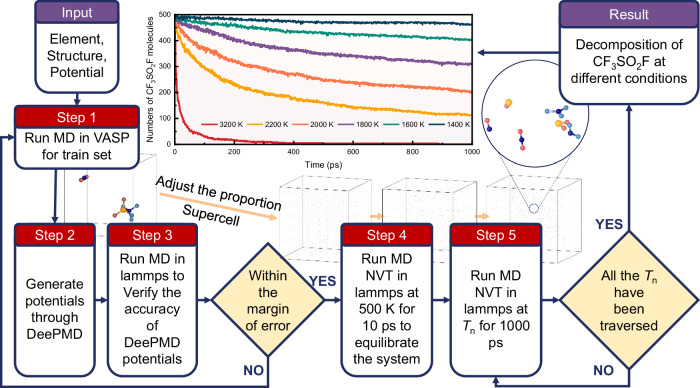 Figure 1
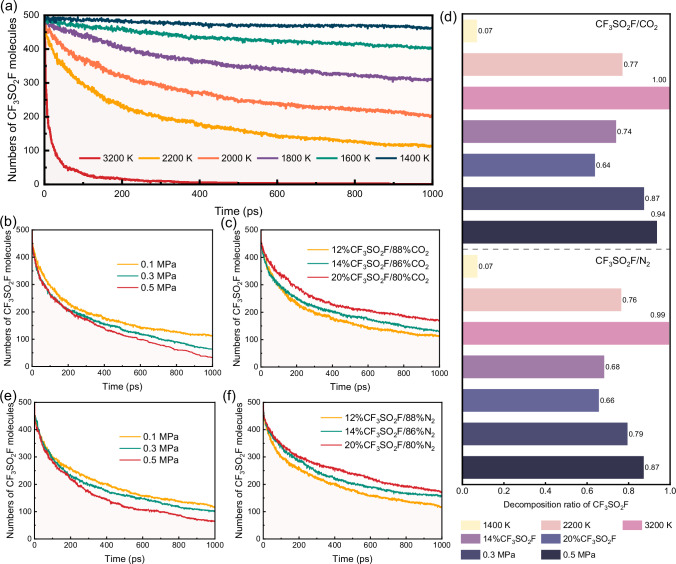 Figure 2
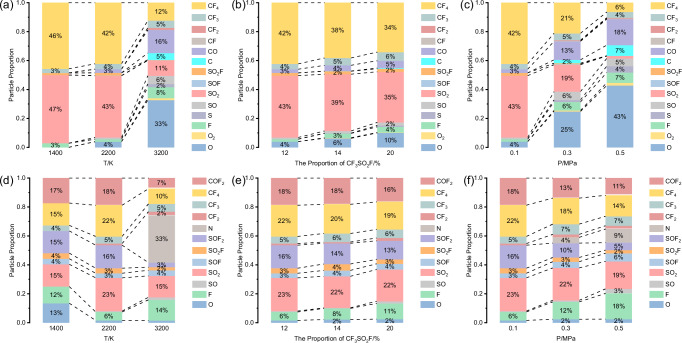 Figure 3
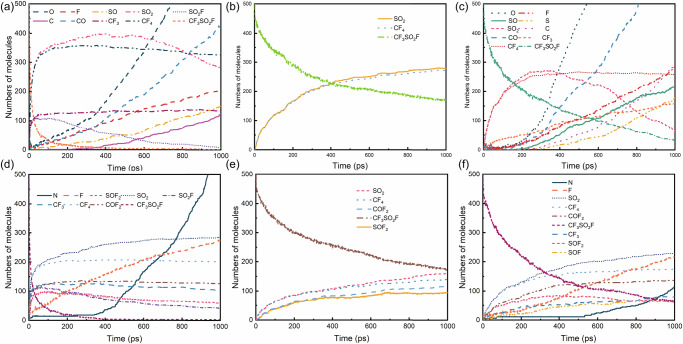 Figure 4
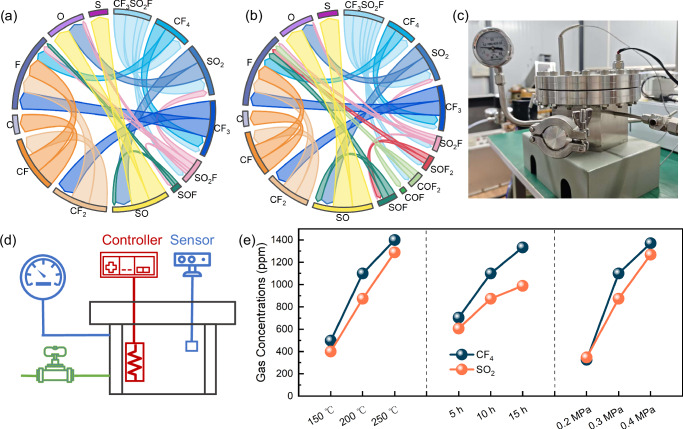 Figure 5
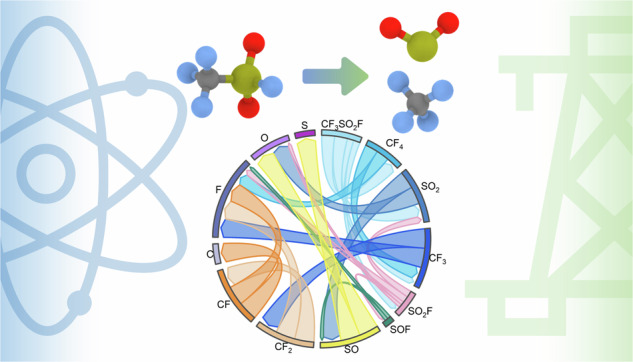 Figure 6
Peer Reviews
No public reviews on file for this paper yet. If you reviewed it on a platform where reviews are public (OpenReview, ICLR, NeurIPS, ICML), you can paste yours below so the community can read it here.
Videos
No videos yet. Explain this paper in a talk, walkthrough, or lecture? Add one.
Taxonomy
TopicsHigh voltage insulation and dielectric phenomena · Power Transformer Diagnostics and Insulation · Energetic Materials and Combustion