Sensitivity of larval and juvenile fish with different swim bladder morphology to barotrauma with a special focus on Cypriniformes
Andreas Zitek, Wolfgang Gessl, Peter Mehlmauer, Clemens Ratschan, Martin Schletterer, Josef Schneider

TL;DR
This study examines how different fish species, especially cypriniforms, are affected by barotrauma during rapid pressure changes in hydropower turbines.
Contribution
The study identifies species-specific injury patterns and swim bladder morphology as key factors in barotrauma sensitivity.
Findings
Physostomous cypriniforms showed the highest sensitivity to barotrauma with frequent swim bladder ruptures.
Depth acclimation increased vulnerability in European grayling.
Partial load conditions in Kaplan turbines reduced barotrauma-related mortality.
Abstract
Barotrauma, caused by rapid pressure changes, poses a major risk to fish migrating downstream through hydropower turbines. This study investigated the sensitivity of larval and juvenile fish with different swim bladder morphology to barotrauma using a custom-built chamber. Four different representative species, namely the two cypriniform species common nase (Chondrostoma nasus) and roach (Rutilus rutilus), both physostomous species with a two-chambered swim bladder, European grayling (Thymallus thymallus) as physostomous species with a single-chambered swim bladder and European perch (Perca fluviatilis) as physoclistous species with a single chambered swim bladder were investigated. Fish were acclimated to 0- or 15-meters depth (101 and 251 kPa, respectively) and exposed to rapid decompression to different nadirs (15, 30, 40, 60 kPa) to simulate turbine passage as a basis to construct…
Genes, proteins, chemicals, diseases, species, mutations and cell lines named across the full text — each resolved to its canonical identifier and authoritative record.
Click any figure to enlarge with its caption.
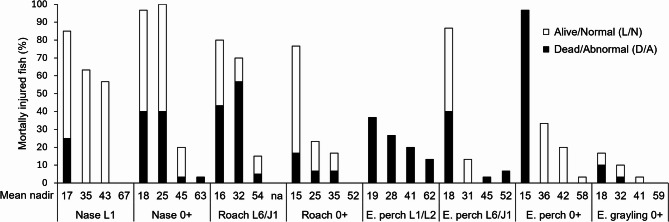 Figure 1
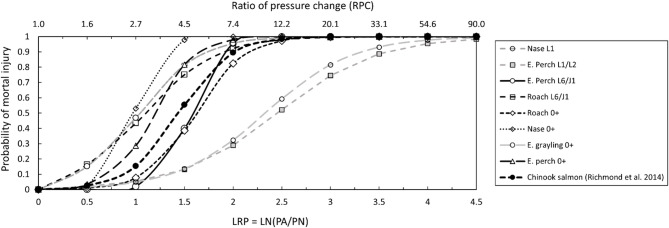 Figure 2
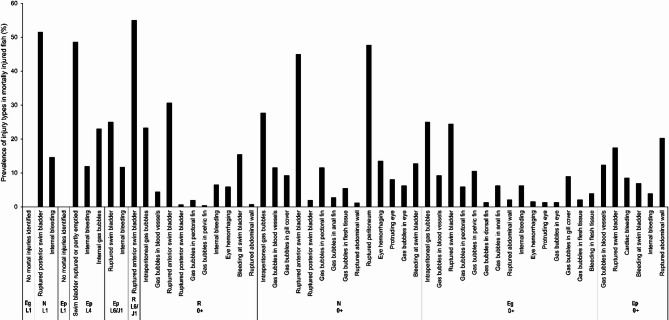 Figure 3
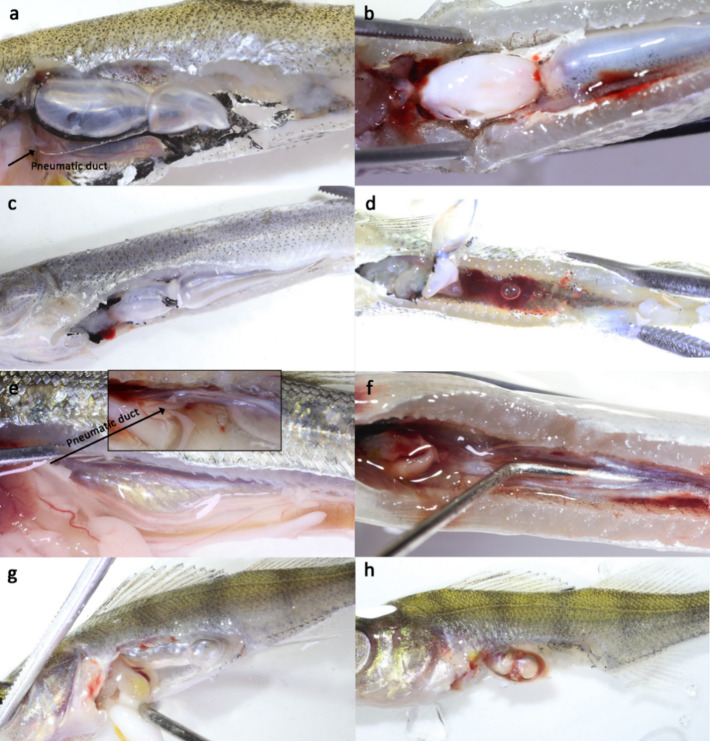 Figure 4
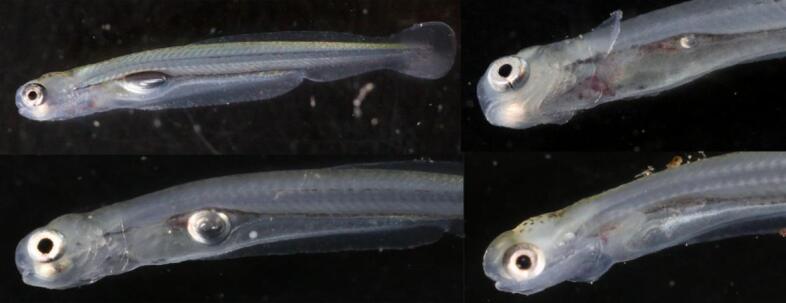 Figure 5
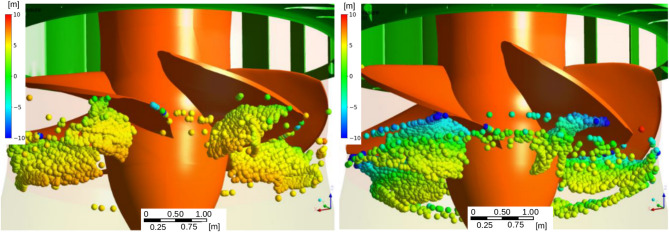 Figure 6
Peer Reviews
No public reviews on file for this paper yet. If you reviewed it on a platform where reviews are public (OpenReview, ICLR, NeurIPS, ICML), you can paste yours below so the community can read it here.
Videos
No videos yet. Explain this paper in a talk, walkthrough, or lecture? Add one.
Taxonomy
TopicsBiomimetic flight and propulsion mechanisms · Fish Ecology and Management Studies · Wind Energy Research and Development