The link between the gender role self-concept and psychobiological stress in everyday life: an ecological momentary assessment study
Martin Stoffel, Stephanie Zintel, Laura I. Schmidt, Andreas B. Neubauer, Monika Sieverding, Beate Ditzen

TL;DR
This study explores how gender role traits, beyond biological sex, influence stress levels in daily life through self-reported and biological measures.
Contribution
The study introduces a novel approach by distinguishing between trait and state aspects of gender role self-concept in relation to psychobiological stress.
Findings
Higher state agency was linked to lower subjective stress and fewer stressors.
Higher trait communion predicted increased salivary cortisol levels.
Gender role self-concept explained within- and between-person stress variation beyond biological sex.
Abstract
This study examined how trait and state aspects of the gender role self-concept (GSC), beyond biological sex assigned at birth, are associated with psychobiological stress in daily life. We hypothesized that higher agency (self-assertive traits, historically associated with male gender stereotypes) would relate to lower subjective stress and stressor exposure, whereas higher communion (interpersonally oriented traits, historically associated with female gender stereotypes) would show the opposite pattern. Associations with salivary cortisol (sCort) were also investigated. Eighty-two healthy adults (20–65 years; M = 40.0, SD = 12.6; 47.6% female) completed ecological momentary assessments over five consecutive workdays, with seven daily prompts. GSC was measured using the Bem Sex Role Inventory, with trait GSC assessed at baseline and state GSC four times per day. Psychobiological stress…
Genes, proteins, chemicals, diseases, species, mutations and cell lines named across the full text — each resolved to its canonical identifier and authoritative record.
Click any figure to enlarge with its caption.
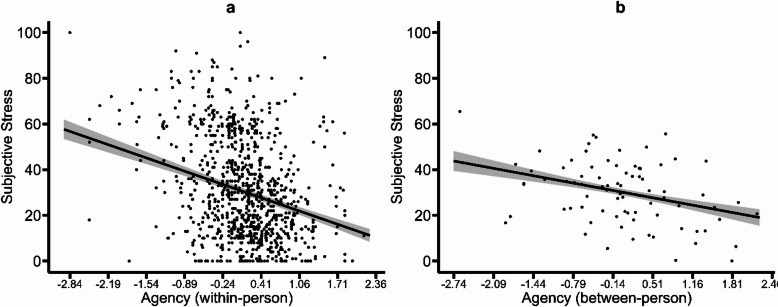 Figure 1
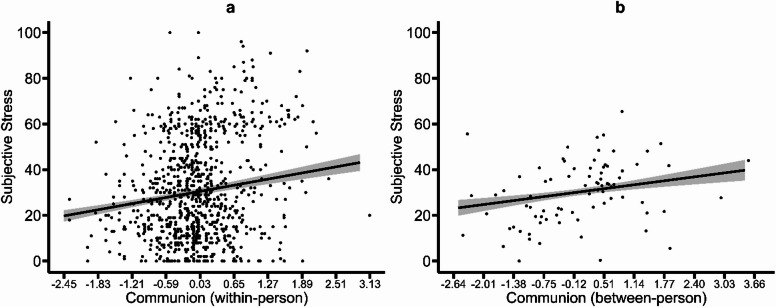 Figure 2
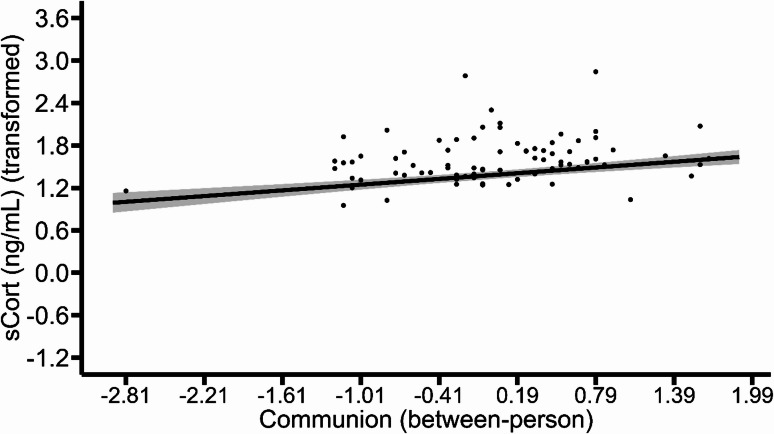 Figure 3
Peer Reviews
No public reviews on file for this paper yet. If you reviewed it on a platform where reviews are public (OpenReview, ICLR, NeurIPS, ICML), you can paste yours below so the community can read it here.
Videos
No videos yet. Explain this paper in a talk, walkthrough, or lecture? Add one.
Taxonomy
TopicsGender Roles and Identity Studies · Stress Responses and Cortisol · Sex and Gender in Healthcare