Identification of new interactors of eIF3f by endogenous proximity-dependent biotin labelling in human muscle cells
Lionel Tintignac, Nitish Mittal, Shahidul Alam, Meric Ataman, Yusuf I. Ertuna, Thomas Bock, Beat Erne, Mihaela Zavolan, Michael Sinnreich

TL;DR
This study identifies new proteins that interact with eIF3f in human muscle cells, revealing its role in muscle mass regulation and uncovering a new nuclear localization.
Contribution
The study introduces a novel endogenous tagging system for eIF3f and identifies new nuclear and cytoplasmic interactors.
Findings
eIF3f interacts with components of the eIF3 complex and other translation initiation factors in both proliferating and differentiated muscle cells.
eIF3f exhibits a previously unknown nuclear localization in myoblasts and myotubes.
Novel cytoplasmic partners of eIF3f include proteins involved in muscle ultrastructure and lysosomal compartments.
Abstract
Regulation of protein synthesis is central to maintaining skeletal muscle integrity and its understanding is important for the treatment of muscular and neuromuscular pathologies. The eIF3f subunit of the translation initiation factor eIF3 has a key role, as it stands at the crossroad between protein-synthesis-associated hypertrophy and MAFbx/atrogin-1-dependent atrophy. To decipher the molecular mechanisms underpinning the role of eIF3f in regulating muscle mass, we established a cellular model that enables interrogation of eIF3f functionality via identification of proximal interactors. Using CRISPR-Cas9 molecular scissors, we generated single cell clones of immortalised human muscle cells expressing eIF3f fused to the BirA biotin ligase (eIF3f-BioID1 chimera) from the endogenous EIF3F locus. Biotinylated proteins, representing interactors of eIF3f in nanometer range distance, were…
Genes, proteins, chemicals, diseases, species, mutations and cell lines named across the full text — each resolved to its canonical identifier and authoritative record.
Click any figure to enlarge with its caption.
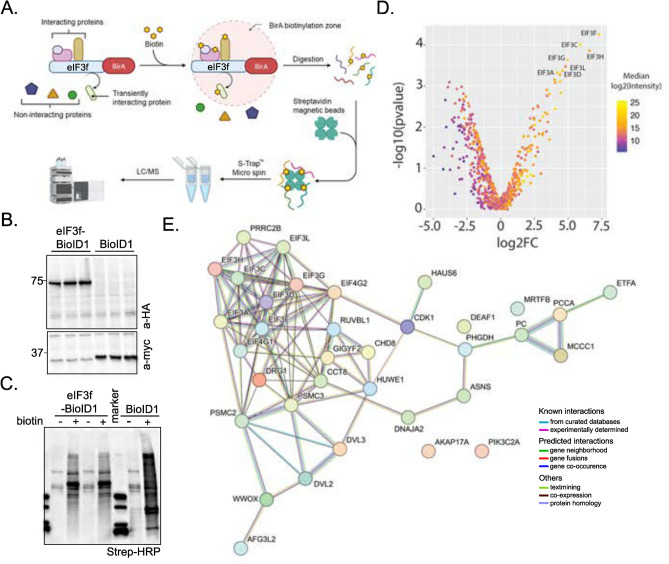 Figure 1
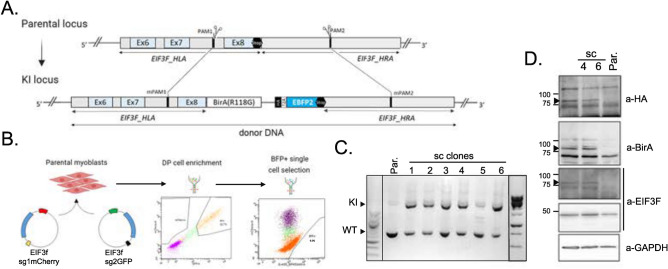 Figure 2
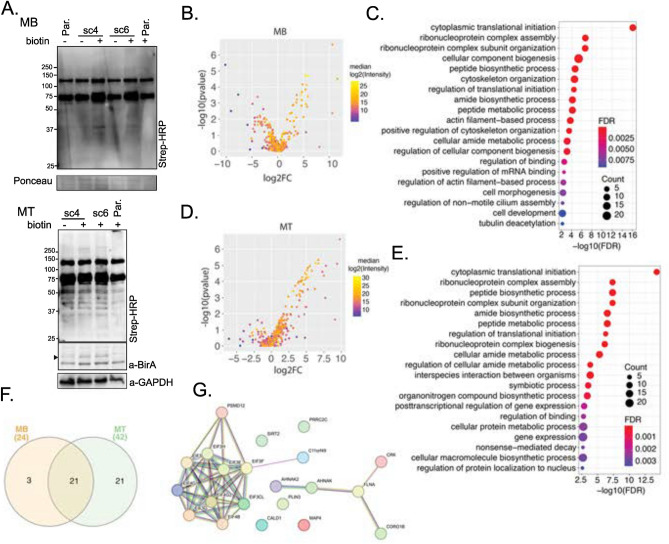 Figure 3
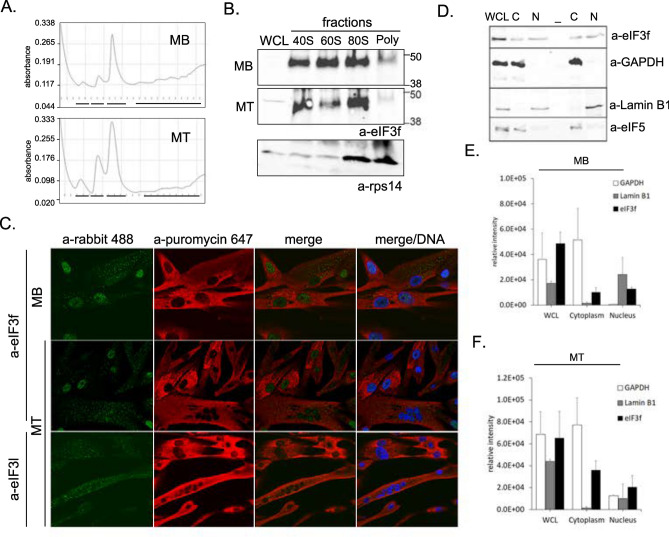 Figure 4
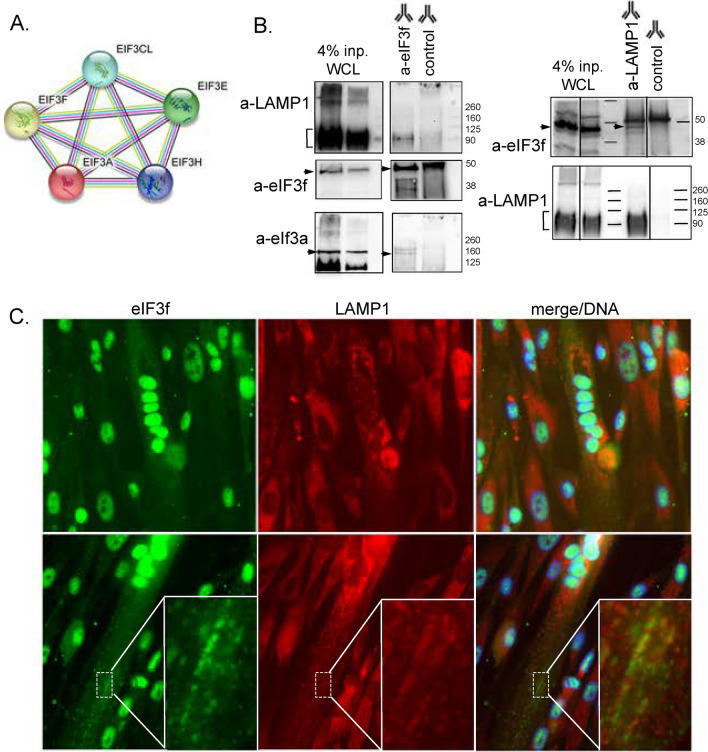 Figure 5
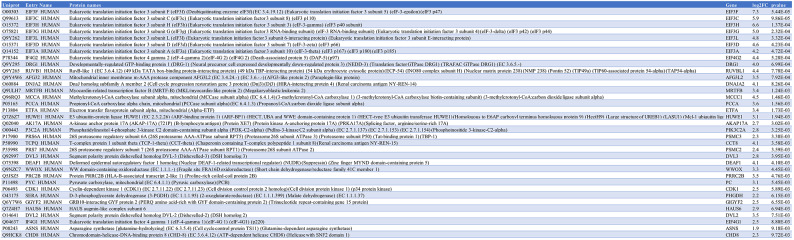 Figure 6
 Figure 7
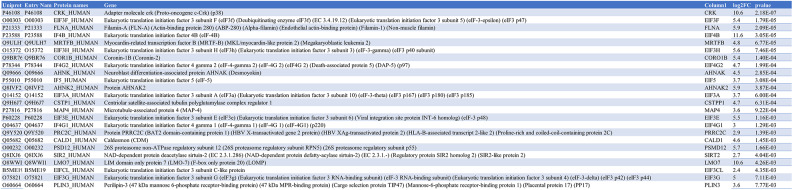 Figure 8
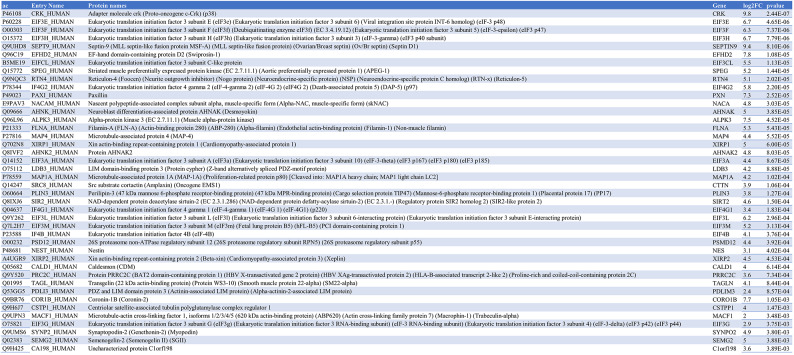 Figure 9
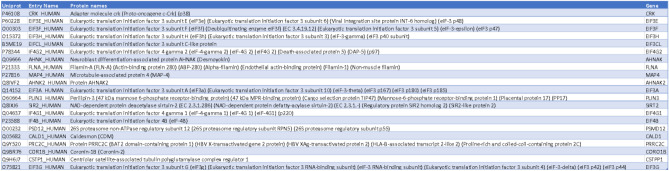 Figure 10
Peer Reviews
No public reviews on file for this paper yet. If you reviewed it on a platform where reviews are public (OpenReview, ICLR, NeurIPS, ICML), you can paste yours below so the community can read it here.
Videos
No videos yet. Explain this paper in a talk, walkthrough, or lecture? Add one.
Taxonomy
TopicsBiotin and Related Studies · RNA and protein synthesis mechanisms · Muscle Physiology and Disorders