Evaluation of compartmentalization systems to study microbial interactions
Miguel Mejias-Ortiz, Ana Perea-Martínez, Ramon Gonzalez, Pilar Morales

TL;DR
This paper compares different systems used to study yeast interactions in wine fermentation, finding that active exchange is the most versatile and efficient method.
Contribution
The study provides a comparative evaluation of compartmentalization systems for studying microbial interactions, emphasizing the importance of system choice for experimental outcomes.
Findings
The twin-bottles system showed very limited metabolite exchange.
Active exchange through hollow fiber cross-flow filtration devices was found to be the most versatile and efficient system.
Different systems have specific characteristics that make them suitable for different experimental objectives.
Abstract
With some exceptions, wine fermentation has increasingly relied on the use of Saccharomyces cerevisiae starters since the last decades of the past century. However, there is growing interest on the understanding of spontaneous wine fermentation, as well as on the use of complementary non-Saccharomyces wine starters. This in turn raises the question of the importance of interspecific interactions in winemaking and the underlying mechanisms. An important question about these interspecies recognition mechanisms is whether or not it is mediated by physical contact between yeast cells. To address this topic, different laboratories have developed diverse devices to cultivate at least two yeast species in the same growth medium without cell-to-cell contact between them. In this work, we compared four of the most popular systems and found that one of them (twin-bottles exchange through a flat…
Genes, proteins, chemicals, diseases, species, mutations and cell lines named across the full text — each resolved to its canonical identifier and authoritative record.
Click any figure to enlarge with its caption.
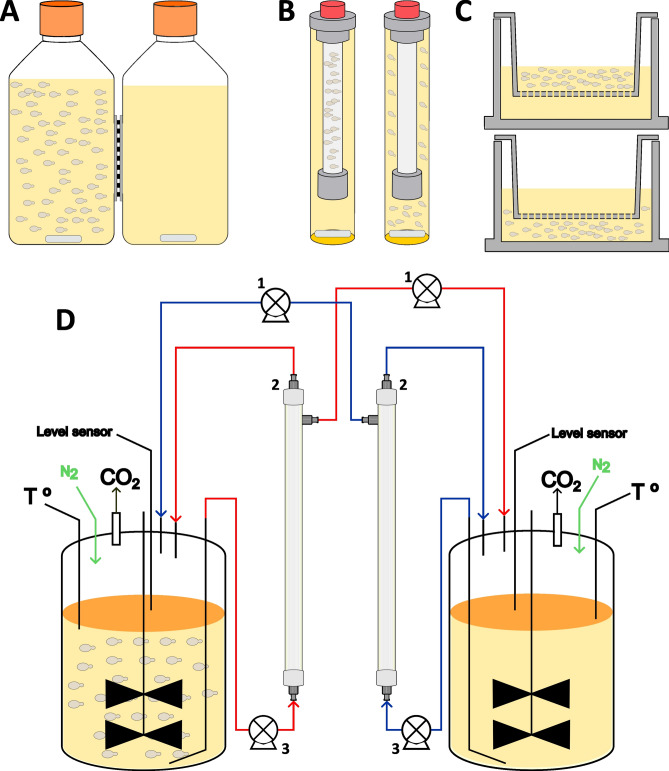 Figure 1
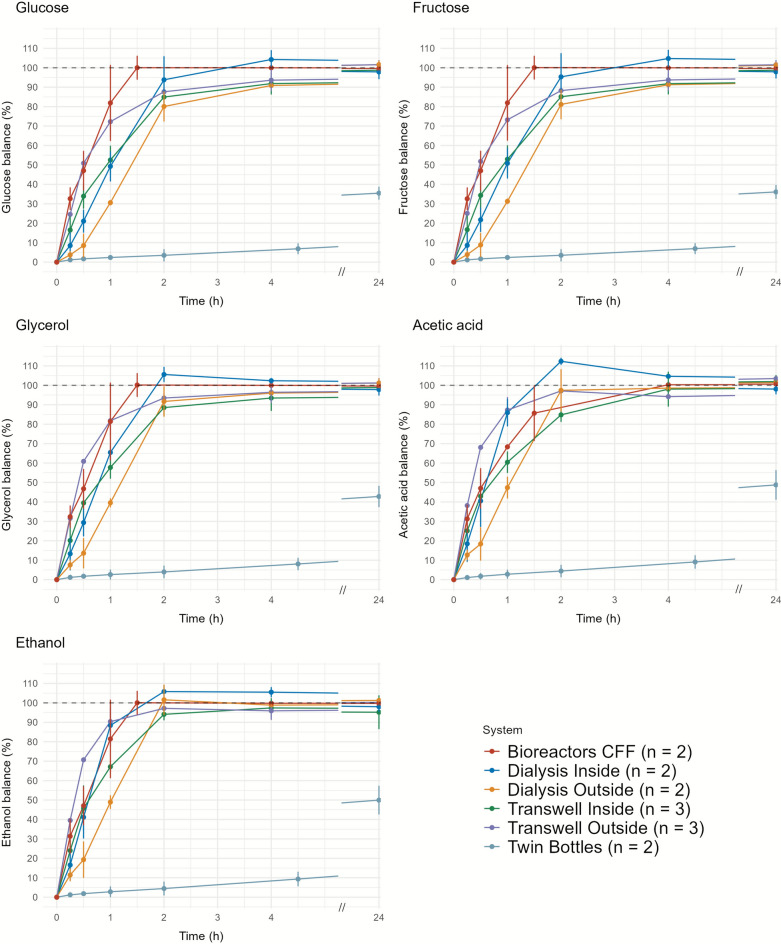 Figure 2
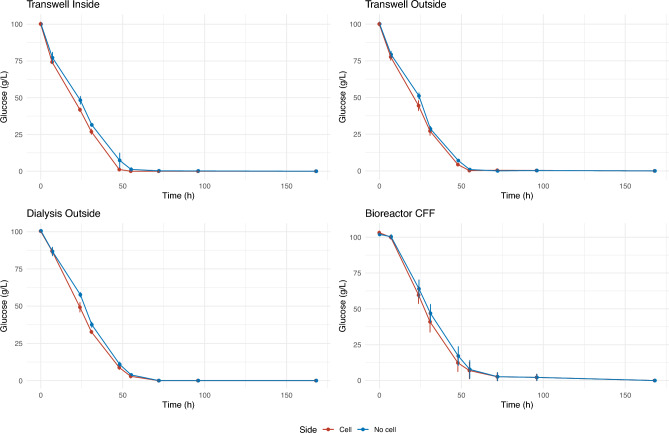 Figure 3
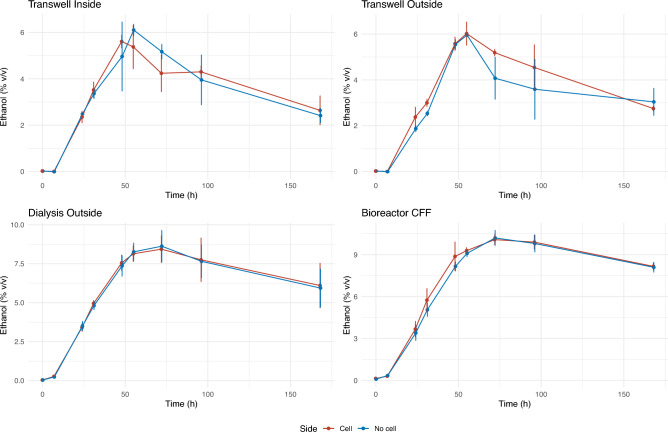 Figure 4
Peer Reviews
No public reviews on file for this paper yet. If you reviewed it on a platform where reviews are public (OpenReview, ICLR, NeurIPS, ICML), you can paste yours below so the community can read it here.
Videos
No videos yet. Explain this paper in a talk, walkthrough, or lecture? Add one.
Taxonomy
TopicsFermentation and Sensory Analysis · Fungal and yeast genetics research · Microbial Metabolic Engineering and Bioproduction