Differential impact of manic versus depressive episode recurrence on longitudinal gray matter volume changes in bipolar disorder
Florian Thomas-Odenthal, Lea Teutenberg, Frederike Stein, Nina Alexander, Linda M. Bonnekoh, Katharina Brosch, Kira Flinkenflügel, Janik Goltermann, Dominik Grotegerd, Tim Hahn, Andreas Jansen, Elisabeth J. Leehr, Susanne Meinert, Julia-Katharina Pfarr, Harald Renz, Kai Ringwald

TL;DR
This study shows that the frequency of manic and depressive episodes in bipolar disorder affects brain structure changes over time.
Contribution
The study reveals distinct brain volume changes linked to manic and depressive episode recurrence in bipolar disorder.
Findings
BD patients with more depressive episodes showed GMV increases in the right exterior cerebellum.
BD patients without recurrence had GMV reductions in the cerebellum compared to those with recurrence and healthy controls.
Longer manic episodes before baseline were associated with greater GMV reductions in BD patients without recurrence.
Abstract
Bipolar disorder (BD) is a severe mental disorder, characterized by episodes of mania and depression. The longitudinal neurobiological impact of BD episodes on brain structure remains largely unknown. In 124 age-sex-matched participants (62 BD patients; 62 healthy controls; HCs), aged 20-62 years, we investigated the longitudinal relationship between BD episodes and whole-brain gray matter volume (GMV) changes (3 Tesla MRI) during a two-year interval, using voxel-based morphometry in SPM12/CAT12. We compared GMV trajectories between BD patients with at least one depressive or manic episode during the two-year interval, BD patients without an episode, and HCs. We explored associations between GMV changes and clinical variables, like the number and duration of depressive or manic episodes both during the two-year interval and before baseline assessment. BD patients showed GMV increases in…
Genes, proteins, chemicals, diseases, species, mutations and cell lines named across the full text — each resolved to its canonical identifier and authoritative record.
Click any figure to enlarge with its caption.
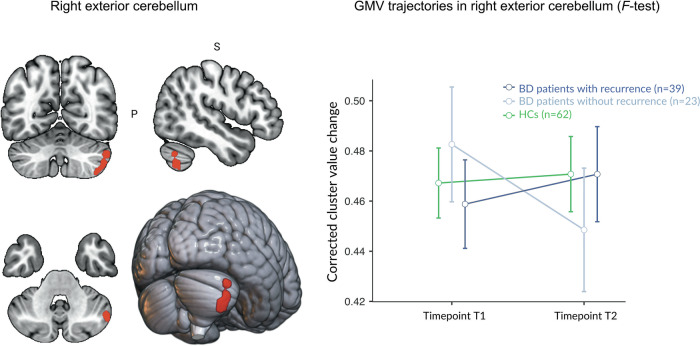 Figure 1
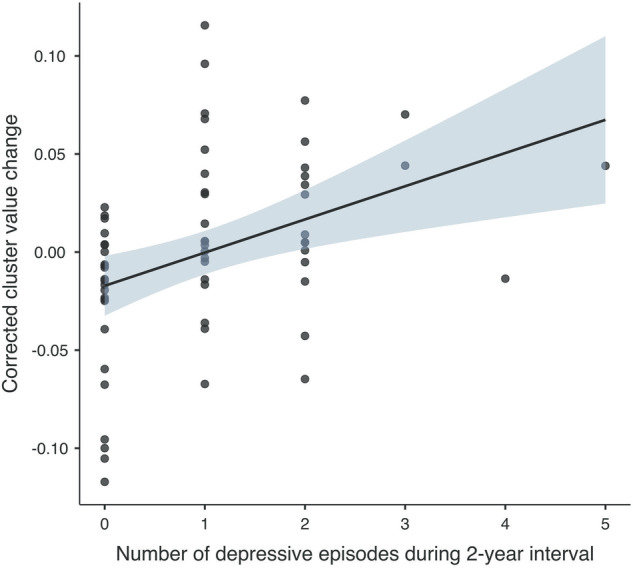 Figure 2
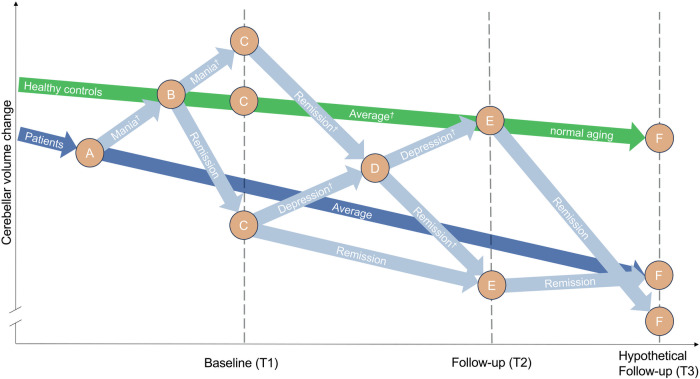 Figure 3
Peer Reviews
No public reviews on file for this paper yet. If you reviewed it on a platform where reviews are public (OpenReview, ICLR, NeurIPS, ICML), you can paste yours below so the community can read it here.
Videos
No videos yet. Explain this paper in a talk, walkthrough, or lecture? Add one.
Taxonomy
TopicsBipolar Disorder and Treatment · Tryptophan and brain disorders · Schizophrenia research and treatment