Spatiotemporal Regulation of Ligand Trafficking and TLR9 Activation by PIEZO1 in Human Plasmacytoid Dendritic Cells
Shrestha Pattanayak, Deblina Raychaudhuri, Purbita Bandopadhyay, Upasana Mukhopadhyay, Tithi Mandal, Chinky Shiu Chen Liu, Nidhi Kalidas, Sumangal Roychowdhury, Krishnananda Chattopadhyay, Fnu Ashish, Bidisha Sinha, Dipyaman Ganguly

TL;DR
This study shows how a mechanosensory ion channel, PIEZO1, regulates immune responses in dendritic cells by controlling how different DNA-like molecules activate immune signals.
Contribution
PIEZO1 is identified as a novel mechanosensor that controls TLR9 signaling through membrane tension and spatial regulation in pDCs.
Findings
CpGA forms aggregates that activate PIEZO1, leading to sustained IFN production in pDCs.
PIEZO1 deficiency or inhibition reduces CpGA-induced IFN responses.
PIEZO1 activation can enhance IFN production from CpGB, which normally induces weaker responses.
Abstract
Plasmacytoid dendritic cells (pDCs) are innate immune cells that produce type I interferons (IFNs) upon sensing nucleic acids via Toll-like receptor 9 (TLR9). Synthetic oligodeoxynucleotides CpGA and CpGB are widely used TLR9 agonists, yet only CpGA robustly induces IFN-α in pDCs. In contrast, CpGB drives much less IFN production. The mechanism underlying this ligand-specific response is not known. Here, we identify PIEZO1, a mechanosensory ion channel, as a regulator for this ligand-specific response. We show that CpGA, unlike CpGB, self-associates into large aggregates that generate membrane tension during cellular uptake, activating PIEZO1. This triggers calcium influx and localized F-actin assembly, retaining CpGA in early endosomes to sustain IRF7 activation and IFN production. PIEZO1 deficiency or inhibition abolishes CpGA-induced IFN responses, while PIEZO1 activation enhances…
Genes, proteins, chemicals, diseases, species, mutations and cell lines named across the full text — each resolved to its canonical identifier and authoritative record.
Click any figure to enlarge with its caption.
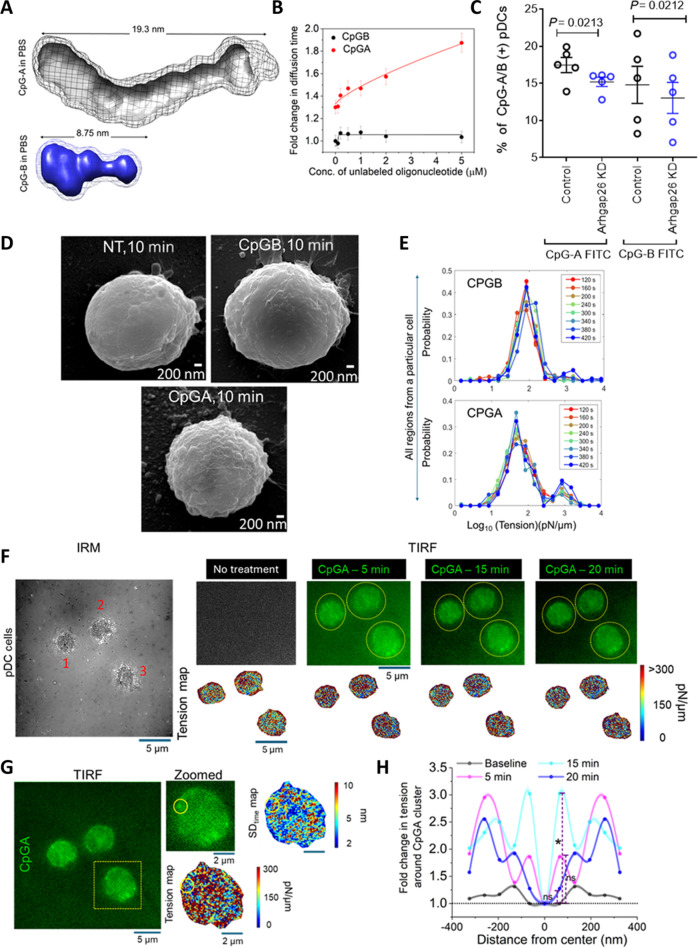 Figure 1
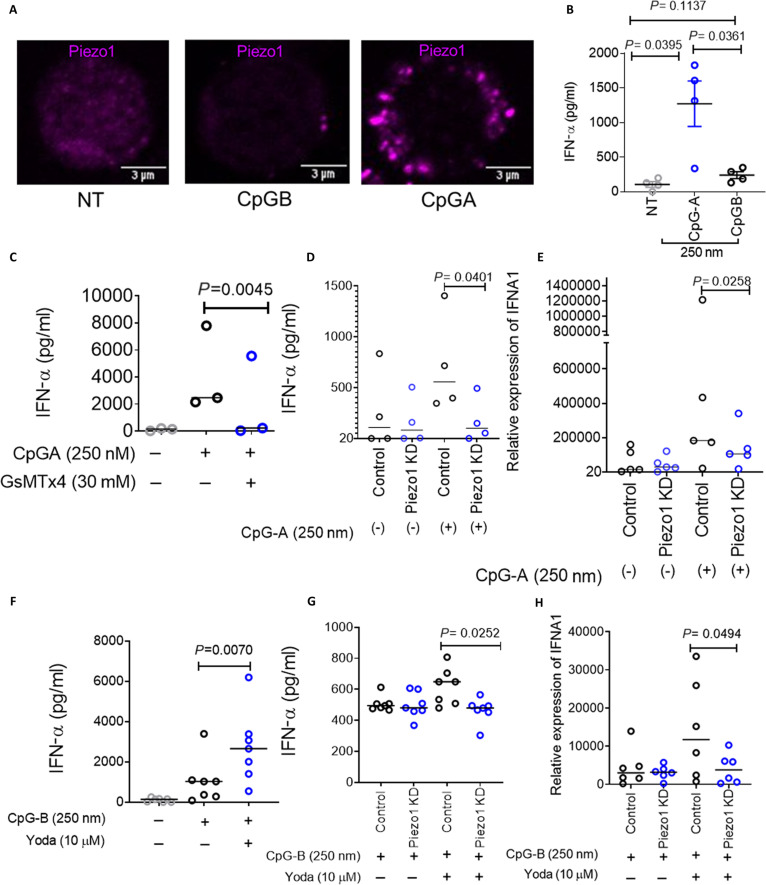 Figure 2
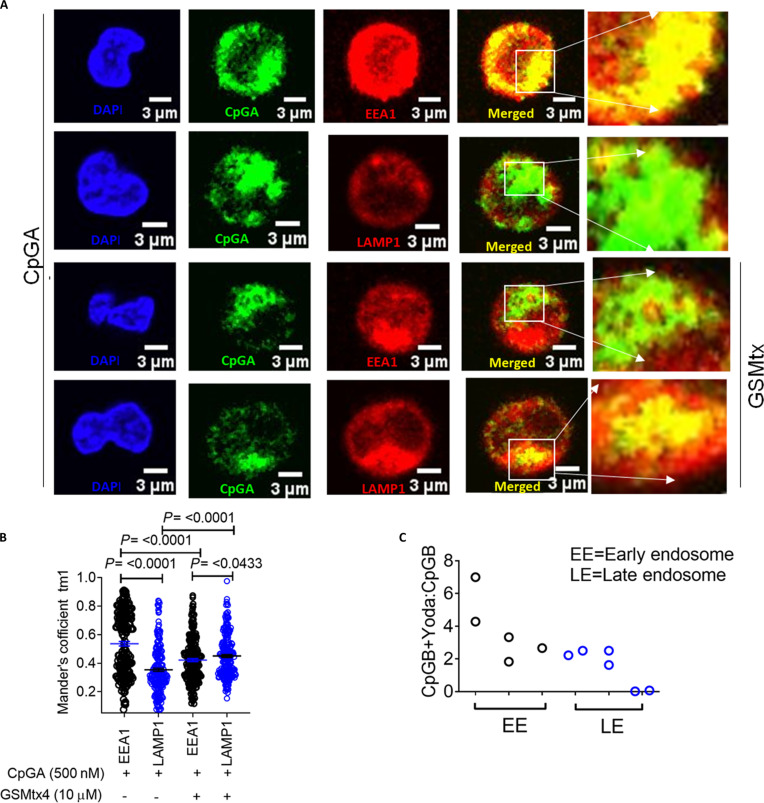 Figure 3
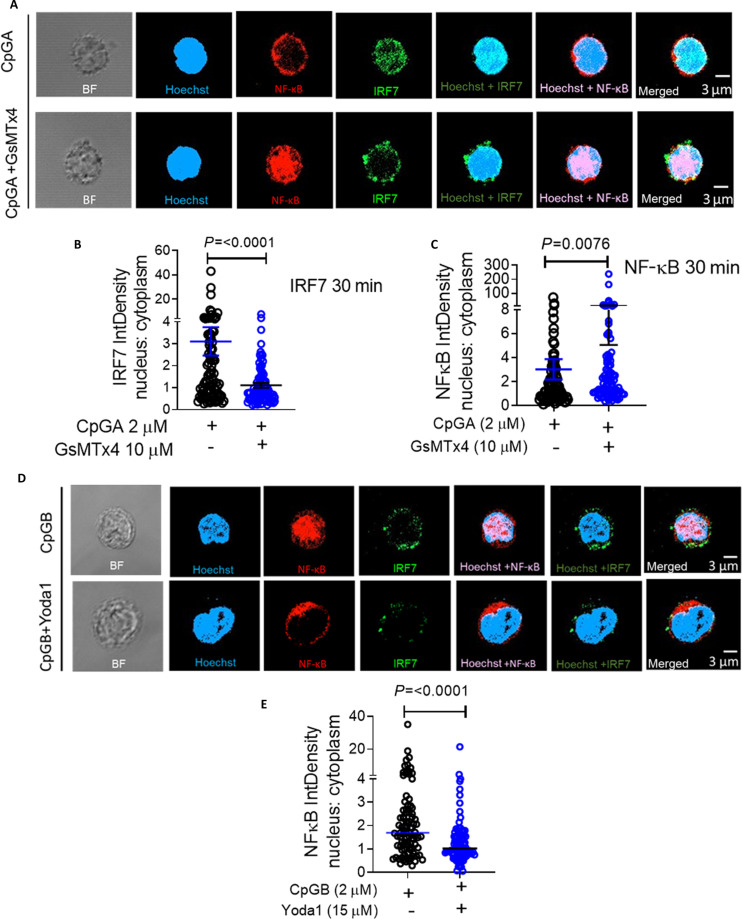 Figure 4
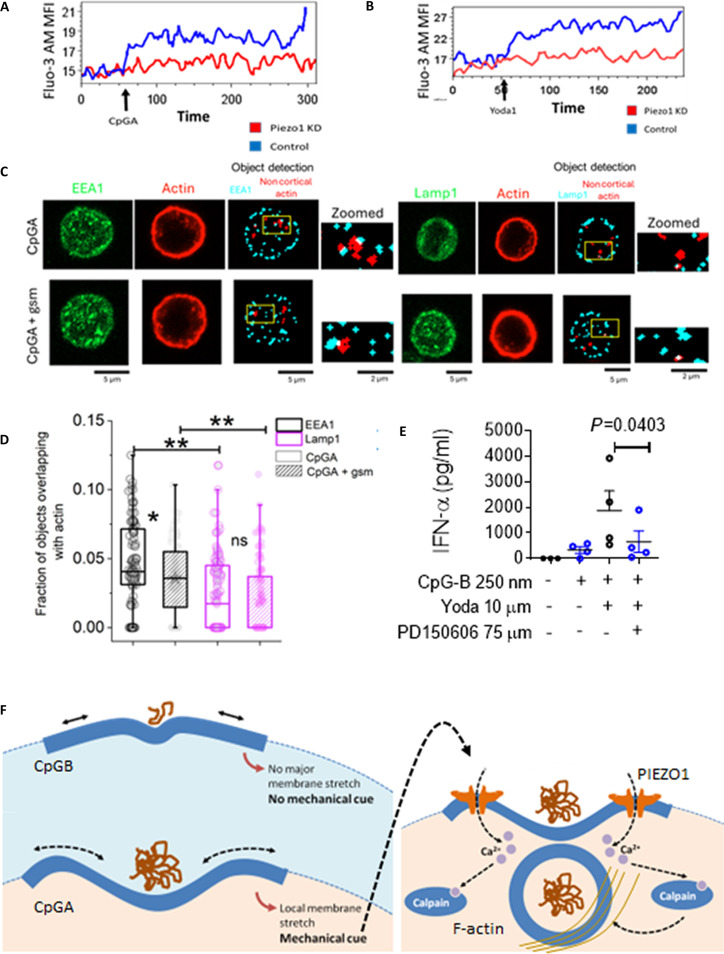 Figure 5
Peer Reviews
No public reviews on file for this paper yet. If you reviewed it on a platform where reviews are public (OpenReview, ICLR, NeurIPS, ICML), you can paste yours below so the community can read it here.
Videos
No videos yet. Explain this paper in a talk, walkthrough, or lecture? Add one.
Taxonomy
TopicsImmune Response and Inflammation · Erythrocyte Function and Pathophysiology · interferon and immune responses