Resistance exercise exerts anti-hypertensive effects and downregulates NTPDase/CD39 and ecto-5′-nucleotidase/CD73 expression in patients with chronic kidney disease undergoing hemodialysis
Angela Makeli Kososki Dalagnol, Francini Franscescon, Matheus Chimelo Bianchini, Josiano Guilherme Puhle, Keroli Eloiza Tessaro da Silva, Helamã Moraes Santos, Sarah Franco Vieira de Oliveira Maciel, Débora Tavares de Resende e Silva

TL;DR
Resistance exercise lowers blood pressure and reduces enzyme activity linked to purinergic signaling in CKD patients on hemodialysis.
Contribution
This study shows resistance exercise mitigates purinergic signaling and has anti-hypertensive effects in CKD patients.
Findings
Resistance exercise significantly reduced systolic blood pressure in CKD patients.
NTPDase/CD39 and ecto-5′-nucleotidase/CD73 expression were downregulated after resistance exercise.
Extracellular ATP levels were restored in CKD patients following resistance exercise.
Abstract
Chronic kidney disease (CKD) affects approximately 13.4% of the global population and significantly impacts patients’ quality of life. This study aimed to investigate the effects of resistance exercise on blood pressure and purinergic signaling in patients with CKD. Here, 28 patients with CKD performed a 12-week resistance exercise protocol during hemodialysis. Blood samples were collected before and after the intervention. Biochemical analyses, for example, NTPDases, ecto-5′-nucleotidase, and adenosine deaminase, were measured in platelets. Flow cytometry was performed to investigate CD39 and CD73 expression on lymphocytes. In addition, extracellular ATP and blood pressure were analyzed. Our findings revealed that patients with CKD present high systolic blood pressure (p = 0.0002) compared to control, and resistance exercise reduces blood pressure in these patients (p = 0.007).…
Genes, proteins, chemicals, diseases, species, mutations and cell lines named across the full text — each resolved to its canonical identifier and authoritative record.
Click any figure to enlarge with its caption.
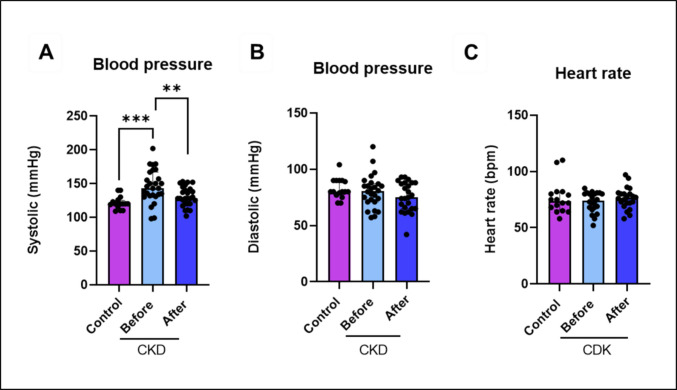 Figure 1
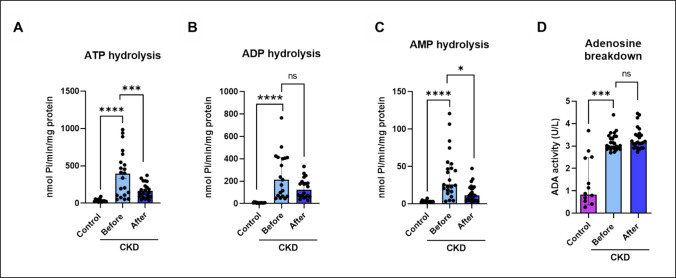 Figure 2
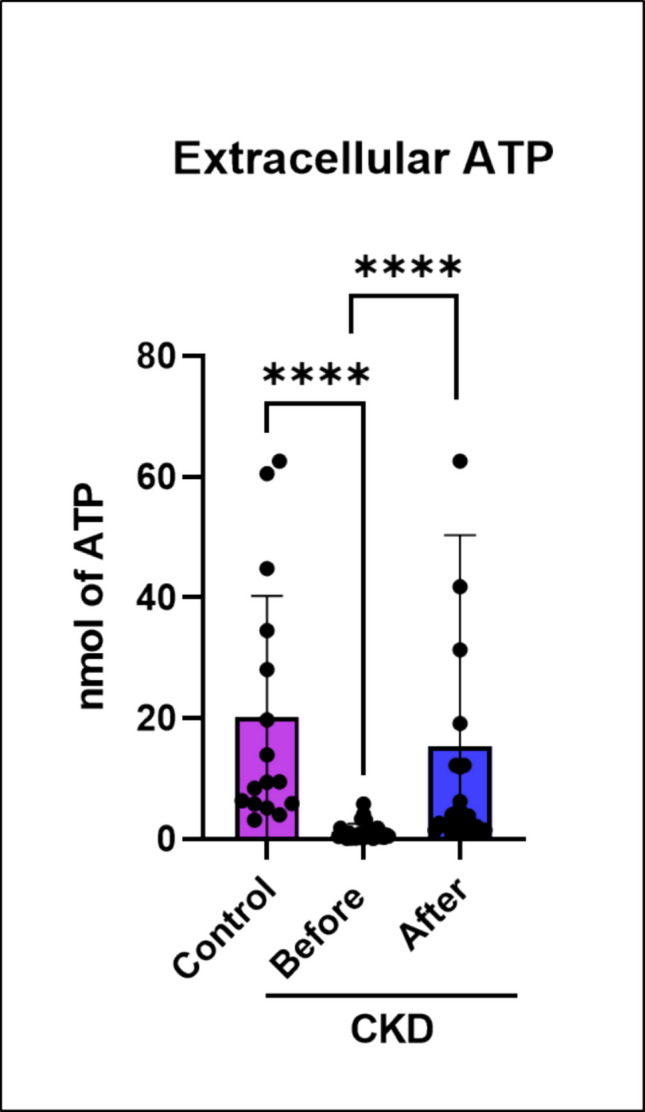 Figure 3
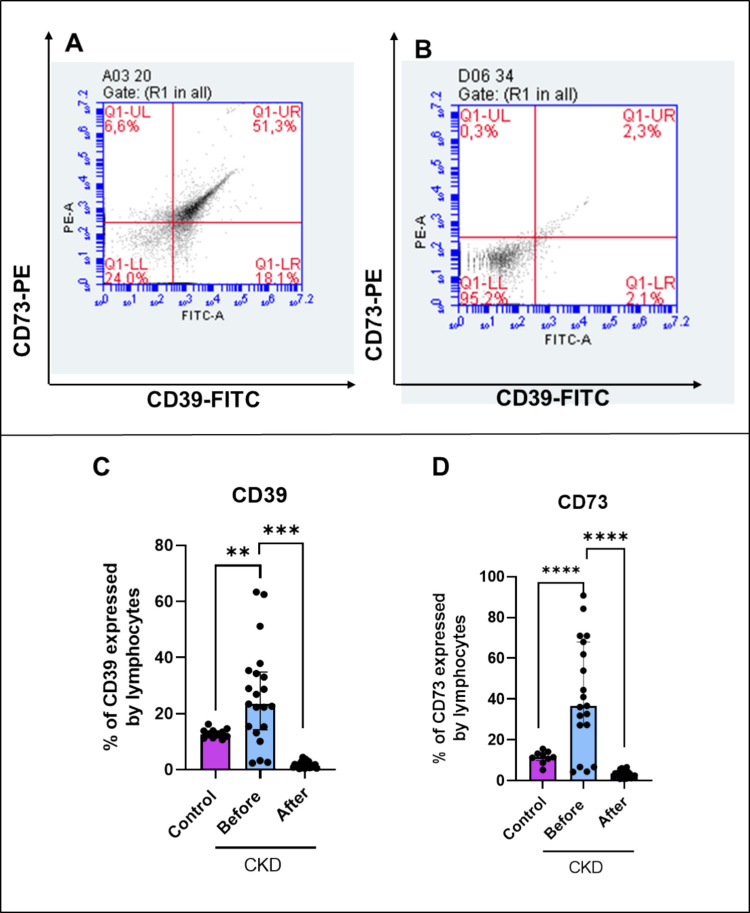 Figure 4
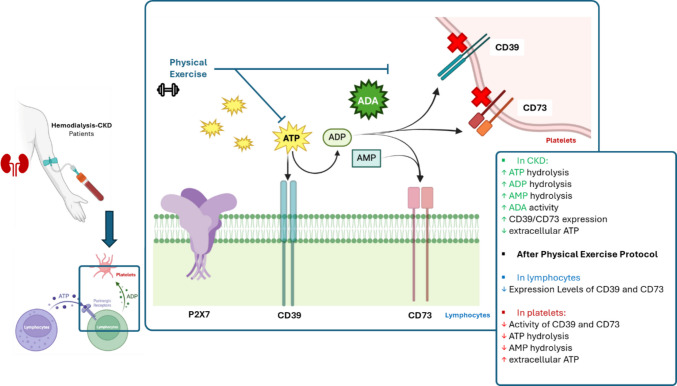 Figure 5
 Figure 6
Peer Reviews
No public reviews on file for this paper yet. If you reviewed it on a platform where reviews are public (OpenReview, ICLR, NeurIPS, ICML), you can paste yours below so the community can read it here.
Videos
No videos yet. Explain this paper in a talk, walkthrough, or lecture? Add one.
Taxonomy
TopicsAdenosine and Purinergic Signaling · Dialysis and Renal Disease Management · Apelin-related biomedical research