Non-invasive estimation of material properties of normal and dissected human ascending aortas in vivo: comparison with the ex vivo tensile experiment
Xiaoya Guo, Yi Yang, Liang Wang, Dalin Tang, Haoliang Sun

TL;DR
This study compares non-invasive in vivo and ex vivo methods to estimate the mechanical properties of human aortas, finding significant differences in stiffness measurements.
Contribution
A novel non-invasive method is proposed to estimate in vivo anisotropic mechanical properties of aortas and compare them with ex vivo data.
Findings
In vivo estimates using ex vivo parameters showed up to −33.44% relative error in Young’s modulus ratios compared to ex vivo measurements.
A 5% variation in initial parameters caused less than 1.5% change in estimated in vivo properties.
Estimated in vivo circumferential Young’s modulus was consistently lower than ex vivo results for both normal and dissected aortas.
Abstract
Patient-specific aortic material properties play a critical role in aortic dissection development. In this study, a non-invasive method was employed to assess the in vivo anisotropic mechanical properties of normal and dissected ascending aortas and compare them with their ex vivo material properties. Biaxial tensile testing was performed on 10 ascending aortic specimens (five patients with type-A aortic dissection and five donors without aortic diseases), with testing data fitted using anisotropic Mooney–Rivlin models. An iterative algorithm was proposed to determine in vivo aortic material properties by matching systolic and diastolic aortic geometries from echocardiography images with those from computed tomography-based computational models. Three settings of initial guesses of material parameters (M01: subject-specific ex vivo parameters; M02: ex vivo parameters of one subject…
Genes, proteins, chemicals, diseases, species, mutations and cell lines named across the full text — each resolved to its canonical identifier and authoritative record.
Click any figure to enlarge with its caption.
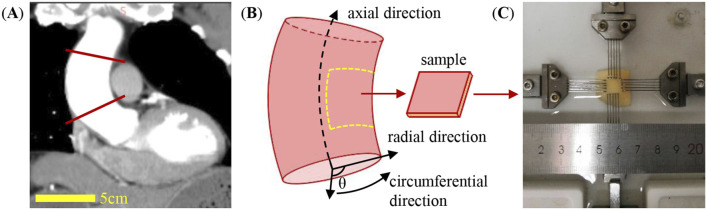 Figure 1
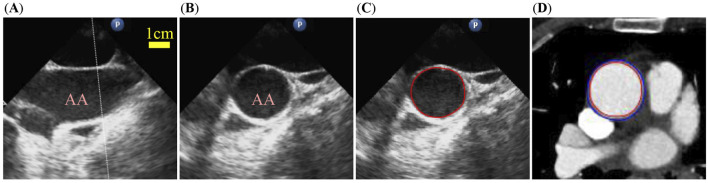 Figure 2
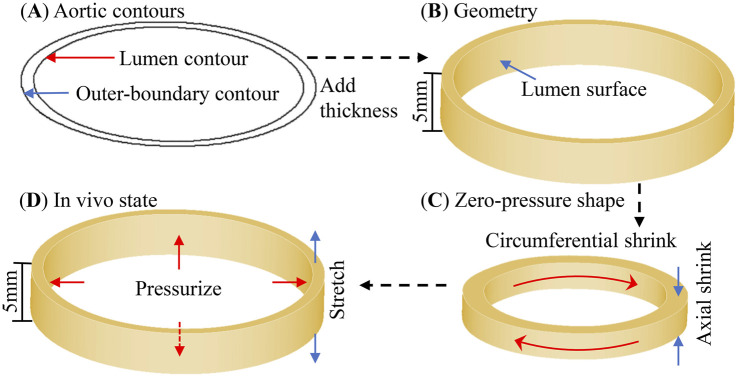 Figure 3
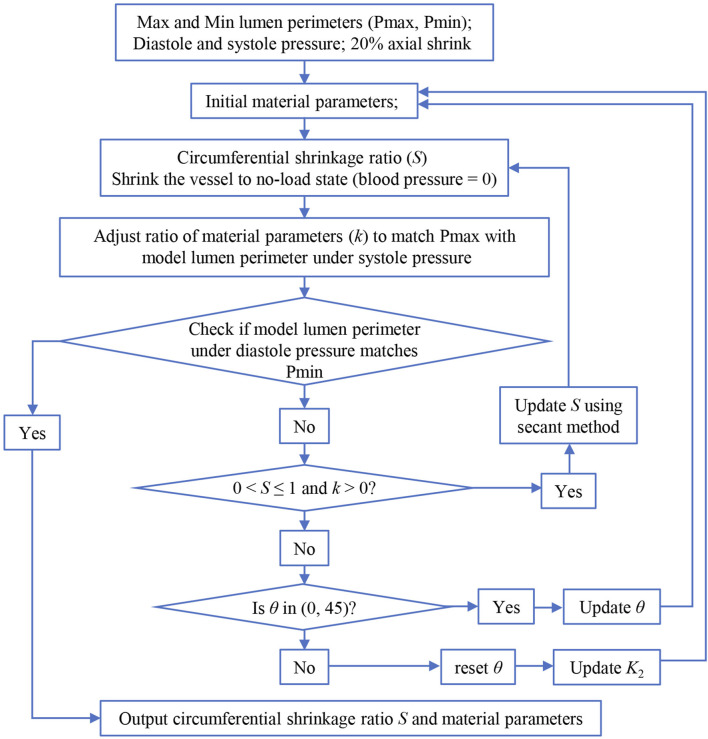 Figure 4
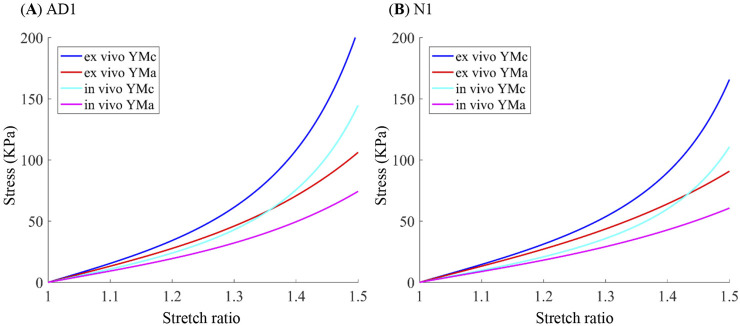 Figure 5
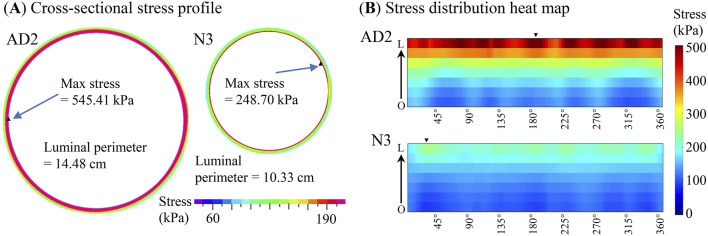 Figure 6
Peer Reviews
No public reviews on file for this paper yet. If you reviewed it on a platform where reviews are public (OpenReview, ICLR, NeurIPS, ICML), you can paste yours below so the community can read it here.
Videos
No videos yet. Explain this paper in a talk, walkthrough, or lecture? Add one.
Taxonomy
TopicsElasticity and Material Modeling · Aortic Disease and Treatment Approaches · Aortic aneurysm repair treatments